UK Imposes Sanctions on Israeli Settlements, Including Golan Heights
On Tuesday, September 8 2026, the United Kingdom announced a sweeping sanctions regime that will reshape the legal landscape of the Israeli‑occupied territories. The package, unveiled by Foreign Secretary Ed Miliband, targets the West Bank, East Jerusalem and, for the first time in a major Western policy, the Golan Heights—a plateau Israel seized in 1967 and formally annexed in 1981, a move the international community does not recognise.
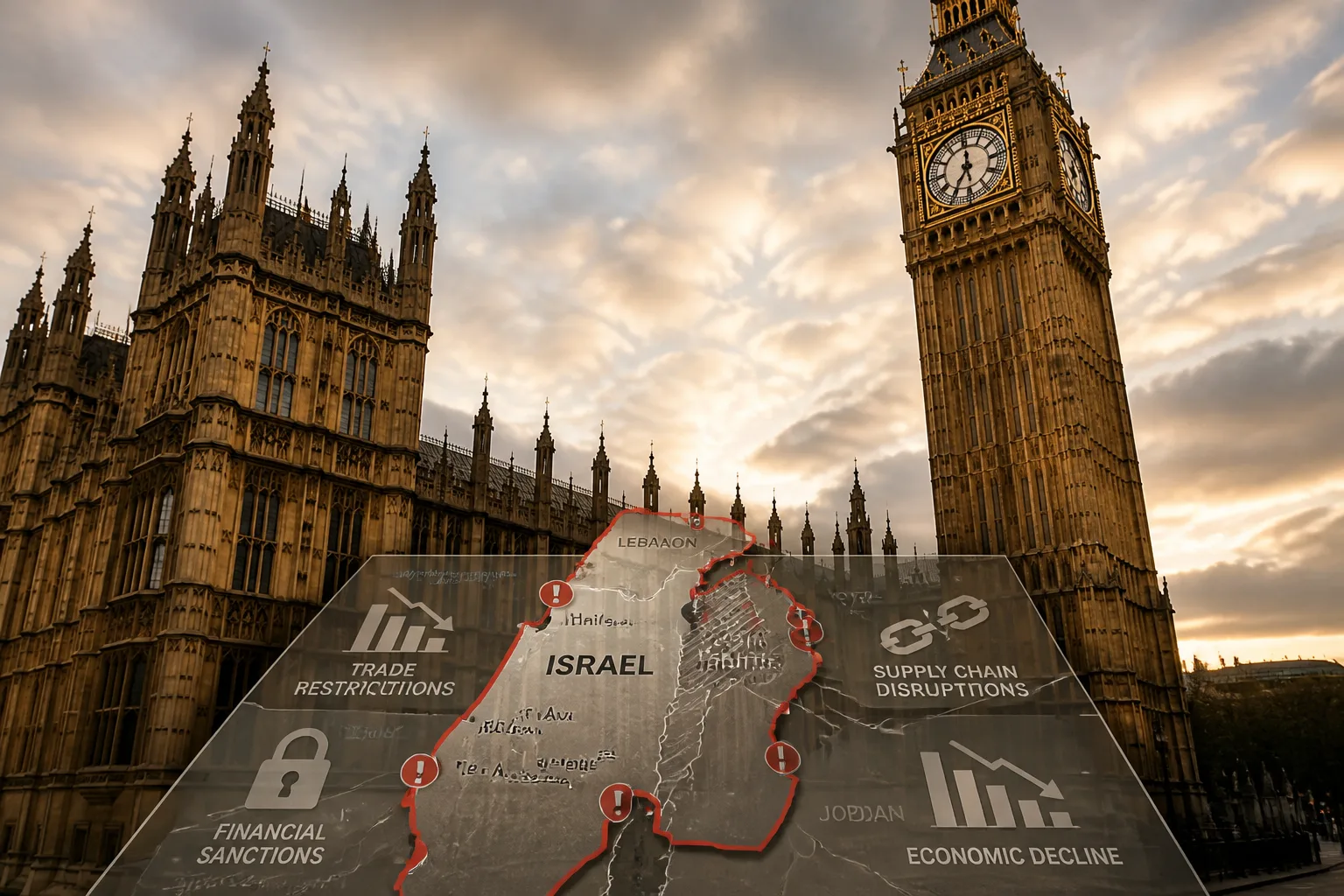
Miliband’s statement outlined an import ban on goods produced in settlements, restrictions on companies and individuals that supply construction, infrastructure financing or real‑estate services for settlement expansion, and targeted asset freezes on those who facilitate the growth of settlements. He added that the UK would “take action against specific companies and individuals who provide services such as construction, infrastructure financing or real estate for settlement expansion.” The policy also contains “appropriate religious exemptions” to protect non‑settlement‑related religious activities.
The announcement came alongside a joint declaration issued by the UK and eleven other governments—Canada, Denmark, Finland, France, Iceland, Ireland, Norway, Poland, Portugal, Spain and Sweden—confirming their intention to introduce national or European restrictions on trade with settlements that are illegal under international law. The statement was signed by ministers from the participating governments and published on the same day as the UK’s sanctions.
The Golan Heights, home to about 20,000 Israeli settlers and 26,000 native Druze residents who identify as Syrian, has long been a flashpoint. United Nations Security Council Resolution 242, adopted in 1967, calls for the withdrawal of Israeli forces from territories occupied in the recent conflict—a principle the UK’s sanctions aim to enforce. By explicitly including the Golan, the UK marks a significant shift in the region’s diplomatic landscape.
Israel reacted swiftly. Foreign Minister Gideon Saar announced that Israel would close the British consulate in East Jerusalem and ban 11 British Members of Parliament from entering the country, framing the move as a retaliatory measure against what Israel views as an unfounded attack on its sovereignty.
The sanctions are expected to have a limited immediate economic impact, as the UK imports only a small fraction of goods from settlements—roughly £6 million in the last four quarters, according to Al Jazeera. Nevertheless, the policy signals a broader international effort to pressure Israel to halt settlement expansion. The UK’s legal framework for sanctions allows it to impose asset freezes, travel bans and trade restrictions on individuals and entities that violate the law.
The policy reflects a growing consensus among Western democracies that settlement activity violates the Fourth Geneva Convention, which prohibits an occupying power from transferring its civilian population into occupied territory. While the United States has historically taken a more ambivalent stance, the Biden administration’s 2024 policy shift aligns it with the UK’s position.
The sanctions are part of a broader trend of coordinated action. The European Union has been considering similar measures, and several European Parliament members have called for a unified approach to trade with settlements. The UK’s move may influence the EU’s future policy, especially as the UK continues to negotiate trade agreements that include provisions on human rights and international law.
The Golan Heights holds strategic importance, controlling water sources that feed the Jordan River and the Sea of Galilee. Its annexation by Israel was condemned by the United Nations Security Council in Resolution 497 (1981) and remains a key issue in Israeli–Syrian relations. The UK’s sanctions therefore carry both legal and geopolitical implications.
In the days following the announcement, the UK government confirmed that the sanctions would take effect within six to nine months, allowing companies and individuals to adjust their operations. It also stated that it would monitor compliance and enforce penalties for violations.
The sanctions represent a significant development in the international community’s engagement with the Israeli–Palestinian conflict and the broader Arab–Israeli dispute. While the immediate economic effects may be modest, the policy underscores the UK’s commitment to upholding international law and signals a willingness to use economic tools to influence foreign policy decisions.
The next steps will involve the UK’s enforcement agencies implementing the sanctions, monitoring trade flows, and coordinating with allied governments to ensure consistent application. Israel’s diplomatic response and potential legal challenges in UK courts will also shape the trajectory of this policy.