Explosion at Qatars Ras Laffan LNG Facility Leaves 54 Injured, 18 Missing
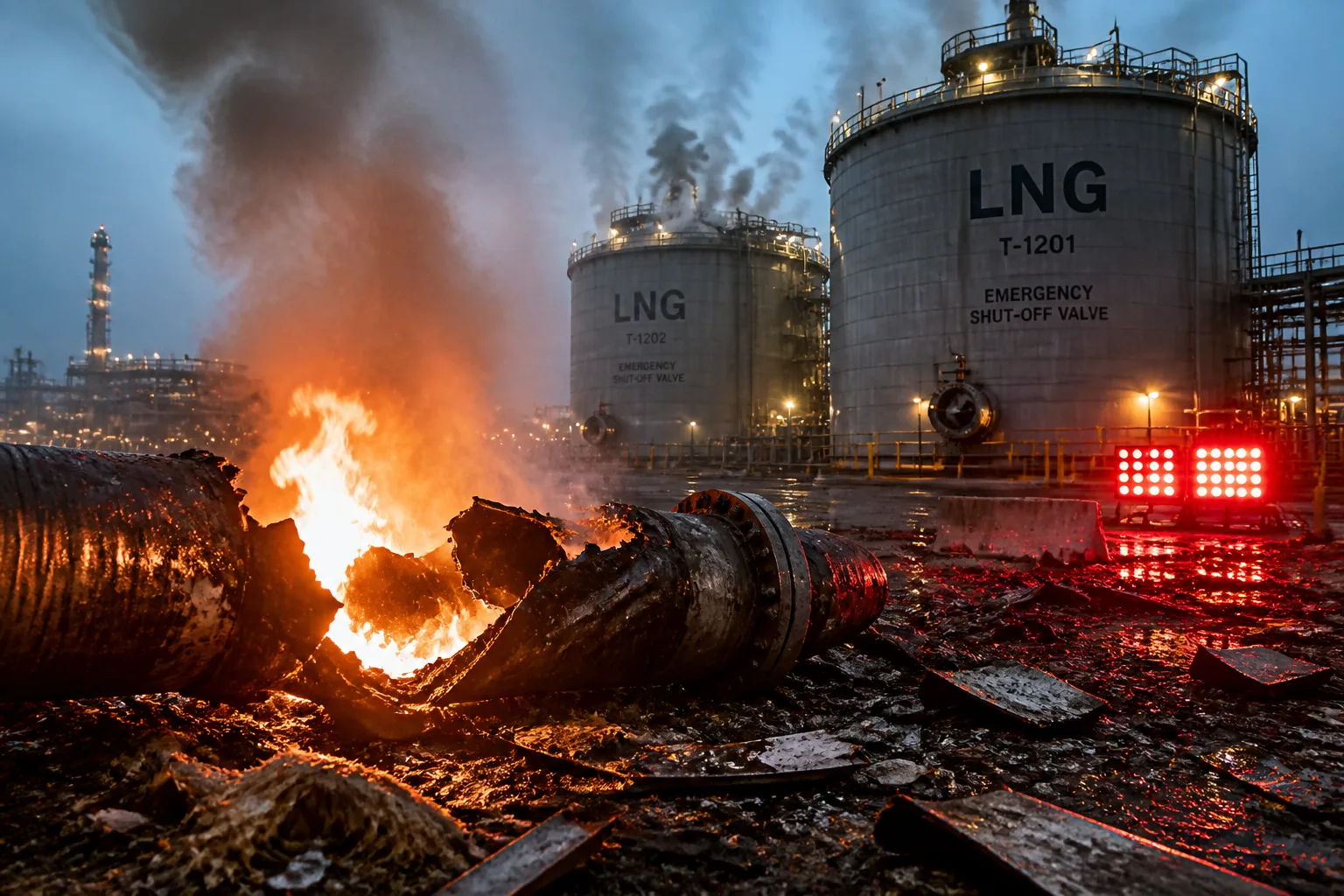
A sudden blast shattered the night of 21 June 2026 at Qatar’s Barzan gas‑supply complex in Ras Laffan Industrial City, sending shockwaves through the world’s largest LNG export hub.
At 11:22 p.m. local time, the Interior Ministry confirmed that an internal explosion, caused by a technical malfunction during the plant’s start‑up, had erupted in the Barzan facility. The blast ignited a fire that, thanks to the rapid response of QatarEnergy’s emergency team and local civil‑defence units, was quickly brought under control.
The incident left 54 workers wounded and 18 people unaccounted for. Rescue crews, backed by civil‑defence personnel, are combing the site in a coordinated effort to locate the missing. The Ministry has not yet released details on the fate of those individuals.
Ras Laffan is a critical node in Qatar’s energy network, operating 14 LNG trains that can ship 77 million metric tonnes a year. The same complex houses Qatar’s Helium 1 and Helium 2 plants, where helium is extracted as a by‑product of LNG processing. Qatar supplies roughly 30 % of the world’s helium, and more than 80 % of the country’s output is produced at these two facilities.
The explosion comes on the heels of a restart that began in early April, after a ceasefire opened safe passage through the Strait of Hormuz. QatarEnergy had projected that LNG output would reach about 50 % of capacity one month after the strait reopened, and roughly 80 % within two months. Yet, as of 6 March, the plant had been idle, with no LNG produced and no helium recovered.
Beyond the immediate human toll, the blast threatens to ripple through global markets. Helium is captured during the cryogenic processing of natural gas; when LNG production halts, so does helium recovery. Analysts note that the loss of Qatar’s helium output has already tightened a market that was once in a buyer’s market.
Phil Kornbluth, a helium consultant who spoke at gasworld’s Specialty Gas Summit, warned that the current disruptions could evolve from a temporary shock into a longer‑term shortage. He pointed out that global production capacity—about 7.3 billion cubic feet per year—has historically outpaced demand of roughly 6.2 billion cubic feet, leaving a surplus before recent events.
Major players in the helium market have already felt the pinch. Air Liquide’s CEO, Francois Jackow, told investors on a quarterly earnings call that the resumption of LNG and helium production at Ras Laffan was “more important” than the reopening of the Strait of Hormuz. Air Products, meanwhile, has been drawing from its storage cavern in Beaumont, Texas, as market conditions remain weak.
The explosion marks the first major incident at Ras Laffan since its restart. QatarEnergy has not yet released a detailed investigation report, but the company confirmed that the event was an operational mishap and that it is cooperating fully with authorities.
The incident underscores the fragility of critical energy infrastructure in the region. While rescue and containment take priority, industry observers and governments will be watching closely to gauge the long‑term impact on LNG exports and helium supply.
In the coming days, QatarEnergy is expected to conduct a comprehensive safety review and assess the damage to the Barzan facility. Those findings will determine when—and at what capacity—LNG and helium production can resume.
The event also highlights how a single disruption can reverberate through global supply chains, affecting everything from industrial cooling to medical imaging and scientific research.
At present, rescue operations continue and no definitive statement has been issued regarding the missing personnel. Updates will follow as additional information becomes available.