Omans Tourism Strategy Gains Momentum as Vision 2040 Drives Sustainable Growth
In a region where tourism has long been dominated by a handful of mega‑destinations, Oman is quietly carving out its own niche. Rather than relying on a single marketing blitz, the country has built a comprehensive plan anchored in Vision 2040, launched in 2020, that positions tourism as a pillar of economic diversification.
Vision 2040 frames tourism within a broader agenda to reduce hydrocarbon dependence, boost private‑sector participation, and generate jobs across all governorates. The Ministry of Heritage and Tourism reports a steady rise in visitor arrivals: 3.97 million in 2025 versus 3.90 million in 2024. According to the plan, Oman is on track to attract 12 million tourists by 2040, a target that aligns with World Travel & Tourism Council forecasts of a 5.4 billion OMR contribution to GDP by 2034 and support for more than 265,600 jobs.
The growth model is deliberately diversified. Hotels, air transport, travel agencies, cultural services, and nature‑based experiences together form a tourism value chain that reached 2.11 billion OMR in 2024. Hotel revenue alone climbed to 293.4 million OMR, signaling a robust recovery from pandemic lows.
Air connectivity is a cornerstone of the strategy. Muscat International Airport handled 7.45 million passengers by July 2025, a 1.5 % increase over the same period in 2024. Oman Airports reports that the country’s airports carried 15.2 million passengers in 2025, reflecting a steady expansion of routes. The Ministry has announced 500 shuttle flights between October and April, targeting winter demand from Europe, the GCC and Asia‑Pacific. A regional marketing office is under construction in Singapore to strengthen ties with Australian and New Zealand markets.
Meetings, incentives, conferences and exhibitions (MICE) have been earmarked as a key growth area. The Oman Convention and Exhibition Centre, situated just four kilometres from Muscat International Airport, offers 22,396 m² of exhibition space, two auditoriums (seating 3,200 and 456), more than 55 meeting rooms and a car park for 4,000 vehicles. Its proximity to the airport and integrated hotel and precinct infrastructure make it attractive for regional and global events.
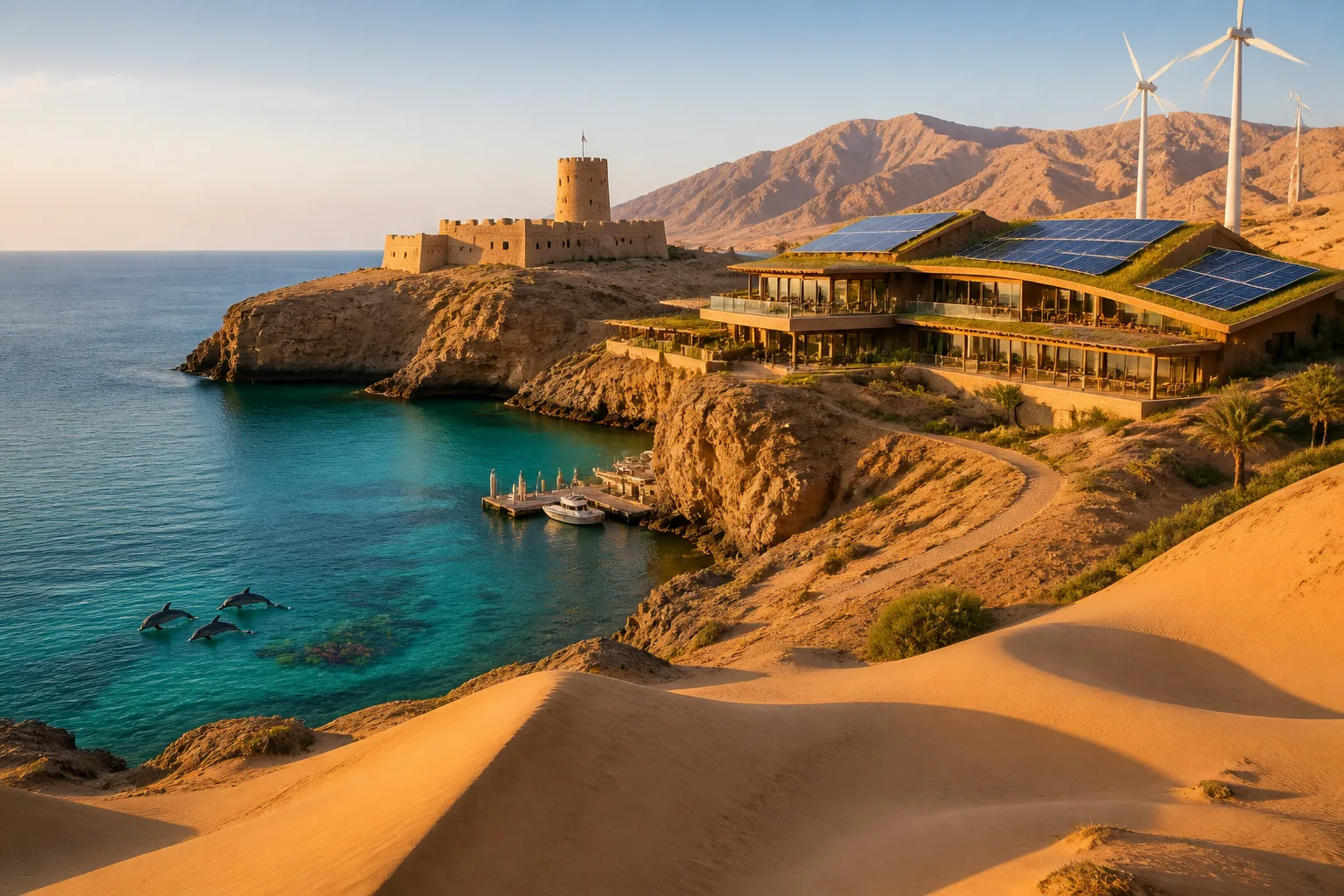
Sustainability is woven into the Vision 2040 framework. The Ministry links tourism growth to the country’s net‑zero target for 2050. Yiti Sustainable City, a carbon‑neutral development, is the first of its kind in Oman. The plan prioritises nature reserves, green mobility and biodiversity protection, aligning with global trends that favour destinations offering space, safety, culture, nature and wellness.
Digital distribution is facilitated through Visit Oman, a national platform that connects international travel trade partners with local tourism providers. The portal offers ready‑made, commissionable products, helping to overcome the fragmentation that has historically limited the sector’s reach.
Challenges remain. Air links must continue to expand to meet growing demand, and hotel supply must match seasonal peaks without creating oversupply. Regional competition from the UAE, Saudi Arabia, Qatar and Bahrain is intense, and Oman still needs stronger brand recall in long‑haul markets.
Nevertheless, Oman’s differentiated model—rooted in authenticity, nature, culture, space and sustainable luxury—provides a clear identity in a crowded Gulf market. By building on Vision 2040, expanding air connectivity, protecting natural and cultural assets, and simplifying trade access, Oman is positioned to become one of the Middle East’s most important next‑generation tourism economies.
The next steps involve continued investment in airport infrastructure, the development of integrated tourism complexes, and the promotion of Oman as a regional extension for Gulf itineraries. If these measures are sustained, the country could offer international visitors a quieter, more nature‑rich and culturally grounded alternative to traditional Gulf destinations.