US Secretary of State Marco Rubio Arrives in UAE to Reassure Gulf Allies After Iran War Ceasefire
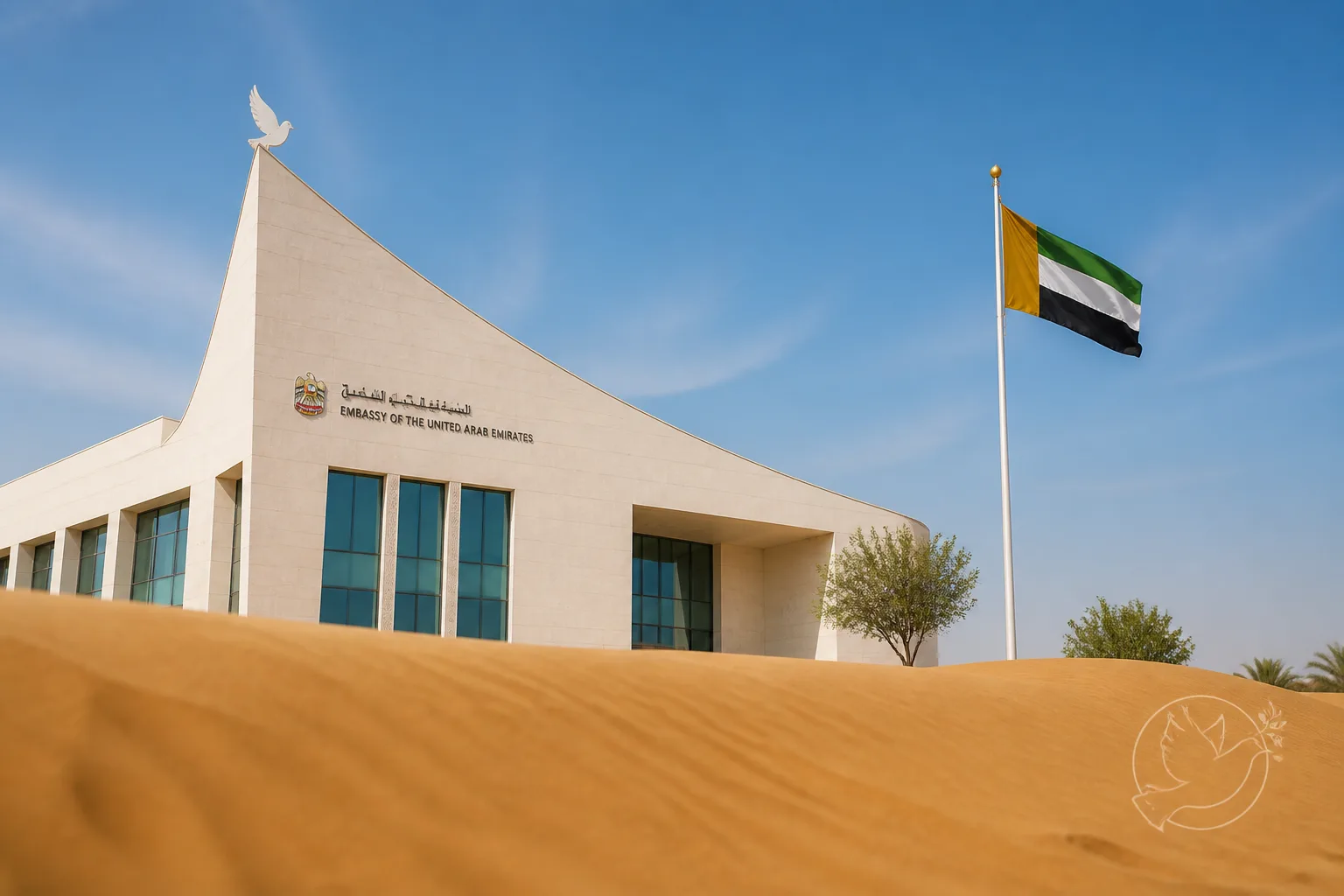
In the dim glow of Abu Dhabi’s skyline, U.S. Secretary of State Marco Rubio stepped onto the tarmac, marking the start of a Gulf tour that could recalibrate the region’s fragile balance of power. The arrival came on a Tuesday evening, just weeks after Washington and Tehran inked a 60‑day memorandum of understanding (MOU) that temporarily halts hostilities and lays the groundwork for a longer‑term settlement.
The MOU, negotiated by Vice President J.D. Vance, is slated for formal signing in Switzerland. While the State Department confirmed that Rubio will discuss the agreement with Iranian officials, it also underscored the need to secure free transit through the Strait of Hormuz and to promote broader regional peace.
The Gulf states have borne the brunt of economic damage since the U.S. and Israel launched strikes on Iranian targets in February. Iran’s sudden closure of the Strait halted most Gulf oil and gas exports, while drone and missile attacks disrupted shipping lanes and dented the reputations of the UAE and Qatar as stable business hubs. Gulf leaders, who did not support the war, have voiced concerns that the conflict has shifted the regional balance in Iran’s favor.
"Few Gulf states believe the war should have happened in the first place, and they are all concerned that the United States empowered Iran as a result," said Steven Cook of the Council on Foreign Relations. Cook added that the Gulf’s primary worry is the perception that the conflict has tilted power toward Iran.
In a separate interview, HA Hellyer of the Royal United Services Institute said the visit is likely intended to reassure Gulf partners: "I think that Rubio is probably going in order to try to reassure all of these Gulf partners… we're here and we stand by you." Hellyer noted that while the visit may not alter the strategic equation, it could reinforce the perception of U.S. reliability.
Rubio’s itinerary includes a stop in Kuwait on Wednesday and a meeting of the six‑member Gulf Cooperation Council (GCC) in Bahrain on Thursday. The GCC session will address ongoing security challenges, including Iran’s continued threat to the Strait of Hormuz. The United States has urged Gulf states to maintain free passage for international shipping, a right that was severely restricted during the war.
The MOU grants a 60‑day negotiating window to secure a permanent settlement, but it does not address Iranian missile or drone activity. Analysts warn that the absence of explicit provisions could leave Gulf states vulnerable to future Iranian aggression.
Gulf leaders, who historically maintained close ties with the Trump administration, have pledged to invest billions in the United States. However, they now appear to be diversifying their security relationships, as they no longer view the U.S. as fully dependable.
Another point of contention is Iran’s push to impose fees on ships passing through the Strait of Hormuz. Prior to the war, the strait handled about 25 % of global liquefied natural gas and 20 % of seaborne oil trade. Iran’s new fee proposal could further strain Gulf economies.
The United Arab Emirates has also expressed uncertainty about a $300 billion reconstruction fund mentioned in the U.S.–Iran deal. An Emirati official told AFP on Tuesday that the UAE is not aware of the fund and is not involved in its development.
As Rubio’s visit unfolds, Gulf states will likely use the opportunity to press the United States for concrete assurances on maritime security, economic support, and a clear stance on Iran’s future conduct. The U.S. will need to balance its diplomatic commitments with the practical realities of a region still reeling from a multi‑month conflict.
In the coming days, the U.S. is expected to hold further talks with Iranian officials to clarify the terms of the MOU, particularly regarding the reopening of the Strait of Hormuz and the status of Iranian assets. The Gulf Cooperation Council will also convene to assess the implications of the U.S. visit and to coordinate a collective response to Iran’s continued provocations.
The current situation remains fluid, with the U.S. and Iran engaged in a 60‑day ceasefire that serves as a temporary pause rather than a final resolution. Gulf states await the outcome of the U.S. visit and the subsequent negotiations to determine whether the region can achieve lasting stability.