BIS Warns Global Economy Faces Rising Inflation and AI Investment Risks Amid Middle East Conflict
On Sunday, the Bank for International Settlements (BIS) unveiled its 2026 Annual Economic Report, warning that the world economy, though still resilient, is now caught at the crossroads of several looming threats. The study pinpoints stubborn inflation, the durability of artificial‑intelligence (AI) investment, widening financial fragility and faltering fiscal positions as the main risks.
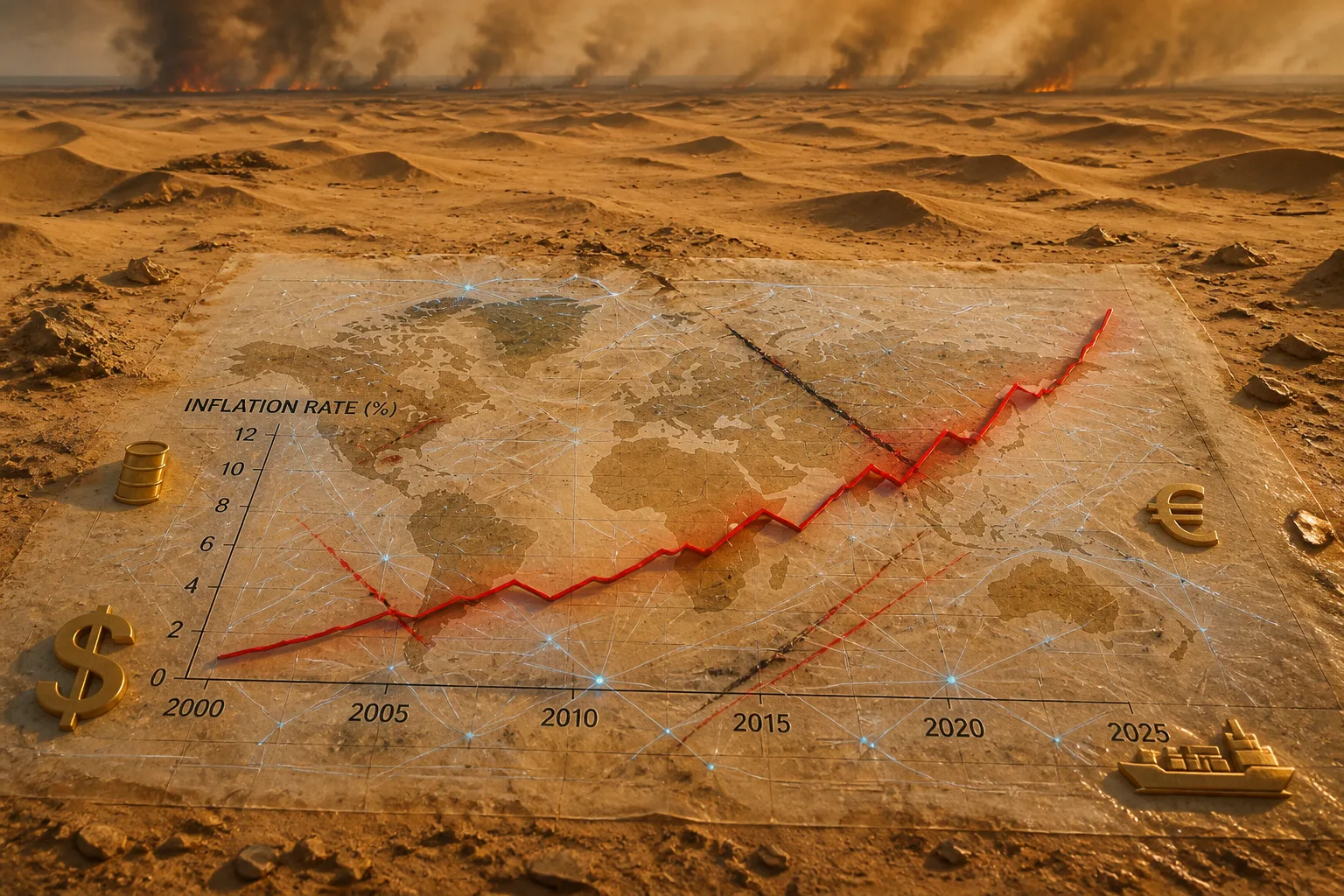
At the heart of the risk lies an energy shock unleashed by the Middle East conflict. In the United States, consumer‑price inflation surged to a three‑year high of 4.2 % in May, while the energy‑price index leapt 23.5 % over the preceding 12 months. The war has also choked global supply chains, forcing markets to lose more than 10 million barrels of crude oil a day – roughly 13 % of normal output, a hit that eclipses the 8 % shortfall of the 1970s energy crises.
The International Monetary Fund (IMF) revised its 2026 global growth forecast to 3.1 % in April, assuming the conflict remains contained. Yet the IMF cautioned that a prolonged war could dent growth further and unsettle markets.
Even if oil prices fall below pre‑war levels, the BIS warns that inflationary pressures may persist. The report cites recent tit‑for‑tat exchanges between Washington and Tehran, where U.S. Central Command struck in retaliation for Iranian attacks on commercial shipping, and Iran responded with missile and drone strikes. The BIS describes the conflict as having “thrown global supply chains into disarray” and notes that escalating hostilities pose a renewed threat to the global outlook.
Supply‑chain disruptions now ripple beyond energy. Shortages of nitrogen‑based fertilizers, helium and petrochemical feedstocks threaten production of food, semiconductors and manufactured goods. The BIS recorded a 9 % decline in global equity markets from late February to the end of March 2026, with the S&P 500 falling 8 % over the same span.
Adding to the turmoil, the BIS cautions that the AI boom could become a source of instability. While AI optimism has spurred capital expenditure and buoyed growth, a sudden downturn in returns could trigger a sharp pullback in financing, turning the capex surge into a prolonged investment bust that could ripple through financial conditions and trigger a major equity‑market correction.
Veteran investor Jeremy Grantham echoed this concern. Speaking to CNBC on Friday, he said the AI surge has driven the U.S. stock market to its most expensive level ever and could eventually spark a historic decline. Grantham noted the market’s total value stands at roughly 235 % of GDP—more than twice the size of the U.S. economy.
The BIS concludes that the convergence of inflation, AI‑investment fragility, financial vulnerabilities and fiscal weakness creates a complex risk environment. It urges policymakers to uphold disciplined monetary and fiscal policies to protect the fragile gains in global growth.
With uncertainty still high, the BIS calls for ongoing monitoring of inflation dynamics, AI‑investment returns and the trajectory of the Middle East conflict. The next steps will hinge on how geopolitical tensions evolve, energy supplies shift and AI‑related capital expenditure performs.