Saudi Arabia Approves AlUla Manara Observatory, Aiming to Combine Research and Astro-Tourism
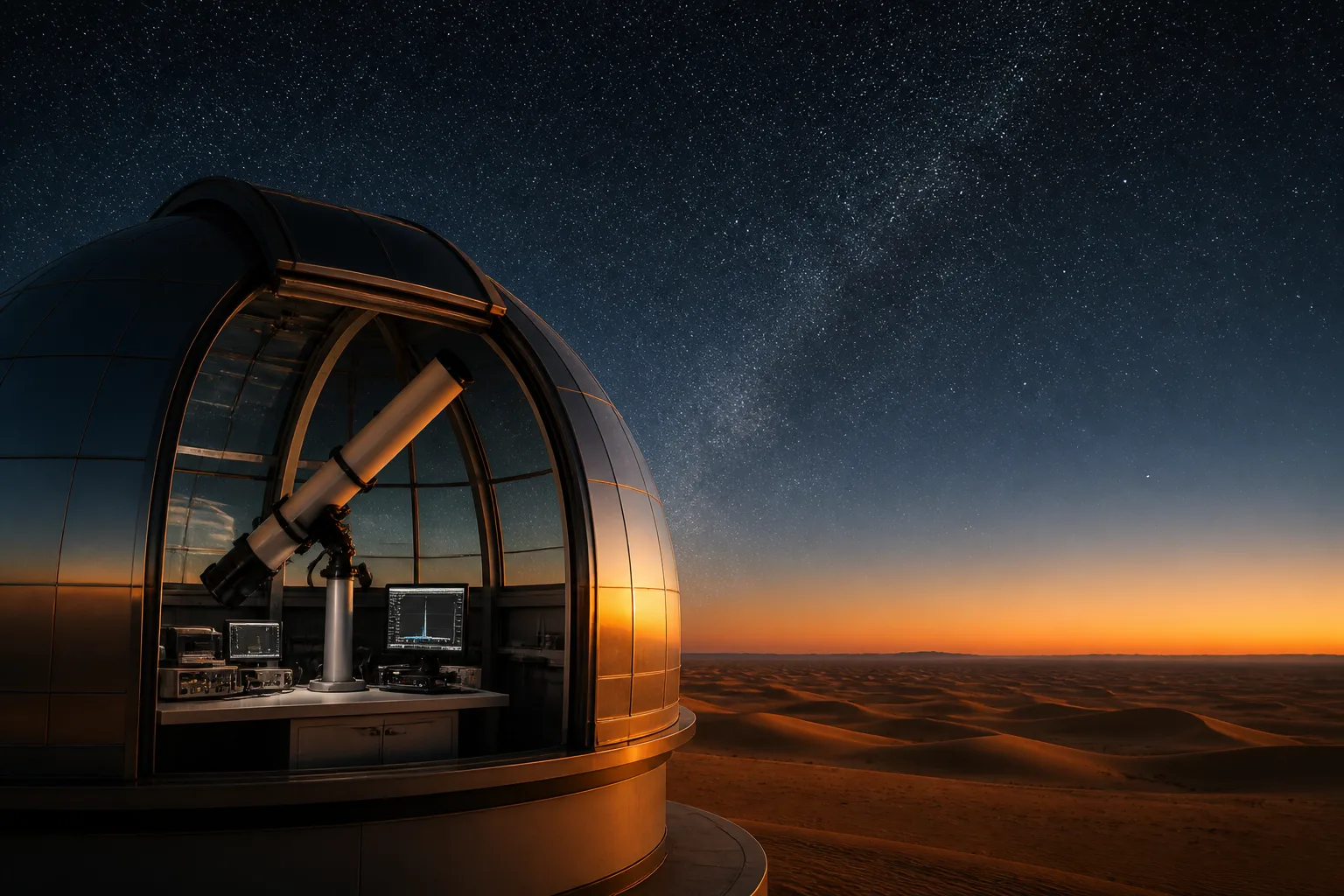
On 17 June 2026, the Royal Commission for AlUla (RCU) green‑lit the design of AlUla Manara, a bold new astronomy complex set 70 kilometres north of the historic city of AlUla. The chosen site sits in a recognised dark‑sky zone, offering skies that are largely free from artificial light pollution.
AlUla Manara will host a four‑metre telescope, observation platforms, interactive exhibitions, a planetarium, a restaurant and a combined visitor‑research centre. The project is a joint effort between the Saudi Space Agency, the King Abdulaziz City for Science and Technology (KACST) and the SETI Institute, and the RCU board announced the design approval without yet setting an opening date.
The observatory aligns with Saudi Arabia’s Vision 2030, which seeks to diversify the economy, foster science and technology, and promote sustainable tourism. By situating the facility in a dark‑sky zone, the RCU aims to deliver a world‑class research hub that also offers immersive public astronomy experiences.
AlUla Manara is not the first of its kind in the region. The United Arab Emirates opened the Al Sadeem Observatory in Abu Dhabi’s Al Wathba South in 2016, featuring guided tours, a 40‑centimetre telescope and an immersive “Cosmic Cube” exhibit. Dubai’s Al Thuraya Astronomy Centre, run by the Dubai Astronomy Group, offers telescope viewing, solar observation, planetarium shows and astronomy classes.
Sharjah hosts the university‑run Sharjah Space and Astronomy Hub, which includes a planetarium, optical and radio observatories, research laboratories and a public exhibition space. In Qatar, the Al Thuraya Planetarium in Doha’s Katara Cultural Village boasts a 22‑metre full‑dome screen and free shows in Arabic and English.
Saudi Arabia already operates the Sultan bin Abdulaziz Science and Technology Centre (SciTech) in Al Khobar, where visitors can use a modern telescope and attend astronomy lectures and training courses.
Beyond the Gulf, Oman’s Astrolab on Jebel Akhdar offers stargazing with specialised telescopes, guided mountain activities and astrophotography guidance, while Jordan’s RumSky provides desert stargazing tours in Wadi Rum that focus on constellations and planets.
In North Africa, Egypt’s Kottamia Observatory—run by the National Research Institute of Astronomy and Geophysics—houses the largest telescope in the Arab world and the Middle East. Morocco’s Oukaimeden Observatory, linked to Cadi Ayyad University, actively tracks asteroids, comets and near‑Earth objects.
AlUla Manara will join this growing network of regional astronomy centres, offering both scientific research capabilities and public engagement. The inclusion of a planetarium and visitor facilities is intended to draw tourists and students, complementing AlUla’s heritage attractions such as the Nabatean site of Hegra.
The RCU has yet to release a construction timetable or a projected opening date. The design approval marks the first formal step toward the project’s development; subsequent phases will involve detailed planning, funding arrangements and environmental assessments.
In short, AlUla Manara exemplifies Saudi Arabia’s commitment to expanding its scientific infrastructure while promoting sustainable tourism. By leveraging a dark‑sky location and state‑of‑the‑art facilities, the observatory aims to become a regional hub for astronomical research and public education.