Flight Cancellations and Delays Hit Tel Aviv and Sharjah Airports, Affecting 10 Flights and 122 Connections
On July 6 2026, travellers heading to or from Tel Aviv and Sharjah faced significant disruptions as three airlines – Israir, El Al and Air Arabia – cancelled a total of ten flights and delayed 122 others. The incidents occurred at Ben Gurion International Airport in Tel Aviv and Sharjah International Airport in the United Arab Emirates.
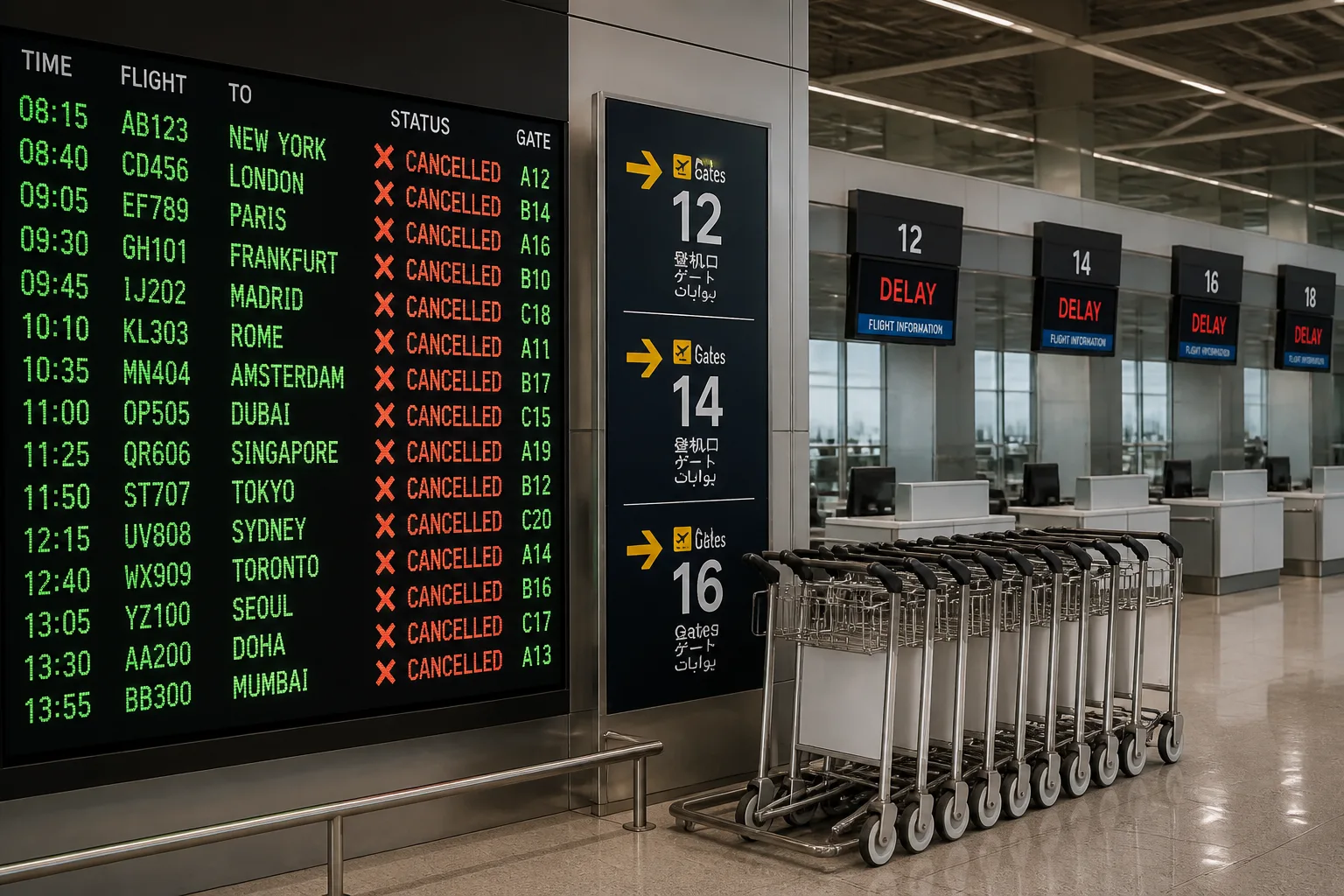
At Ben Gurion, Israir cancelled four scheduled services, a 4 % share of its daily operations, and delayed 44 flights, representing 53 % of its departures. El Al cancelled two flights, about 1 % of its schedule, and delayed 49 flights, a 28 % delay rate. In Sharjah, Air Arabia cancelled four flights, roughly 1 % of its scheduled services, and delayed 29 flights, a 13 % delay rate. The combined cancellations and delays disrupted a wide range of routes, from domestic connections within Israel to international flights to Europe, the Middle East and beyond.
The disruptions were attributed to operational challenges at the two airports. Ben Gurion’s airspace has experienced intermittent restrictions, while Sharjah’s airspace was affected by weather‑related conditions. Both airports are key gateways for regional and international travel, so even a small number of cancellations can ripple through passenger itineraries, causing missed connections and extended waiting times.
Passengers were advised to monitor their flight status through airline apps, email notifications and the airlines’ websites. Airlines were working to rebook affected passengers and to restore normal schedules. The Israel Airports Authority and the UAE Civil Aviation Authority were monitoring the situation and coordinating with the carriers.
The incident follows a pattern of operational instability at both airports. Earlier in June 2026, Ben Gurion recorded 122 delays and 15 cancellations across several carriers, including El Al, Lufthansa and United Airlines. In mid‑June, Air Arabia announced cancellations at Sharjah due to airspace closure and severe weather, affecting flights to Moscow, Cairo and other destinations.
Ben Gurion International Airport, located 20 km southeast of Tel Aviv, is Israel’s primary international gateway and a hub for El Al, Israir, Arkia and Sundor. In 2025 it handled 19.2 million passengers, making it one of the busiest airports in the Middle East. The airport’s security and operational protocols are among the most stringent in the region.
Sharjah International Airport serves as the main base for Air Arabia, which operates to 200 destinations across the Middle East, North Africa, the Indian subcontinent, Central Asia and Europe. The airport’s location in the UAE’s third emirate makes it a strategic hub for low‑cost carriers.
The cancellations and delays underscore the importance of flexibility for travellers. Airlines typically offer rebooking options and, in some jurisdictions, compensation for delays or cancellations that are within the carrier’s control. Passengers should keep contact information for their airline handy and check for updates before arriving at the airport.
While the airlines are restoring normal operations, the incidents highlight how quickly aviation schedules can change in the Middle East. The disruptions affected not only passengers but also airport staff, who had to manage increased traffic and provide assistance to stranded travellers.
In the days following the cancellations, both airports reported a gradual return to normal flight volumes. No further large‑scale cancellations were reported, and airlines confirmed that they were working to clear the backlog of delayed flights.
The situation remains fluid, and passengers are encouraged to stay informed through official airline channels and airport notices. The Israel Airports Authority and the UAE Civil Aviation Authority will continue to monitor the situation and provide updates as necessary.