Houthis Announce Closure of Bab al-Mandab Strait to Saudi Shipping, Raising Global Trade Concerns
Yemen’s Iran‑aligned Houthi militia declared on Monday, 20 July 2026, that it would shut the Bab al‑Mandab Strait to Saudi vessels under a newly imposed maritime embargo. The announcement follows a string of flare‑ups between the Houthis and Saudi Arabia, most notably a Saudi air strike on Sana’a airport that halted an Iranian‑backed Houthi delegation from returning to Tehran.
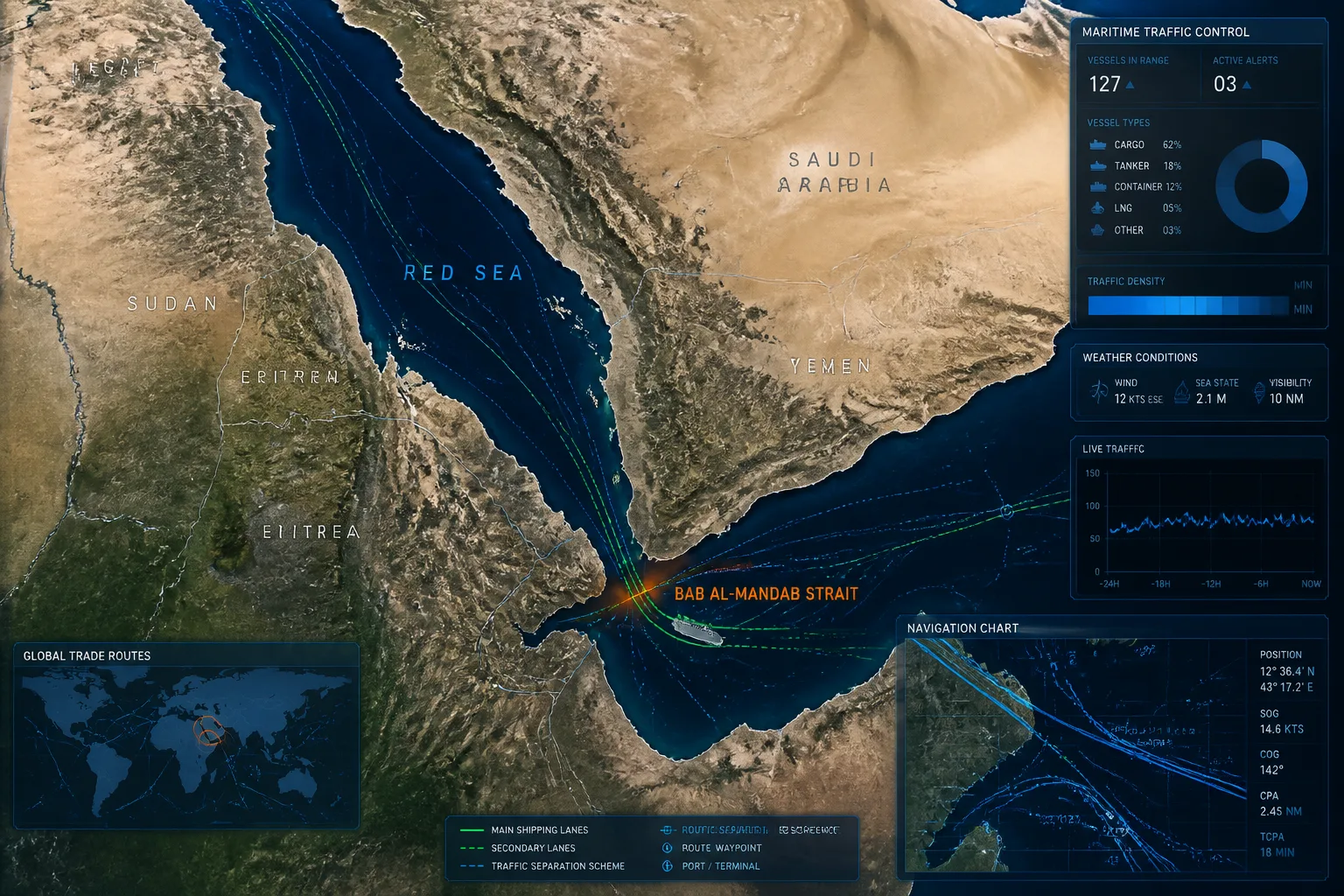
The Bab al‑Mandab, the narrow channel linking the Red Sea to the Gulf of Aden, is a vital artery for international trade. Alhurra reports that roughly 10 % to 12 % of global maritime traffic passes through the strait. If the Houthi blockade were enforced, oil tankers and cargo ships would be forced to detour around the Cape of Good Hope, adding days to transit times and inflating fuel costs.
Iran has been pressing the Houthis to block the strait for all oil tanker traffic, a tactic aimed at countering Saudi influence amid the 2026 Iran‑Saudi war that erupted in February following U.S.–Israeli airstrikes on Iranian officials. The Houthi move is part of a broader strategy to challenge Saudi dominance in the region.
The group’s history of targeting commercial shipping in the Red Sea—most notably during the Gaza war, when it fired on vessels for months—has already strained maritime routes. In the latest escalation, the Houthis claimed they were “strategically emboldened” by Iran’s perceived successes against the United States.
Saudi Arabia has responded by intensifying its campaign against the Houthis. The bombing of Sana’a airport, which prevented the Houthi delegation’s return flight, was described by Saudi officials as a necessary step to safeguard national security. The incident also marked the collapse of the informal 2022 truce that had largely halted cross‑border attacks.
While the Houthis can disrupt shipping, experts caution that a full blockade of the Bab al‑Mandab would require capabilities the group no longer possesses. Ibrahim Al‑Malek, a specialist in Middle Eastern strategic governance at Durham University, told Alhurra that the militia lacks the military, logistical and maritime control needed for a sustained closure.
Nonetheless, the announcement itself is likely to sow uncertainty in global markets. Mohammed Albasha, a Yemeni analyst speaking to Reuters, noted that even if no ships were attacked, the mere threat could disrupt shipping schedules and hike insurance premiums.
The potential closure would add a new layer of complexity to an already volatile Middle East conflict. The Strait of Hormuz, another key chokepoint, has faced intermittent threats since the early months of the Iran‑Saudi war. If both straits were blocked, the world would confront a significant disruption in oil supply routes.
At present, the Houthis have not yet taken action beyond the announcement. Saudi Arabia has not signaled a willingness to resume a broad war with the Houthis, and the international community remains divided on how to respond. The situation remains fluid, with the possibility of further escalation or diplomatic engagement.
Observers will monitor the Houthis’ next moves in the Bab al‑Mandab and any responses from Saudi Arabia, Iran and the global shipping community. The outcome will have implications not only for regional security but also for global energy markets and maritime trade.