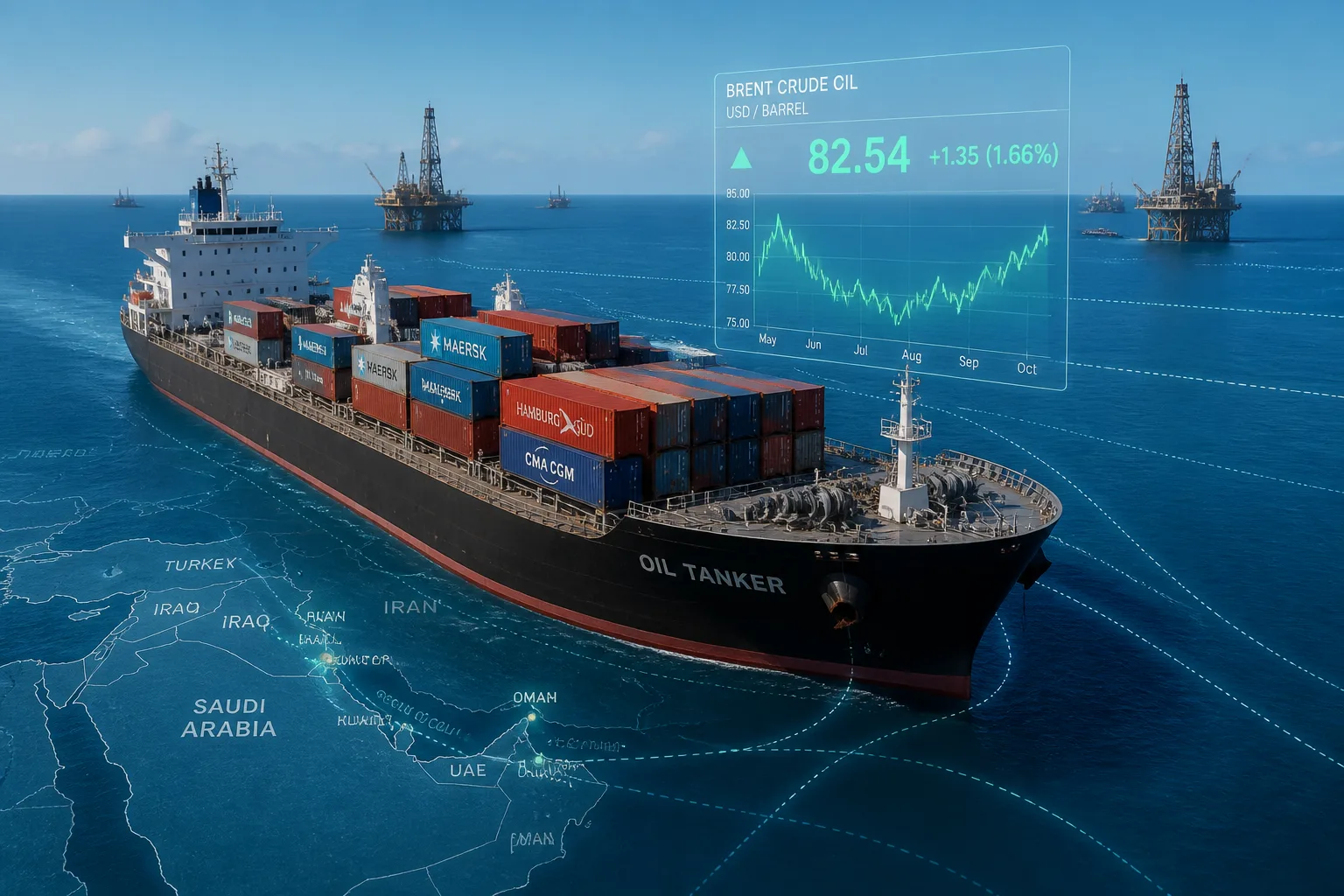
Oil Prices Surge to Six-Week Highs Amid Middle East Shipping Concerns
Oil prices climbed to their highest levels in nearly six weeks on Wednesday, driven by growing worries that U.S.–Iran hostilities and Yemen’s Houthi militia could disrupt key shipping lanes. Brent crude futures rose 3.12 % to $93.85 a barrel, while U.S. West Texas Intermediate (WTI) climbed 3.47 % to $87.27, according to Reuters.
The price rise followed a series of U.S. military strikes in Iran that the Pentagon said marked an 11th consecutive night of attacks. The same day, the Kuwaiti army reported that its air‑defence system had intercepted Iranian drones. These events intensified fears that the Strait of Hormuz, a vital conduit for global oil, could be closed or heavily mined.
At the same time, the Iran‑aligned Houthi militia in Yemen announced a new front in the conflict. The group threatened to target vessels carrying Saudi crude in the Bab el‑Mandeb strait and declared a naval blockade of Saudi Arabia. Traders noted that the Bab el‑Mandeb, which connects the Red Sea to the Gulf of Aden, has become an increasingly important route for Saudi exports as traffic through the Strait of Hormuz has fallen sharply since the U.S.–Iran ceasefire collapsed earlier this month.
Three Saudi tankers that had been loaded with crude for China and India made U‑turns in the Red Sea on Tuesday, opting to head toward the Suez Canal rather than risk the Yemeni coast after receiving the Houthi warning. Analysts say the diversion could tighten the physical market and pressure Saudi exports, further supporting the price surge.
Asian refiners are now seeking alternative routes. Several have shifted shipments from Saudi’s Red Sea port of Yanbu to the Suez Canal and around Africa to avoid the risk of Houthi attacks. The change in routing is expected to add logistical costs and could influence refining margins in the region.
U.S. inventory data published by the American Petroleum Institute shows that crude and distillate stocks rose last week, while gasoline inventories fell. The data precede official figures from the U.S. Energy Information Administration, which are expected later in the week.
The combination of heightened military activity, shipping threats, and inventory changes has kept global oil markets on edge. While the price increase is a short‑term reaction to immediate security concerns, market participants are monitoring the situation closely for any signs of a broader supply disruption.
The current environment underscores the sensitivity of Middle East shipping routes to geopolitical events. Any sustained interruption in the Strait of Hormuz or Bab el‑Mandeb could have cascading effects on global energy supply chains and fuel prices.
In the coming days, analysts will watch for official U.S. and Iranian statements, any further Houthi actions, and the release of EIA inventory data to gauge whether the market will stabilize or continue to react to regional tensions.