Idaho Gas Prices Rise Amid Middle East Tensions, Crude Oil Near $88 a Barrel
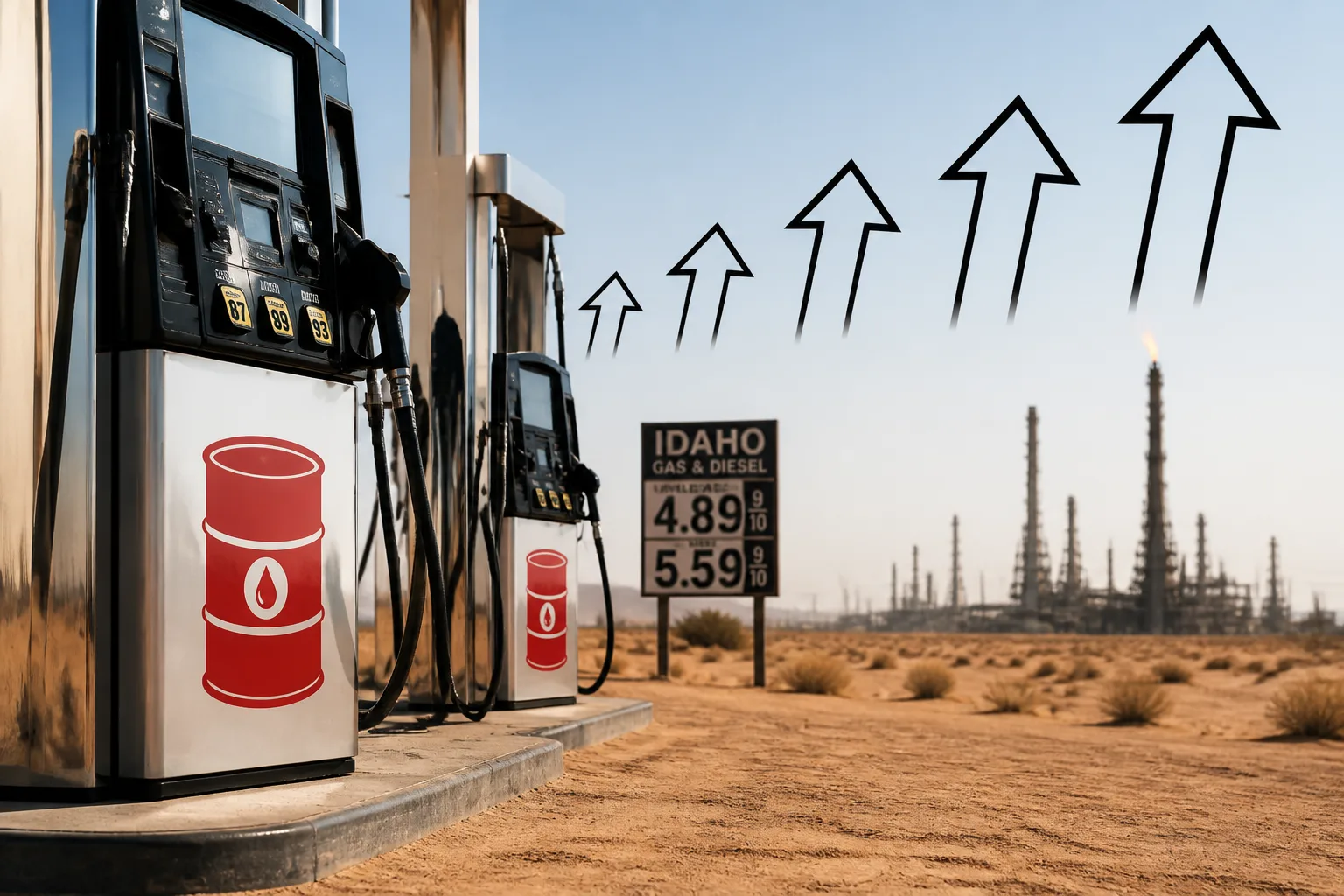
Gas prices in Idaho have climbed 18 cents per gallon from the previous week, bringing the state’s average to $4.23 per gallon, according to data released by the American Automobile Association (AAA). The increase reflects a broader rise in crude oil prices, which are now trading close to $88 a barrel.
The surge in oil prices is linked to escalating conflict in the Middle East. Houthi rebels in Yemen have announced a blockade of the Bab al‑Mandab Strait, a key maritime chokepoint that connects the Red Sea to the Gulf of Aden. The blockade has disrupted Saudi Arabian oil shipments that normally pass through the strait, forcing tankers to seek alternative routes such as the Mediterranean Sea. AAA notes that the detour could triple transit times for vessels.
The situation is compounded by ongoing tensions in the Strait of Hormuz, where U.S. and Iranian forces have been engaged in a conflict that began in February 2026. The combination of the Bab al‑Mandab blockade and the Hormuz dispute has increased uncertainty in the global oil market, leading to higher crude prices.
AAA’s press release on Friday stated that Idaho’s gas price increase is part of a national trend, with the average U.S. price at $4.10 per gallon—an increase of more than 90 cents from a year ago. Idaho now ranks as the 12th most expensive state for gasoline. The state’s price is higher than neighboring Utah and Wyoming but lower than Montana, Oregon, Nevada, and Washington. Washington’s average price is $5.09 per gallon, the third highest in the country.
The impact of the price rise is uneven across Idaho. In Boise, the average price is $4.22 per gallon, 7 cents above the average in Franklin, a city in eastern Idaho that sells gasoline at $4.15. AAA’s data show that the statewide average includes a mix of urban and rural stations, with some areas experiencing larger increases.
"The memorandum of understanding between the United States and Iran that briefly calmed the crude oil market is no longer in effect, which adds more uncertainty to the equation," said AAA Idaho public affairs director Matthew Conde. "In the short term, we could see more expensive crude and a period of higher prices at the pump."
The Houthi blockade is part of a broader pattern of disruptions to global oil flows. According to reports, the blockade has caused oil shipments through the Bab al‑Mandab to rise by 60 percent since the outbreak of the Iran war. The alternative Mediterranean route, while available, is less efficient and can delay tankers by up to three times their normal transit time.
The combination of the Houthi blockade and the ongoing U.S.–Iran conflict has led to a volatile oil market. Analysts note that any further escalation in the Middle East could trigger additional price swings, as global supply routes remain constrained.
The rise in gasoline prices has implications for consumers and businesses across Idaho. Higher fuel costs can increase transportation expenses for commuters, freight operators, and tourism operators, potentially affecting regional economic activity. The state’s energy policy makers are monitoring the situation closely to assess whether additional measures are needed to mitigate the impact on residents.
In summary, Idaho’s average gasoline price has risen to $4.23 per gallon, reflecting a broader increase in crude oil prices driven by Middle East tensions. The Houthi blockade of the Bab al‑Mandab Strait and the conflict in the Strait of Hormuz have disrupted key shipping routes, contributing to higher oil costs. The state’s fuel price increase is part of a national trend, with Idaho ranking as the 12th most expensive state for gasoline.
The situation remains fluid, and AAA will continue to track price changes as the global oil market responds to developments in the Middle East.