25th Anniversary of Sbarro Pizzeria Bombing Highlights Ongoing Palestinian-Israeli Conflict
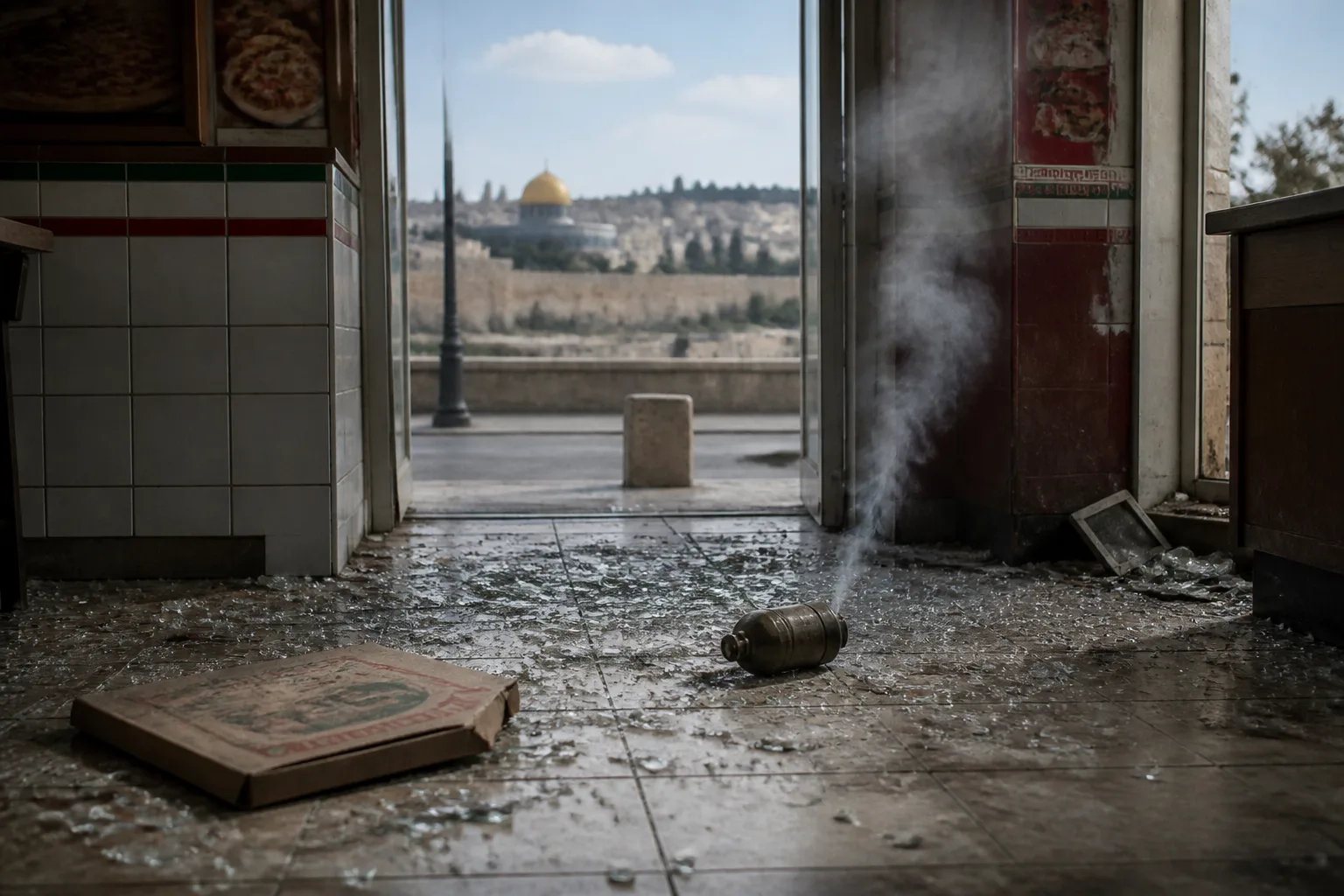
On 9 August 2001 a suicide bomber detonated a bomb inside the Sbarro pizzeria on King George Street in Jerusalem, killing 16 people—including eight children and a pregnant woman—and wounding 130 others. The attack, carried out by Hamas, remains one of the most‑remembered incidents of the Second Intifada, a period of intensified violence that lasted from 2000 to 2005.
The Second Intifada followed the collapse of the 2000 Camp David negotiations and saw a surge in Palestinian suicide bombings. According to the Israeli Ministry of Foreign Affairs, the uprising resulted in the deaths of roughly 1,000 Israelis and 3,000 Palestinians, with 130 Israelis and 130 Palestinians wounded in the Sbarro attack alone. Other high‑profile attacks during the same period included the Dolphinarium discotheque bombing in July 2001, which killed 21 Israelis, and the Moment Café bombing in March 2002, which killed 11.
The roots of the violence are often traced to the Oslo Accords of 1993 and 1995, which established the Palestinian Authority and granted limited self‑governance in parts of the West Bank and Gaza. While the accords were intended to pave the way for a two‑state solution, critics argue that the accords also created an environment in which militant groups such as Hamas and the Al‑Aqsa Martyrs’ Brigade could operate. In 2001, Israeli Prime Minister Ehud Barak offered a revised peace proposal that included an independent Palestinian state in Gaza and a shared Jerusalem; the offer was rejected by Palestinian President Yasser Arafat, after which Hamas intensified its campaign of suicide bombings.
A key figure in the Sbarro bombing was Ahlam Tamimi, a 20‑year‑old Jordanian university student who scouted the pizzeria and guided the bomber to the site. Tamimi was convicted by an Israeli military tribunal and received multiple life sentences. In 2011, she was released as part of a prisoner exchange that freed Israeli soldier Gilad Shalit, who had been held by Hamas for 23 months. Tamimi now resides in Jordan, hosts a talk show on a Hamas‑affiliated channel, and has not been extradited to the United States or Israel. Jordan has repeatedly refused U.S. requests for her extradition, citing political considerations and the country's relationship with Hamas.
The 25th anniversary of the bombing has prompted reflection on the broader peace process. In 2026, former U.S. President Donald Trump announced that his Board of Peace had reached an agreement to disarm Hamas and withdraw Israeli forces from Gaza. Critics, including the author of a recent article in the Jewish News Syndicate, argue that such optimism ignores the historical pattern of failed negotiations and the continued support of Hamas by regional actors such as Iran and Qatar. They contend that the Sbarro attack serves as a reminder that attempts to appease groups whose stated goal is the destruction of Israel have historically failed.
Today, the situation remains unresolved. Ahlam Tamimi remains free in Jordan, while U.S. and Israeli officials continue to press for her extradition. The Gaza Strip remains under Israeli blockade, and the region continues to experience sporadic violence. The 25th anniversary of the Sbarro bombing underscores the enduring impact of the Second Intifada and the challenges that remain in achieving a lasting peace in the Middle East.