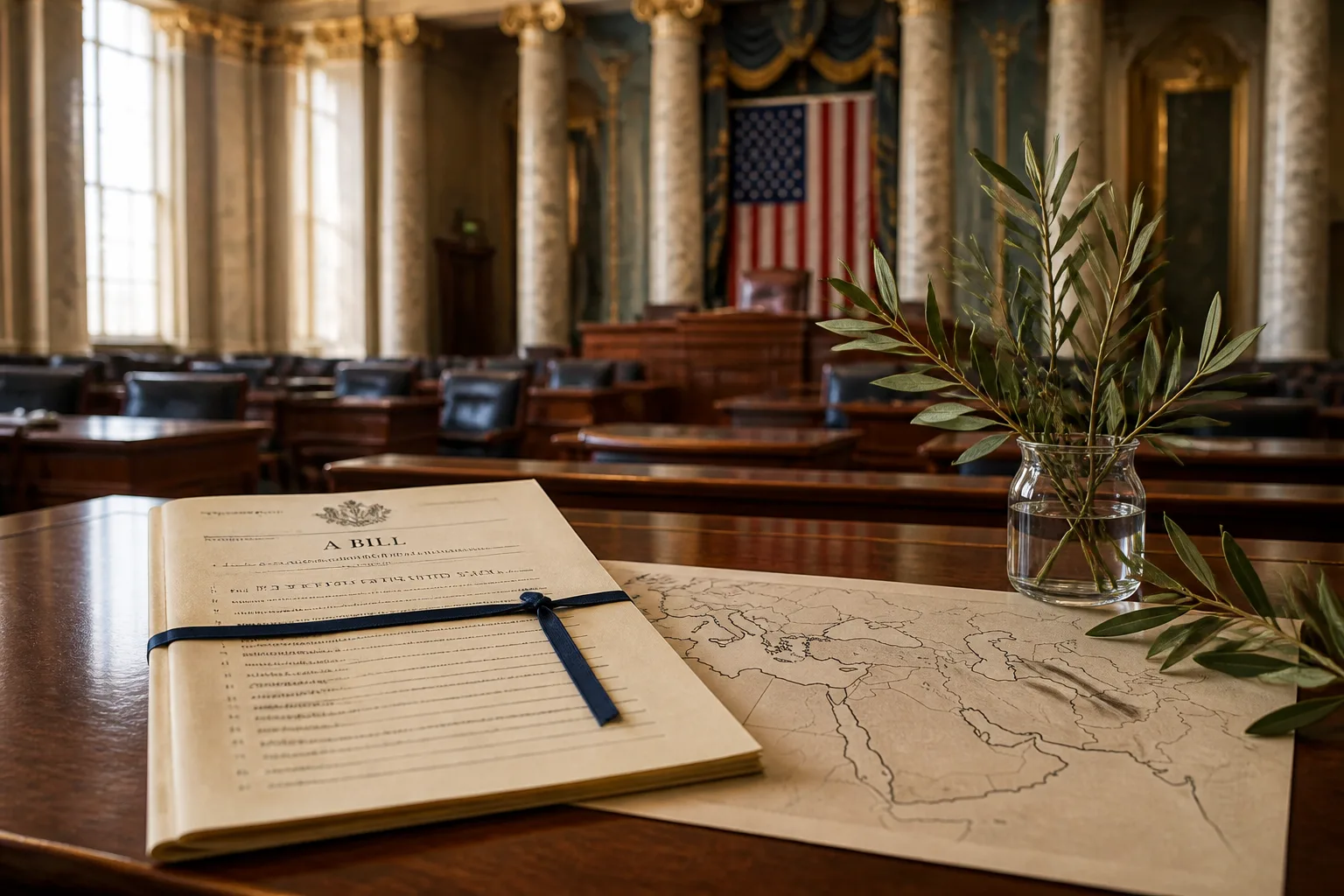
Senate Introduces Bill to Repeal 1957 Middle-East Military Authorization
A new bipartisan bill seeks to finally erase a Cold‑War‑era military authorization that has never been invoked but still sits on the books. Senators Mike Lee (R‑UT) and Tim Kaine (D‑VA) are pushing the measure, arguing that outdated authorizations should not serve as a blank check for future conflicts.
"Outdated congressional authorizations for military action should not sit on the books forever as a blank check," Lee said. "This bill will clean the slate by repealing a Cold‑War‑era AUMF in the Middle East that is no longer necessary." Kaine echoed the sentiment, adding that the 1957 AUMF "serves no purpose and runs the risk of potential misuse," and stressing the need to reaffirm Congress’s constitutional role in deciding whether the United States should go to war.
The 1957 Authorization for Use of Military Force (AUMF) was enacted under President Dwight D. Eisenhower to counter Soviet influence in the Middle East during the Cold War. It granted the president authority to deploy armed forces in the region if deemed necessary to protect U.S. allies from communist aggression. Although the resolution has never been invoked, it remains the longest‑active AUMF in U.S. history.
Under U.S. law, Congress holds the sole power to declare war, but AUMFs provide a narrower framework that allows the president to use force without a formal declaration. Because AUMFs do not expire automatically, they can remain in effect long after the conflict that prompted them has ended. This has prompted calls for periodic review and, when appropriate, repeal.
The Senate bill follows a similar effort in the House, where a resolution to repeal the 1957 AUMF passed in 2021. The House vote was largely bipartisan, with 366 members in favor and 46 opposed. The Senate’s proposal seeks to replicate that outcome and ensure that the authorization is formally removed from the statute books.
Repealing the 1957 AUMF would not affect other U.S. military authorizations that have been invoked in recent decades, such as the 2001 AUMF that authorized the war in Afghanistan or the 2002 AUMF that authorized the Iraq War. Those authorizations have been addressed separately in defense appropriations bills.
The move to repeal the 1957 AUMF is part of a broader trend of reexamining long‑standing military authorizations. In 2025, the National Defense Authorization Act for Fiscal Year 2026 included language to repeal the 1991 AUMF that authorized the Gulf War. The inclusion of repeal language in defense bills has increased the likelihood that such measures will pass.
The bill’s sponsors argue that removing obsolete authorizations limits the president’s ability to deploy troops without congressional approval and reduces the risk of future conflicts being justified under outdated legal frameworks. They also contend that the repeal would reinforce the principle that the decision to engage in armed conflict rests with Congress.
The Senate bill has not yet been assigned to a committee. If it moves forward, it will likely be considered by the Senate Foreign Relations Committee, which has jurisdiction over matters related to U.S. foreign policy and military authorizations.
The proposal has attracted support from both sides of the aisle. While the Senate majority is Republican, the bill’s bipartisan nature reflects a shared concern about maintaining congressional oversight of military action. The Democratic caucus has expressed interest in ensuring that any repeal is accompanied by clear sunset provisions for future authorizations.
The current political context includes ongoing U.S. military engagements in the Middle East, including operations in Iraq and Syria. Critics of the 1957 AUMF argue that its continued existence could be cited to justify new deployments, while supporters of the repeal maintain that the resolution is a relic of a different era.
At present, the bill remains in the early stages of the legislative process. Its passage would mark the first time the 1957 Middle‑East AUMF has been formally repealed, ending a Cold‑War‑era authorization that has never been used but has remained on the books for more than six decades.
The next steps for the bill will depend on committee scheduling and the broader legislative agenda. If it passes both chambers, it will be signed into law by the president, thereby removing the 1957 authorization from U.S. statutes and reinforcing congressional authority over future military engagements.