Oil Prices Fall as Trump Announces Iran Talks; Yen Supported by US-Japan Intervention
Oil prices tumbled on Monday, August 3, after President Donald Trump announced that new negotiations with Iran would begin that afternoon. The move followed a brief threat of a large‑scale strike on Iranian targets, a threat Trump had withdrawn on Saturday.
On Air Force One, Trump outlined the agenda: the Strait of Hormuz and Iran’s nuclear programme. He did not reveal the venue or the parties involved.
Iran’s foreign ministry said it was close to a deal with Oman to create a new route through the strait. Tehran has long insisted that shipping follow a path hugging its coast, a dispute that has kept the waterway at the heart of regional tensions.
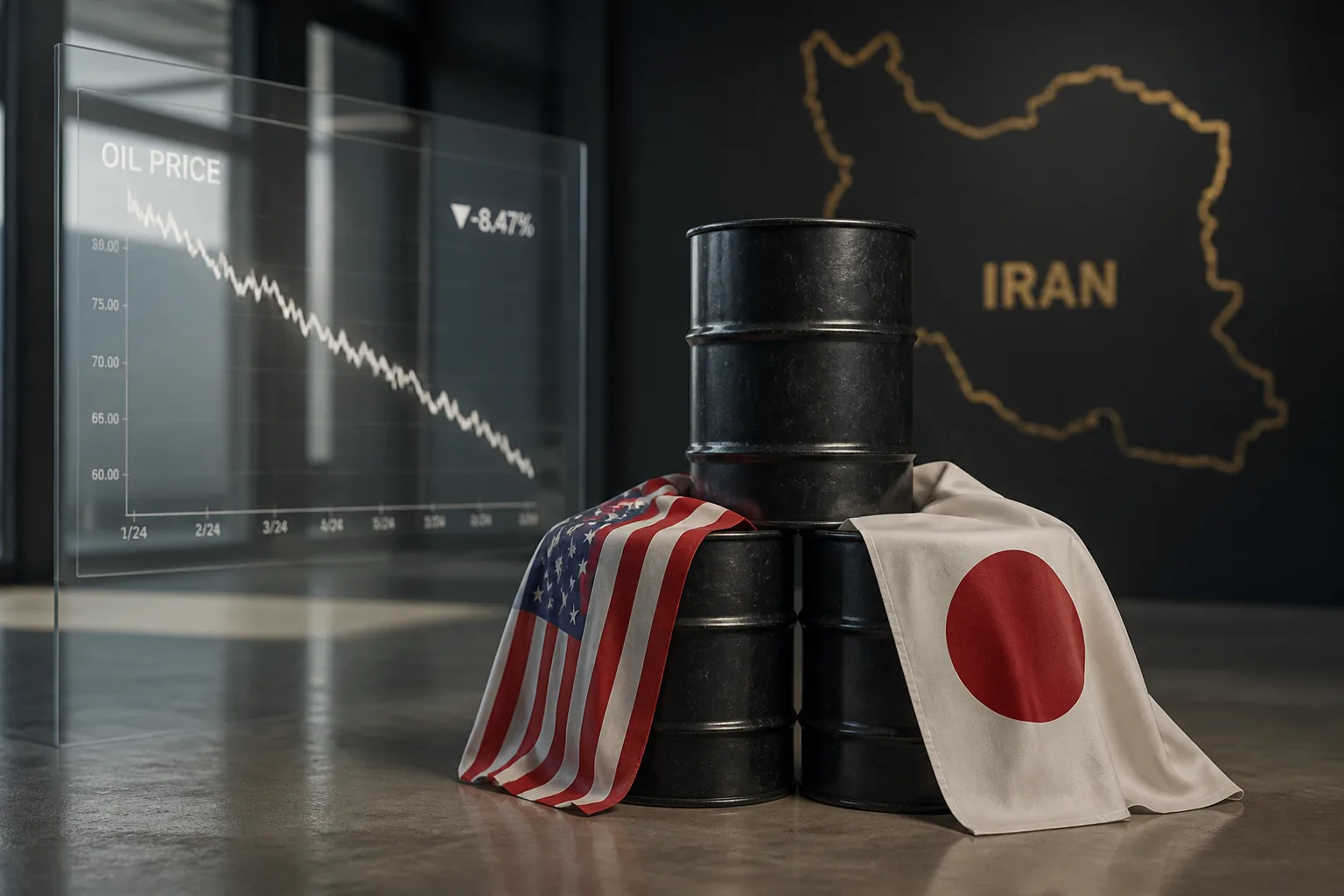
The market reacted swiftly. Brent crude fell more than 5 % at one point, and U.S. West Texas Intermediate slipped below $70 a barrel for the first time since early June. The decline was reinforced by an August 2 OPEC+ decision to raise production by 188,000 barrels per day from September, completing the group’s plan to restore output after years of cuts.
The production increase involves Saudi Arabia, Russia and five other members—Iraq, Kuwait, Kazakhstan, Algeria and Oman—adding supply that is expected to support the price decline.
In currency markets, the yen extended gains after U.S. and Japanese officials confirmed a joint intervention to support the currency. The U.S. Treasury and Japan’s Ministry of Finance coordinated a buying operation, the first such intervention in nearly three decades. The yen rose to 155.23 per dollar, its strongest level since May.
Finance Minister Satsuki Katayama said the intervention “countered excessive volatility and disorderly movements” in the yen. Treasury Secretary Scott Bessent posted on X that the United States would not hesitate to participate in further joint interventions, citing economic security and the U.S.–Japan alliance.
The yen’s rebound was welcomed by investors, but Asian equity markets remained muted. South Korea’s KOSPI fell 5.1 % at the start of the week after a record 17.9 % rally on Friday driven by gains in chipmakers SK Hynix and Samsung. Both companies lost more than 8 % on Monday.
Tokyo, Shanghai and Singapore also posted losses, while Hong Kong, Sydney, Mumbai, Taipei, Bangkok, Manila, Wellington and Jakarta saw modest gains. European markets – London, Paris and Frankfurt – rose modestly.
The mixed performance came despite a strong day on Wall Street, where Amazon surged more than 15 % after reporting forecast‑breaking quarterly profits and revenue. Microsoft also posted strong results, adding to investor confidence in artificial‑intelligence investments.
These events underscore the interconnectedness of global markets. Oil price movements influence currency values, which in turn affect equity markets across the world. The U.S. and Japan’s joint yen intervention signals a willingness to intervene in currency markets to support allies, while the OPEC+ production increase reflects a coordinated effort to stabilize the oil market.
The ongoing negotiations between the United States and Iran remain a key uncertainty for the region. If talks succeed, they could ease tensions around the Strait of Hormuz and potentially lift pressure on global energy supplies. Market participants and policymakers will watch the outcome closely.
At present, oil prices remain below the $70 a barrel threshold, the yen has strengthened, and Asian equities are recovering from a sharp decline. The next few days will determine whether the new Iran talks and the OPEC+ production increase can bring further stability to the markets.