Yesh Atids Vladimir Beliak Outlines Coalition Strategy and Hostage-Compensation Law Ahead of 2026 Election
As Israel readies for the 27 October 2026 legislative election, Yesh Atid member Vladimir Beliak has laid out a clear blueprint for the next government and a landmark law that boosts financial support for hostages released from Gaza.
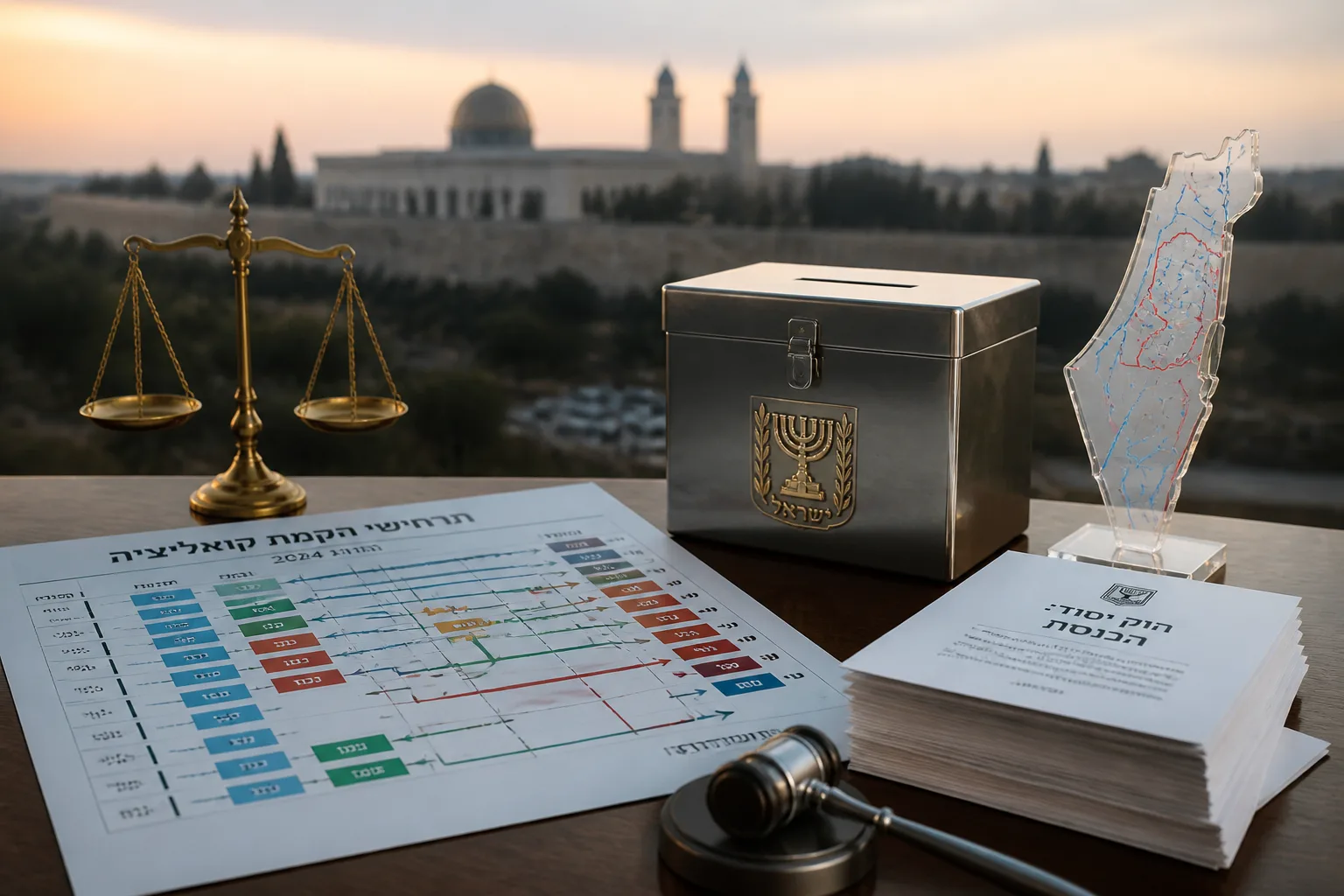
Beliak insists that the next coalition will be built exclusively by Zionist parties and will need 63 to 64 of the 120 Knesset seats. He says that only a “strictly Zionist” alliance can rebuild the country, a stance that echoes Yesh Atid’s broader strategy to keep the coalition free of Arab and Haredi parties.
The comments arrive amid the buildup to the election. In April, former prime ministers Naftali Bennett and Yair Lapid announced the Together (Beyachad) alliance, combining Bennett’s Bennett 2026 faction with Yesh Atid. A recent Kan News poll projects the alliance to win just 13 seats, a decline from earlier estimates. The alliance follows a rotation agreement that saw Bennett serve as prime minister until 2023 and Lapid take the helm in 2025.
During the 24th Knesset (2021‑22), the Bennett‑Lapid coalition included the Arab‑majority Ra’am party—a fact Beliak says will not recur. He stressed that Arab parties and Haredi factions will not join the next government.
Born in Kemerovo, Russia, Beliak immigrated to Israel in 1998 and joined Yesh Atid shortly after its founding by Lapid in 2012. He has chaired the Knesset Caucus for Self‑Employed Individuals and Small and Medium‑Sized Businesses and the Caucus for Immigrants from the Former Soviet Union.
The most significant legislative achievement Beliak cites is a bill that raises monthly compensation for hostages released from Gaza. In the first release deal in November 2023, hostages received only 1,300 shekels (about US$425) per month. In 2024, Beliak, together with MKs Gilad Kariv (The Democrats) and Yitzhak Kroizer (Otzma Yehudit), passed a law that increases the monthly payment to 9,000 shekels (around US$2,950) for life and provides a one‑time grant of 60,000 shekels (about US$19,700). The package also allows recipients to apply for disabled status and related benefits.
"The new compensation scheme was a response to the ‘real needs’ of hostages and that it was ‘never enough, but at least we did what we could,’" Beliak said. He added that the law now offers a more comprehensive safety net for those who endured captivity.
In his role on the Finance Committee, Beliak worked to increase wartime compensation for small businesses. He helped secure an increase in the budget from 4.5 billion shekels (US$1.475 billion) to 17 billion shekels (US$5.575 billion). He noted that many businesses were still recovering from the COVID‑19 pandemic and that the new funds were intended to help them resume full‑time operations.
Beliak also highlighted his work on immigrant student programs and on combating telephone scams that target elderly newcomers. As a member of the Committee for Immigration, Absorption and Diaspora Affairs, he has sought to prevent cuts to programs for immigrant students.
Security remains a priority for Beliak. He said that Hamas still controls parts of Gaza, that a ceasefire in the north is fragile, and that Hezbollah has not been disarmed. He added that Iran’s nuclear program and ballistic missile capabilities remain unresolved, and that Israel’s influence on these matters is limited.
Looking ahead to the election, Beliak said voters will focus on whether to establish a state commission of inquiry into the 7 October attacks, the cost of living, the education system, and the rehabilitation of Israeli society. He downplayed the relevance of a two‑state solution, arguing that a Palestinian state is unlikely in the near future and that security and regional alliances should take precedence.
Beliak also mentioned the possibility of an agreement with Saudi Arabia and the expansion of the Abraham Accords as part of Israel’s broader diplomatic strategy.
In summary, Beliak presents Yesh Atid as a centrist party that will form a strictly Zionist coalition, has championed significant compensation for hostages and small businesses, and emphasizes security and regional diplomacy as key issues for the upcoming election.