Cleveland Clinic Abu Dhabi Introduces Middle Easts First Robot-Assisted Bronchoscopy Platform
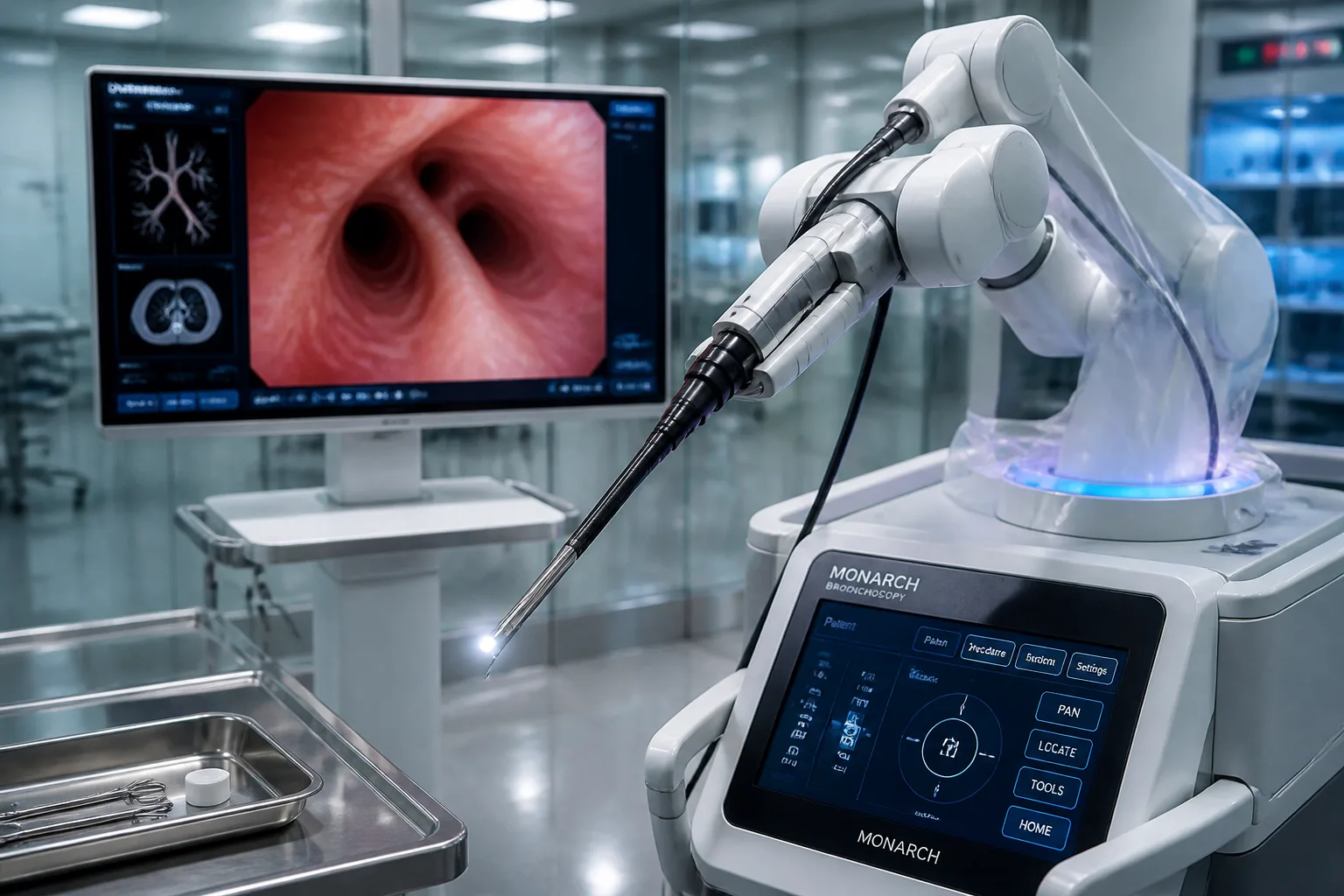
Cleveland Clinic Abu Dhabi (CCAD) announced on 28 July 2026 that it has deployed the MONARCH™ robotic bronchoscopy system, the first of its kind in the Middle East. The new platform allows physicians to guide a flexible endoscope with robotic precision, enabling access to the smallest lung nodules that are often difficult to reach with conventional bronchoscopy. The introduction of the technology is part of CCAD’s broader effort to expand precision care across the region.
The MONARCH system, developed by Johnson & Johnson MedTech, uses a robotic arm to hold and steer the bronchoscope while a pulmonologist controls the movement from a separate console. The design provides enhanced stability and accuracy compared with manual navigation, which can improve the quality of tissue samples taken from peripheral lung lesions. According to the hospital’s press release, the procedure is performed under general anaesthesia and typically lasts between 30 and 75 minutes.
The minimally invasive nature of the robot‑assisted bronchoscopy makes it suitable for a range of diagnostic indications. CCAD reports that the system can be used to biopsy lung nodules that may represent early lung cancer, benign growths, or infections such as tuberculosis. It can also sample tissue from inflammatory lung diseases. The ability to reach small, deep‑lying nodules is expected to increase the diagnostic yield for patients who would otherwise require more invasive surgical biopsies.
Beyond diagnosis, the hospital’s statement outlines potential future applications of the platform. In the long term, the MONARCH system could support robotic surgical interventions for lung cancer, including targeted ablation procedures that use heat or cold therapy to destroy tumours. The technology could also facilitate the delivery of therapeutic agents directly to nodules, a capability that is still under investigation in other centres worldwide.
CCAD, which opened in May 2015 and operates a 411‑bed campus in Abu Dhabi, is a designated Centre of Excellence for adult cardiac surgery, stroke, and multi‑organ transplants. The hospital has a history of adopting advanced medical technologies, and the introduction of the MONARCH platform aligns with its mission to provide world‑class care. The Middle East has a high burden of lung cancer, and early detection is a priority for regional health authorities. By offering a less invasive, more precise diagnostic option, CCAD aims to improve patient outcomes and reduce the need for surgical biopsies.
The deployment of the MONARCH system also reflects a broader trend of medical technology transfer to the Gulf region. Johnson & Johnson MedTech announced the launch of the platform in the Middle East in a joint statement with CCAD, noting that the system had previously been approved in other high‑burden markets. The partnership demonstrates the growing collaboration between international medical device manufacturers and regional hospitals to bring cutting‑edge solutions to local patients.
At present, CCAD has performed its first robot‑assisted bronchoscopy case on a patient with a peripheral lung nodule. The hospital has not yet released detailed clinical outcomes, but the press release indicates that the procedure was completed successfully within the expected time frame. The next steps involve expanding the use of the platform to additional patients and integrating the technology into CCAD’s existing pulmonary diagnostic pathways. The hospital also plans to monitor procedural data to assess diagnostic yield and safety outcomes over time.
In summary, Cleveland Clinic Abu Dhabi’s introduction of the MONARCH robotic bronchoscopy platform marks the first deployment of this technology in the Middle East. The system offers a minimally invasive, precise method for accessing small lung nodules, with potential applications that extend beyond diagnosis to future therapeutic interventions. The hospital’s move is part of a broader effort to enhance precision medicine in the region and to provide patients with earlier, more accurate detection of lung disease.