Airlines Extend Middle East Flight Suspensions Amid Ongoing Airspace Restrictions
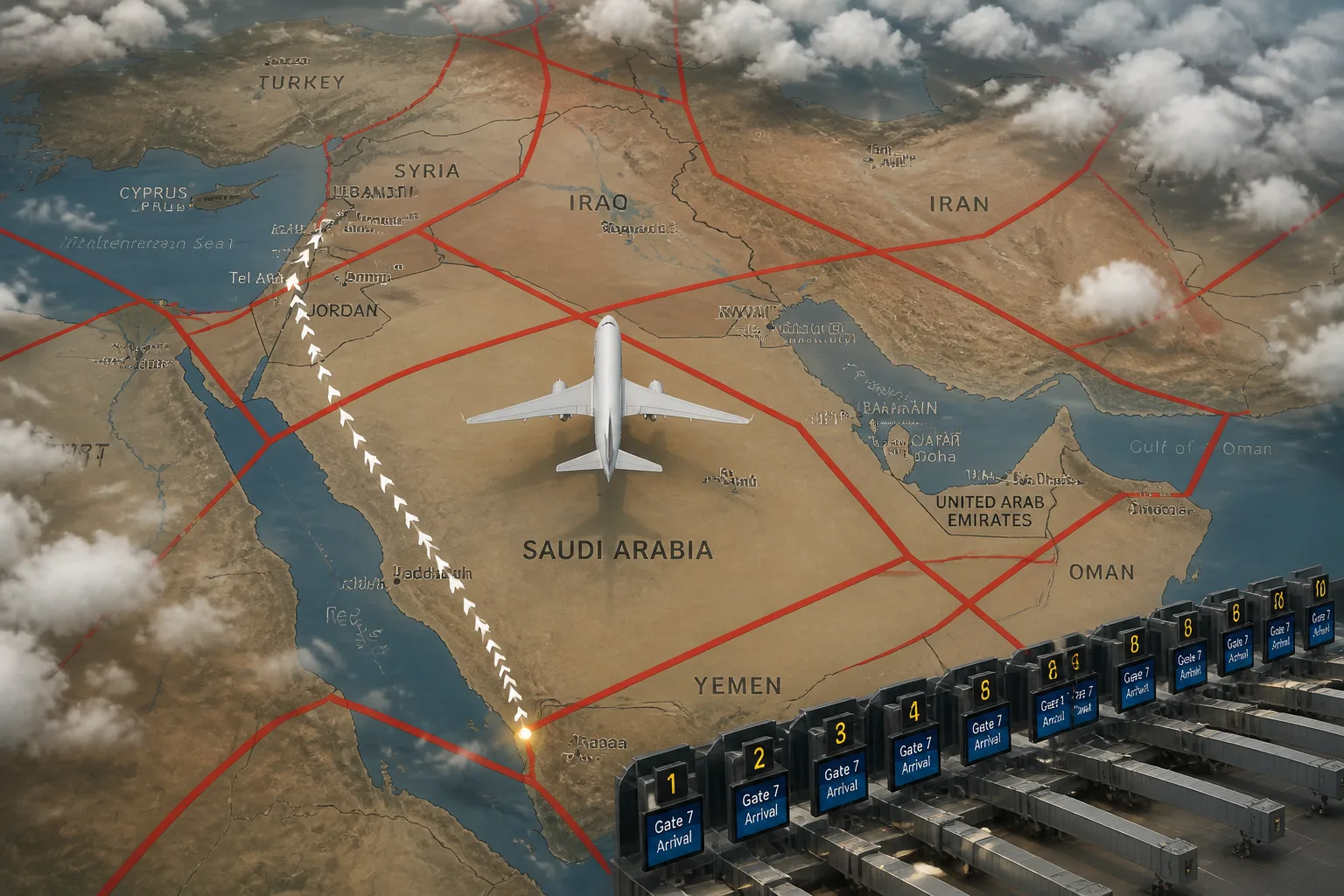
In the midst of persistent geopolitical tensions and frequent airspace closures across the Middle East, a broad array of international carriers have extended or modified their flight schedules to the region. The most affected routes run to Dubai, Riyadh, Tel Aviv, Beirut, Amman, and several Gulf states, with many airlines delaying their return until late 2026 or early 2027.
Emirates, the UAE’s flag‑carrier, has pushed back the resumption of its Dubai‑to‑Bahrain and Dubai‑to‑Kuwait services beyond the originally announced cut‑off of August 6. The latest timetable shows no Emirates flights to either Bahrain or Kuwait until August 11. Prior to the conflict, the airline operated three daily flights to Bahrain (EK 835, EK 837, EK 839) and four daily flights to Kuwait (EK 853, EK 855, EK 857, EK 859). The carrier’s website notes that only Emirates‑operated flights are displayed and urges passengers to consult codeshare partners for connecting services.
Air Canada has postponed the restart of its nonstop Dubai and Tel Aviv routes until mid‑January 2027. The carrier advises passengers affected by cancellations to check directly for rebooking or refund options, adding that schedules will continue to adjust as regional conditions evolve. In a statement on its website, the airline cautioned travelers not to head to the airport unless they have a confirmed flight with another carrier.
European carriers are also extending suspensions. KLM has halted flights to Riyadh, Dammam, and Dubai until September 6, citing an inability to resume its regular schedule amid uncertain operational conditions. Air France has suspended Riyadh services until August 14 and Dubai and Beirut flights until August 18, adding that resumption will depend on a security assessment. Singapore Airlines postponed the resumption of its Dubai service from the originally planned August 2 to October 24, offering affected passengers alternative flights or refunds. Its low‑cost subsidiary, Scoot, has suspended Singapore‑to‑Jeddah flights until September 12.
Turkish Airlines has restored services to Abu Dhabi, Dubai, Damascus, Beirut, and Amman but maintains a suspension of flights to Iran. The carrier warned of potential further disruptions due to the latest escalation, noting that some flights to and from Iran and the surrounding region have been cancelled and that the situation is being monitored in real time.
Philippine Airlines resumed Manila‑to‑Doha flights but keeps Dubai services suspended until October 2, announcing that it will restore full capacity as conditions allow. British Airways has delayed its phased return to the Middle East, originally slated for July 1, and now keeps Dubai, Tel Aviv, Bahrain, and Amman flights suspended until October 25. The airline also reduced daily frequencies on other routes, cutting Doha services to once a day from August 1 and halving Riyadh flights from August 8.
Kazakhstan’s national carrier, Air Astana, has suspended Almaty and Astana‑to‑Dubai flights until August 31, citing the deteriorating situation in the Strait of Hormuz and the wider Gulf area. Passengers are offered full refunds or rebooking to other destinations operated by the airline.
Finnair extended its Helsinki‑to‑Dubai suspension until October 24 and will keep Doha services suspended for the winter season on commercial grounds. The carrier will reroute affected passengers, primarily on Qatar Airways‑operated flights.
Cathay Pacific has extended its Dubai and Riyadh suspensions until October 25 and October 26, respectively, after an earlier planned resumption on September 1. The Hong Kong carrier will offer rebooking, rerouting, or refunds to affected travelers.
The Lufthansa Group’s subsidiaries—Austrian Airlines, Lufthansa, Swiss, and Brussels Airlines—have varied responses. While Tel Aviv services have resumed for Austrian, Lufthansa, and Swiss, Brussels Airlines remains suspended. Dubai services for Lufthansa and Swiss are paused until September 13, and all carriers are on hold for Abu Dhabi, Amman, Beirut, Dammam, Riyadh, Erbil, Muscat, and Tehran until October 24.
Italy’s Alitalia suspended Riyadh flights until September 15 and Dubai services until October 24, allowing passengers to rebook or request refunds. United Airlines continues to face disruptions on Dubai and Tel Aviv routes, offering rebooking or refunds for cancellations until September 7. American Airlines has updated its travel alerts for passengers flying to or through parts of the Middle East, including Tel Aviv and Doha, and is allowing one‑time fee‑free changes for tickets purchased by March 28 for travel between February 28 and January 6 2027.
IndiGo, which operates Gulf routes from New Delhi, Mumbai, and Bengaluru, warned passengers of potential schedule changes due to the evolving situation, advising travelers to check flight status before heading to the airport.
The cumulative effect of these adjustments is a significant reduction in connectivity between North America, Europe, and the Middle East, with many carriers prioritising safety and operational feasibility over service continuity. Airlines continue to monitor airspace closures, particularly over Iran, Iraq, Israel, and the Strait of Hormuz, and will modify schedules as the security environment evolves. Passengers are encouraged to consult their airline’s website or customer service for the most current information and available options.