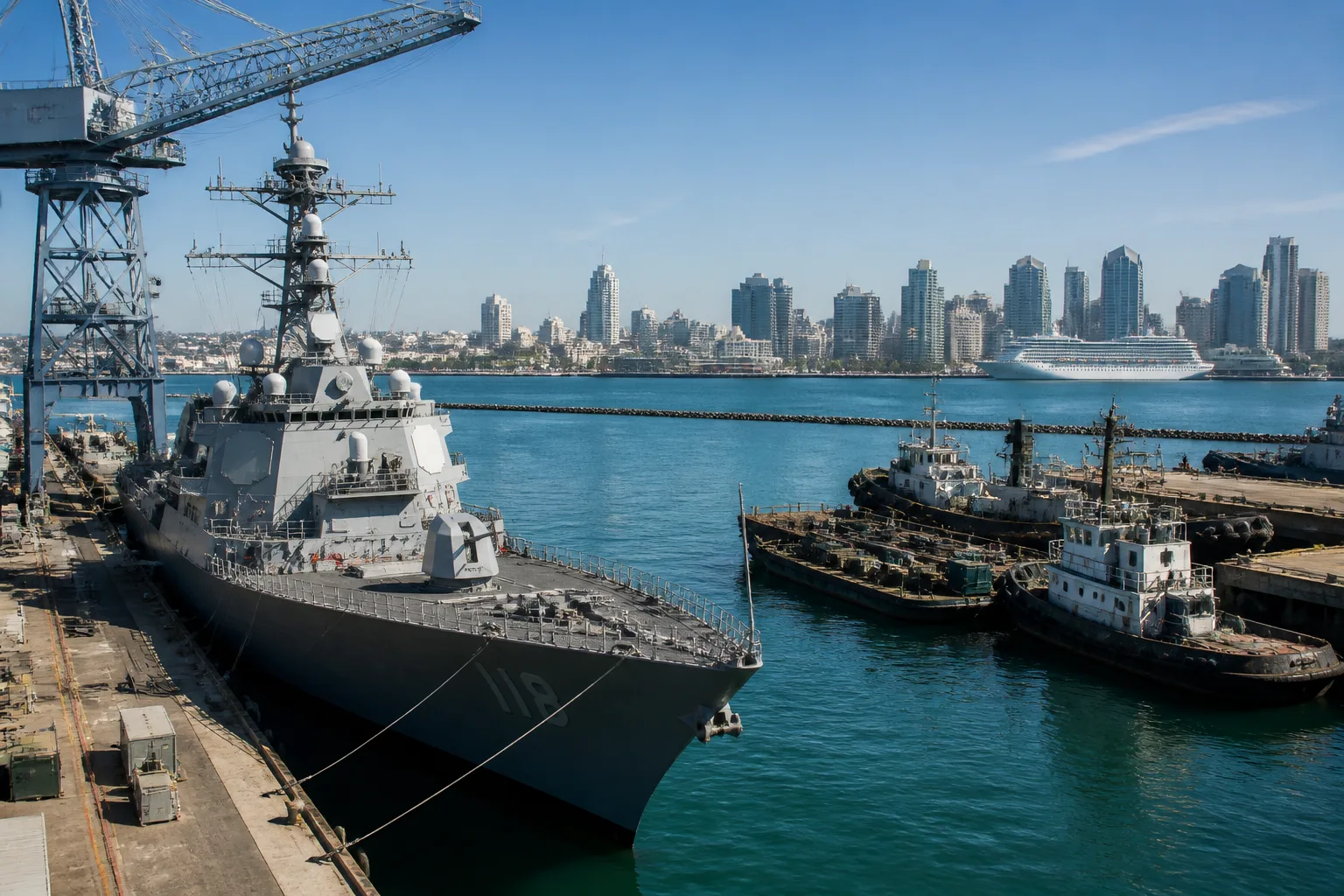
USS Pinckney Returns to San Diego After Nine-Month Deployment in Indo-Pacific and Middle East
On 9 August 2026, the Arleigh Burke‑class guided‑missile destroyer USS Pinckney (DDG‑91) docked at Naval Base San Diego, bringing home a nine‑month tour that stretched from the Indo‑Pacific to the Persian Gulf. The ship’s arrival marked the end of a deployment that blended routine deterrence with active combat support.
Pinckney set sail from San Diego on 25 November 2025, accompanied by an air wing detachment from Helicopter Maritime Strike Squadron (HSM) 37. During the first leg of its journey, the destroyer operated within the U.S. 7th Fleet’s area of responsibility before turning eastward to join the U.S. 5th Fleet, thereby supporting U.S. Central Command (CENTCOM) missions in the Persian Gulf.
A highlight of the cruise was a port visit to Singapore in February 2026. While anchored in the city-state, Pinckney performed a forward‑location ship‑repair and maintenance exercise that showcased the crew’s ability to conduct complex maintenance away from home ports. The visit also facilitated high‑level meetings with the U.S. Ambassador to Singapore, the Republic of Singapore Navy Commander of the First Flotilla, and the U.S. Navy Commander of Task Force 76.
In the Middle East, the destroyer joined CENTCOM joint forces during Operation Epic Fury, the U.S. campaign launched in response to the 28 February 2026 escalation with Iran. According to CENTCOM releases, Pinckney and HSM‑37 carried out precision maritime interdictions as part of the U.S. naval blockade of Iranian ports. Eleven commercial vessels were compelled to comply with CENTCOM directives.
"Pinckney’s Firewalkers answered every mission with professionalism, resilience, and unwavering commitment," said Cmdr. Timothy DeVall, the ship’s commanding officer. "Whether operating in the Indo‑Pacific or supporting combat operations in the Middle East, our Sailors consistently demonstrated the readiness and adaptability required to execute our mission. I couldn’t be prouder of what this team accomplished."
Over the course of the deployment, Pinckney steamed more than 48,000 nautical miles across the U.S. 3rd, 7th and 5th Fleets. It logged 534 flight hours, completed 24 replenishment‑at‑sea operations and transited five strategic waterways.
The U.S. 3rd Fleet, which leads naval forces in the Atlantic and European theaters, provided realistic training and operational support for Pinckney’s missions. The 7th Fleet, headquartered in Yokosuka, Japan, is the largest forward‑deployed U.S. fleet and is responsible for maintaining freedom of navigation in the Indo‑Pacific. The 5th Fleet, based in Bahrain, oversees operations in the Persian Gulf, Red Sea, Arabian Sea and parts of the Indian Ocean.
Pinckney is an Arleigh Burke‑class destroyer of the Flight IIA variant, equipped with the Aegis combat system and the AN/SPY‑1D(V) littoral warfare radar. The ship was commissioned in 2004 and has since served in multiple carrier strike groups and regional security operations.
The deployment occurred during a period of heightened tension in the Middle East. The U.S. naval blockade of Iranian ports began on 13 April 2026, following failed diplomatic talks. The blockade, implemented by CENTCOM, aimed to restrict maritime traffic to and from Iranian ports and to enforce sanctions.
Pinckney’s return to San Diego marks the end of a deployment that combined traditional naval deterrence with active participation in a large‑scale military campaign. The ship’s operations in both the Indo‑Pacific and the Middle East illustrate the U.S. Navy’s capacity to project power across multiple theaters while maintaining readiness for rapid response.
The U.S. Navy will likely schedule a post‑deployment inspection and maintenance period before the next deployment. No further operational details have been released at this time.