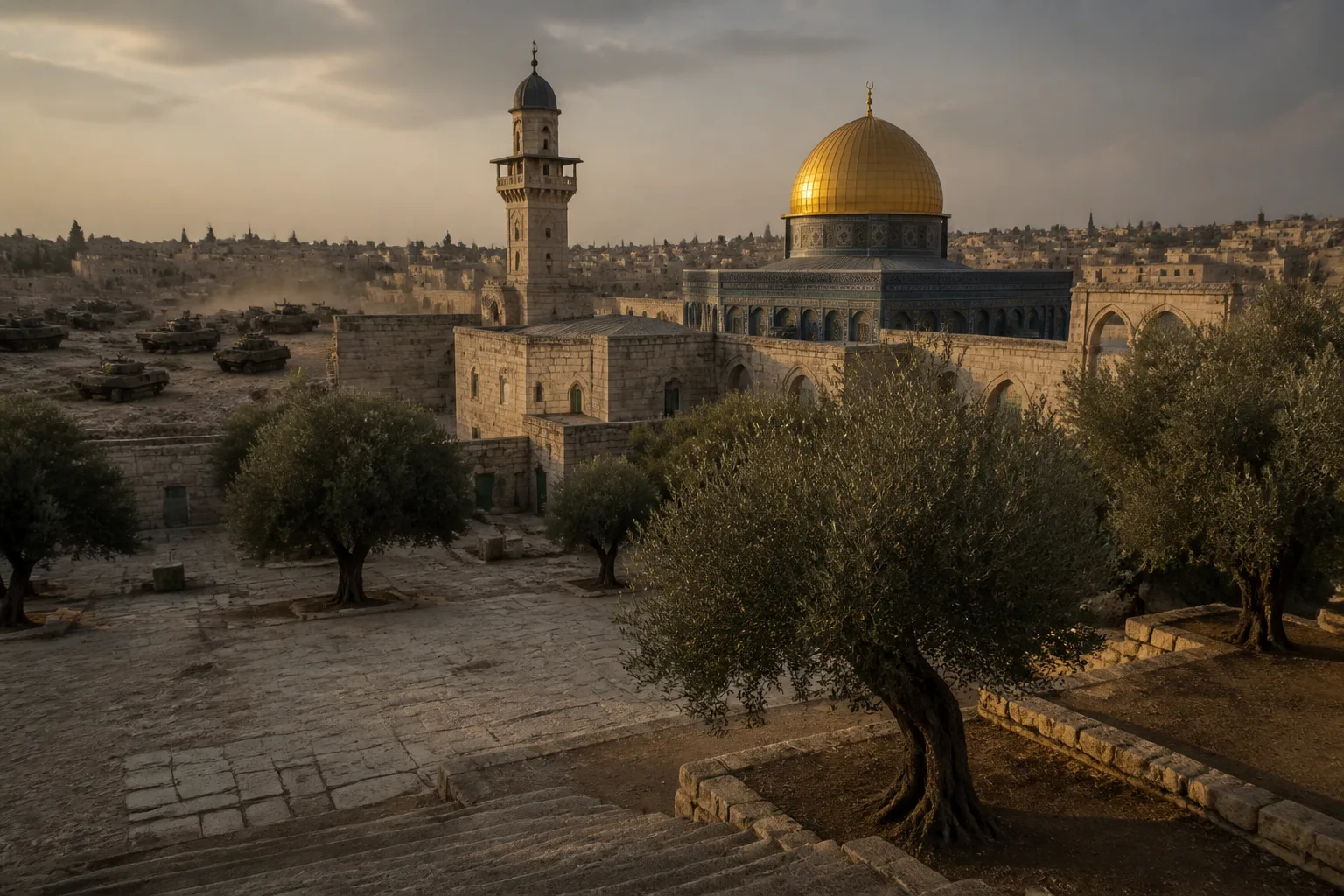
Al-Aqsa Mosque Status Quo Under Threat as Israeli Policy Shifts Post-Gaza War
The ancient stones of Al‑Aqsa, once a sanctuary of silence, now echo with new voices. In early 2026, a series of Israeli policy changes began to erode the status quo that had governed the compound for more than five decades.
The status quo was cemented in 1967 and later formalised by the 1979 Jerusalem Law and the 1997 Waqf agreement. Those accords placed the site under the independent administration of the Jerusalem Islamic Waqf while reserving the right of Jewish visitors to the area for “non‑religious” purposes. Over the past decade, Israeli authorities tightened restrictions on Muslim worship citing security concerns. In June 2026, a police revision permitted Jewish prayer at Al‑Aqsa, a decision publicly supported by Prime Minister Benjamin Netanyahu and national security minister Itamar Ben‑Gvir. The change was reported by Religion News and subsequently echoed by the Israeli Ministry of Public Security.
The erosion accelerated in August 2026 when Israeli police allowed a group of settlers to enter the compound and perform certain rituals. According to a report from Press TV, nearly 600 Israeli settlers entered the Al‑Aqsa compound under police protection that day. The same month, the imam of Al‑Aqsa, Sheikh Mohammed al‑Abbasi, was detained inside the courtyard—a fact confirmed by the Palestinian news agency Wafa and corroborated by social‑media footage. These incidents illustrate a shift from the traditional “non‑religious” access policy to a more permissive stance that blurs the line between worship and settlement activity.
The Gaza war, which began in October 2023, has had a profound impact on the region. The conflict has resulted in more than 29,000 deaths, widespread destruction, and a humanitarian crisis that has drawn international condemnation. While the war mobilised protests and solidarity rallies worldwide, it has not produced a decisive political response that could alter the balance of power in the region. A Middle East Eye article argues that the lack of sustained political mobilisation reflects a broader pattern of comfort and routine that has left the global Muslim community ill‑prepared to defend Al‑Aqsa if its status quo is further challenged.
The implications of the recent policy shifts are significant. If the Israeli government continues to expand Jewish prayer rights and permit settler access, the legal and religious status of Al‑Aqsa could be fundamentally altered. Palestinian authorities, Hamas, and the Jordanian government have all expressed concern that such changes undermine the historic rights of Muslims to the compound. Egypt has warned that the situation could destabilise the already fragile security arrangement in the region. Internationally, the United Nations has repeatedly called for the preservation of the status quo, and the International Court of Justice has ruled that Israel continues to occupy the West Bank and Gaza Strip.
The Middle East Eye piece calls for a reassessment of Muslim solidarity in light of the Gaza war. It stresses that the future of Al‑Aqsa will depend not only on the ambitions of those seeking to transform the site but also on whether the Muslim world can overcome the habits of passivity that have characterised its response to Palestinian suffering. The article urges that the lessons of Gaza should translate into concrete action, rather than remain a source of regret.
At present, the situation remains fluid. Israeli authorities continue to enforce the new policy framework, while Palestinian leaders monitor developments closely. The international community is expected to raise the issue at upcoming United Nations sessions, and there is speculation that a diplomatic review of the status quo may be scheduled for late 2026. The outcome will likely shape the future of Al‑Aqsa and the broader Israeli‑Palestinian conflict.