Brent Crude Futures Surpass $100 a Barrel Amid Escalating Middle East Tensions
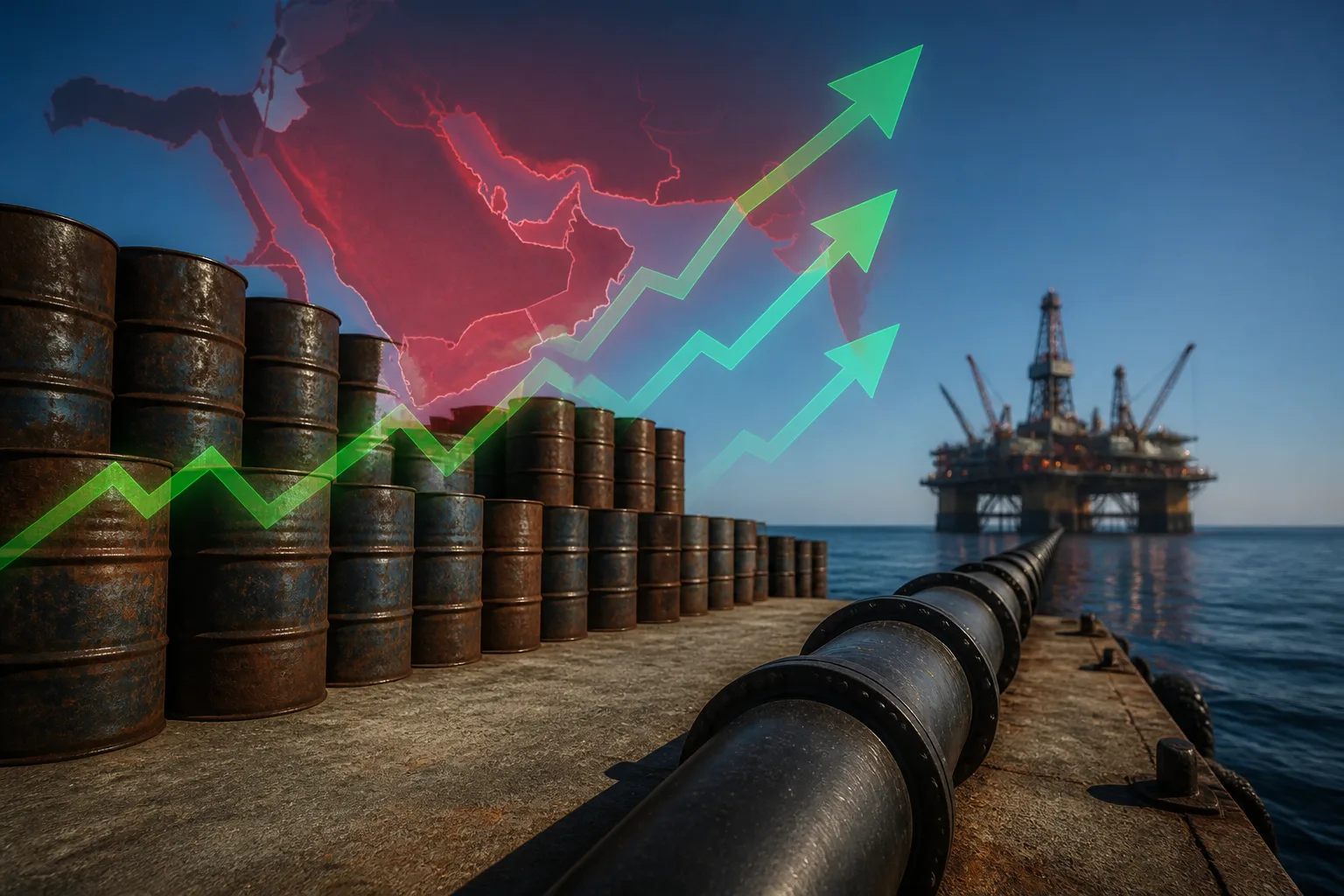
On Wednesday, September 9 2026, the global oil market jolted as Brent crude futures cracked the $100‑barrel threshold, a milestone that traders have watched closely for weeks. At 0802 GMT, Brent futures were quoted at $99.93 a barrel after briefly touching $100.19 earlier in the session. U.S. West Texas Intermediate (WTI) crude climbed $1.49 to $94.52 a barrel, marking a 2.05 % rise for Brent and a 1.60 % rise for WTI.
The surge follows a steady climb of about a quarter since the U.S.–Iran conflict erupted on February 28. Brent prices have ranged from roughly $80 at the start of the crisis to a peak of $126.41 on April 30 before settling near the $100 mark.
What triggered the latest spike was a string of attacks by Iran‑backed Houthi rebels on Saudi Arabian energy infrastructure. The rebels set fire to facilities in southern Saudi Arabia, including a 400,000‑barrel‑per‑day refinery in Jazan. The strikes also threaten crude shipments through the Red Sea, an alternative corridor that has become increasingly important as the Gulf of Oman has taken on a key role in transporting oil to global markets.
"Market participants appear to be pricing in a more prolonged conflict in the Middle East as well as the risk that the latest escalation in military strikes disrupts oil flows from the Middle East," said Hamad Hussain, senior climate and commodities economist at Capital Economics. Hussain added that the key risk lies in whether the recent attacks on oil tankers will curtail ship‑to‑ship transfers in the Gulf of Oman, which have so far helped temper price volatility.
Financial institutions have responded by raising their crude‑price forecasts. Goldman Sachs, Bank of America and HSBC have all increased their outlooks in recent days.
Rystad Energy’s chief economist, Claudio Galimberti, noted that in the week before fighting resumed on August 30, about 8 million to 9 million barrels per day (bpd) flowed through the Strait of Hormuz, roughly double the volume of the previous week. More recently, that figure has fallen below 2 million bpd.
"I think the market is trying to treat this rise in energy prices as a one‑off. It’s not. This is structural. It’s not going away, and it’s part of what I would argue as a security premium. And it’s only going to get bigger," said Jeffrey Currie, co‑chairman at Abaxx Markets.
The International Energy Agency (IEA) projected a global oil supply shortfall of 4.3 million bpd, or about 4 %, for 2026. This forecast comes despite non‑OPEC producers—including the United States, Canada and Guyana—boosting output.
The ongoing conflict has also tightened shipping routes. The Red Sea, which has become a vital lifeline for oil and gas, is now at risk of further disruptions. Houthi attacks on Saudi facilities and tankers could widen the impact beyond the blockaded Strait of Hormuz.
Beyond price pressure, the conflict has prompted a reassessment of supply chains. Banks and market analysts are increasingly factoring in a “security premium” that reflects the heightened risk of supply disruptions.
Crossing the $100 barrier signals that market participants are pricing in sustained supply constraints and geopolitical risk. The current situation underscores the fragility of global oil markets in the face of regional conflicts. While the U.S. and Iran have agreed to a 60‑day ceasefire extension, the broader Middle East remains volatile. The Houthi attacks, the threatened Red Sea route, and the limited flow through the Strait of Hormuz all contribute to a complex environment that is likely to keep oil prices elevated.
The next steps for the market will depend on the trajectory of the conflict and the resilience of alternative shipping routes. If the Red Sea remains open and the Gulf of Oman continues to facilitate ship‑to‑ship transfers, prices may stabilize. However, any further escalation could widen the supply risk and push prices higher.
In short, Brent crude futures have breached the $100 barrier amid escalating Middle East tensions, reflecting a market that is pricing in prolonged conflict and supply disruptions. The situation remains fluid, with the potential for further volatility as the conflict evolves.