Middle East Aviation Recovery Splits: Turkish Airlines and Regional Carriers Lead While European Giants Hold Back
When the first jets of 2026 cut through the Arabian skies, a sharp division in airline strategy became evident. Turkish Airlines, Cebu Pacific, IndiGo, Iraqi Airways, Etihad, Emirates, Flydubai, Air Arabia and Pegasus are pushing forward, reinstating routes and adding flights across Gulf and regional corridors. By contrast, Lufthansa Group, KLM, British Airways, Air France, Air Canada, Cathay Pacific, Singapore Airlines and Finnair have extended suspensions or rerouted services, citing regulatory caution, conflict‑zone risk assessments and higher operating costs.
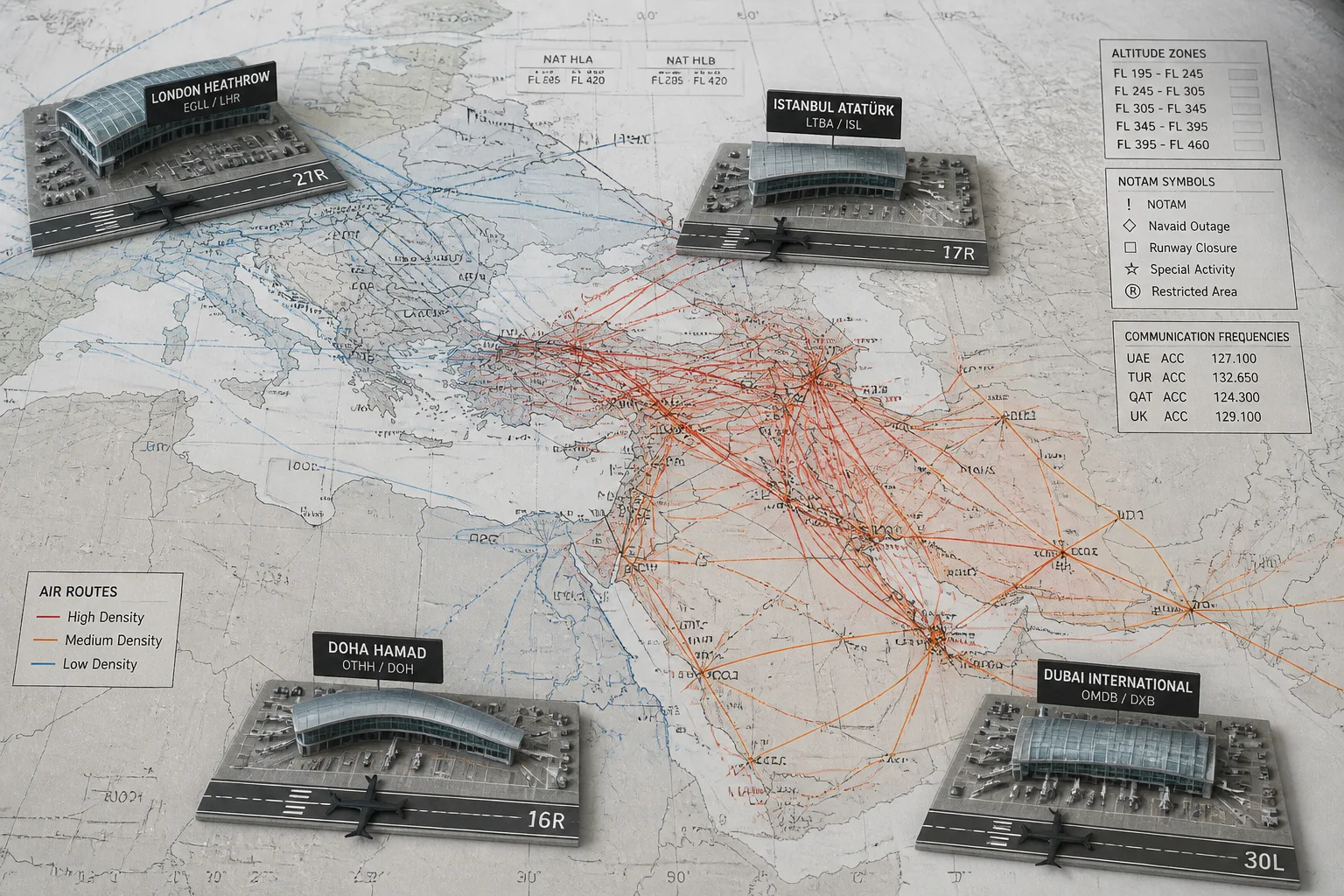
Three drivers shape this split. First, safety advisories from European and North‑American authorities still influence route decisions. Even when a sector of airspace is technically open, airlines opt to delay or suspend services to avoid exposure to unpredictable conditions. Second, many flights now must detour to bypass sensitive airspace, raising fuel consumption, flight time and crew costs. That makes several Middle‑East routes less profitable for long‑haul carriers. Third, demand recovery is uneven. Dubai, Abu Dhabi and Istanbul have rebounded quickly, while some long‑haul markets remain slower, prompting airlines to be cautious about restarting full capacity.
Turkish Airlines has positioned itself as a regional pivot. The carrier resumed flights to Dubai, Damascus, Beirut and Amman, and increased its Dubai frequency to 14 weekly flights starting late June 2026. Operations from Abu Dhabi will restart on 1 July, and Istanbul is being strengthened as a global transfer hub for Europe–Middle‑East–Asia traffic. The strategy reflects strong demand for business travel and diaspora traffic linking Turkey with Gulf countries.
Cebu Pacific is re‑entering the Middle‑East market with a focused approach on high‑demand labour routes. Manila–Dubai service will resume on 2 July 2026 with four weekly flights, targeting overseas Filipino workers in Gulf countries. The airline’s return is limited by fuel and routing constraints caused by longer flight paths.
IndiGo maintains one of the most stable and high‑frequency networks in the sector. The carrier operates more than 60 weekly flights to Dubai and Doha from Delhi, Mumbai and Bengaluru. Demand from migrant labour, tourism and business travel keeps the India–Gulf corridor resilient, allowing IndiGo to keep a consistent seat capacity.
Iraqi Airways follows a structured recovery centred on domestic stabilisation. The airline is strengthening routes between Baghdad, Erbil, Sulaymaniyah and Basra, and gradually restoring international services to Istanbul, Cairo and Amman. The phased expansion model prioritises reliability over rapid international scaling.
Etihad Airways is experiencing a strong recovery trajectory. The carrier operates more than 300 flights per day, with a 10 % year‑on‑year capacity growth and load factors close to 90 % on many routes. Abu Dhabi is increasingly a premium transit hub, attracting passengers affected by disruptions in other global networks.
Emirates continues to operate a large international network, serving more than 130 destinations across 70 countries. The airline has adjusted capacity in line with regulatory and operational conditions, maintaining a focus on long‑haul connectivity through Dubai.
Flydubai and Air Arabia maintain extensive regional networks but have adapted to longer flight durations caused by rerouted airspace. Flydubai has reduced frequencies on select routes, while Air Arabia operates from Sharjah, Abu Dhabi and Ras Al Khaimah, prioritising cost‑efficient short‑ and medium‑haul routes.
On the cautious side, Lufthansa Group has suspended services to Abu Dhabi, Amman, Beirut, Dammam, Riyadh, Erbil, Muscat and Tehran until late October 2026, and Dubai services until mid‑September 2026. British Airways has suspended Dubai, Bahrain and Tel Aviv until late October 2026, reduced capacity on Doha and Riyadh, and permanently terminated the London–Jeddah route.
Air France and KLM have adopted different approaches within the same group. Air France is gradually returning to Dubai from July 2026, while KLM has suspended Dubai, Riyadh and Dammam until August 2026 and continues to avoid multiple Middle‑East airspace corridors.
Cathay Pacific, Air Canada, Singapore Airlines and Finnair have extended suspensions into late summer or early autumn, citing network stability and cost control. Singapore Airlines has suspended Dubai flights until early August 2026, and Finnair avoids Iran, Iraq, Syria and Israel airspace entirely.
The outcome is a fragmented aviation system where recovery speed, network access and global connectivity depend entirely on airline strategy rather than a uniform market reopening. Passengers face varying travel times, connection reliability and availability depending on the carrier chosen.
In summary, the Middle‑East aviation landscape in 2026 is defined by a two‑speed structure: regional carriers and Turkish Airlines are rapidly restoring routes and increasing capacity, while European and North‑American carriers remain cautious, extending suspensions or rerouting operations. The split reshapes global aviation flows through the Middle‑East and underscores the importance of carrier strategy in the post‑conflict recovery.