Saudi Arabias Non-Oil Economy Expands 10.6% in April, GASTAT Reports
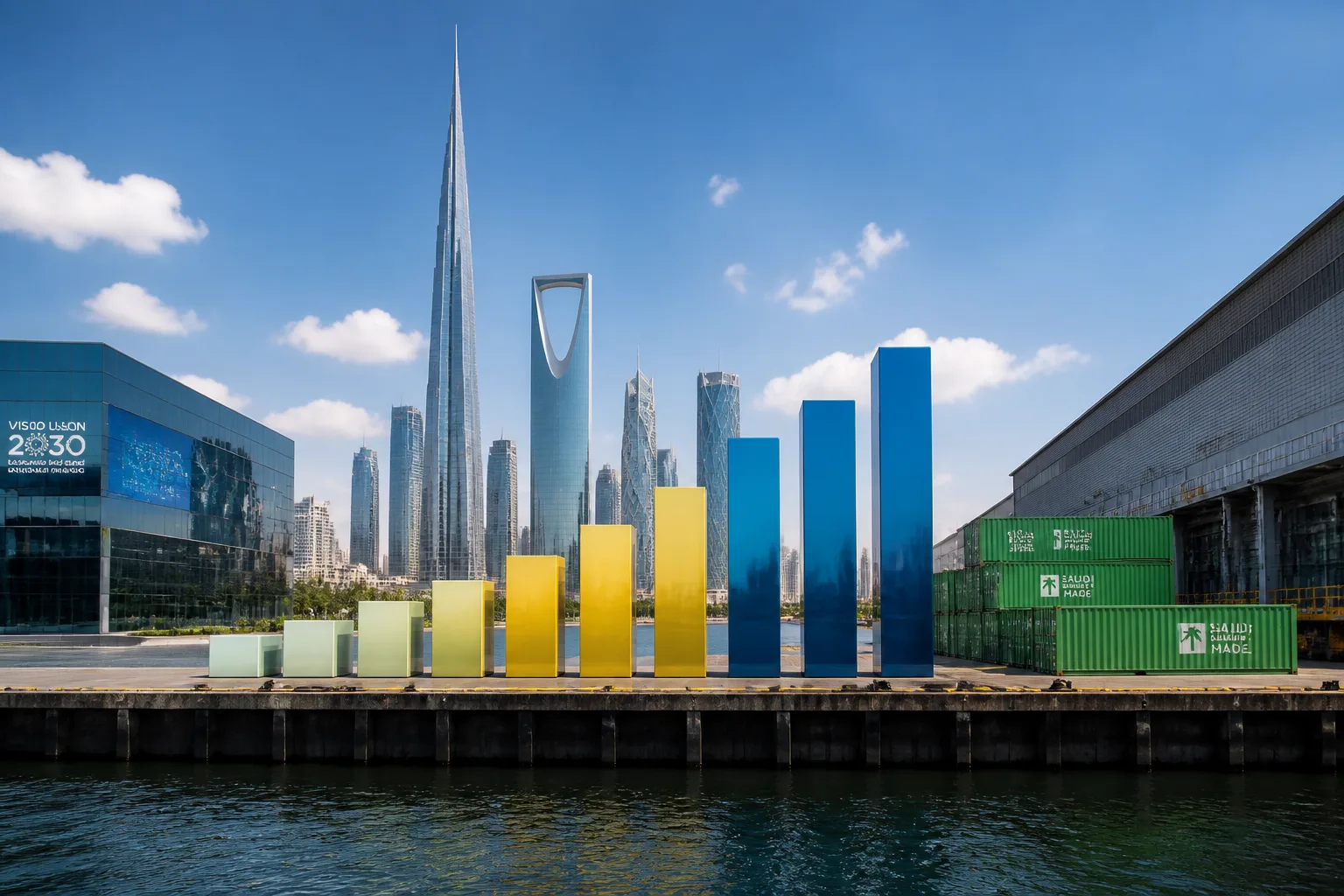
In April 2026, Saudi Arabia’s non‑oil economy pushed past the 10‑percent mark, with short‑term business operating revenues rising 10.6 percent year‑on‑year, according to the latest figures from the General Authority for Statistics (GASTAT). The jump underscores the resilience of the kingdom’s diversification agenda under Vision 2030.
GASTAT’s Operating Revenue Index (ORI) paints a picture of widespread growth. Manufacturing activities grew 10.3 percent, while mining and quarrying surged 22.5 percent, the largest single‑sector increase. Financial and insurance activities posted a 14.2 percent rise, and wholesale and retail trade—including motor‑vehicle repair—climbed 6.9 percent. Construction activities added 5.4 percent, and transportation and storage saw a 16.4 percent jump. Accommodation and food services grew 7.6 percent, and information and communication rose 7.8 percent. Administrative and support services increased 7.8 percent, and arts, entertainment and recreation activities added 12 percent. Smaller gains were also recorded in electricity, gas, steam and air‑conditioning supply (1 percent), water supply and sewerage (2.7 percent), real‑estate activities (0.8 percent), professional, scientific and technical services (1.1 percent), education (0.6 percent) and human health and social work (1.1 percent).
On a month‑to‑month basis, however, the ORI slipped 3.8 percent. The decline was largely driven by a 19.1 percent drop in both manufacturing and mining and quarrying, a 1.5 percent fall in wholesale and retail trade, a 2.5 percent reduction in financial and insurance activities, and smaller declines of 1.5 percent and 4.9 percent in information and communication and transportation and storage, respectively.
Business‑confidence indicators also revealed subtle shifts. The Business Confidence Index (BCI) climbed to 54.5 points in April from 52.1 in March, after dipping to 60.6 in February and 61.6 in January. Analysts linked the March decline to regional geopolitical uncertainty, while the April rebound signals a sustained optimism in non‑oil sectors.
The Purchasing Managers’ Index (PMI) for Saudi Arabia’s non‑oil private sector rose to 52.8 in May, up from 51.5 in April, remaining comfortably above the 50‑point threshold that separates expansion from contraction. Meanwhile, the Employees Compensation Index recorded a 10.1 percent annual increase in April.
These figures dovetail with the broader Vision 2030 narrative of economic diversification. The kingdom’s policy framework seeks to reduce dependence on hydrocarbons by expanding manufacturing, mining, services, and technology sectors. Investment, construction pipelines and consumer demand are now providing the fuel for this transition.
GASTAT’s analysis notes that rising business activity, stronger investor sentiment and sustained growth in service sectors have helped underpin the diversification effort. The data also reflect the impact of government‑backed initiatives such as the expansion of the mining sector, the growth of financial services and the continued development of infrastructure projects.
While the ORI’s monthly decline signals short‑term volatility, the year‑on‑year gains across multiple sectors demonstrate a broad‑based recovery. The mining sector’s 22.5 percent growth, in particular, highlights the kingdom’s increasing role as a mining hub, supported by low‑cost energy and a supportive regulatory framework.
In summary, Saudi Arabia’s non‑oil economy expanded by more than 10 percent in April 2026, with manufacturing, mining, financial services and trade sectors leading the way. Business‑confidence indicators remain positive, and the PMI suggests continued expansion in the private sector. These developments reinforce the kingdom’s Vision 2030 objectives to diversify its economy and reduce reliance on oil revenue.