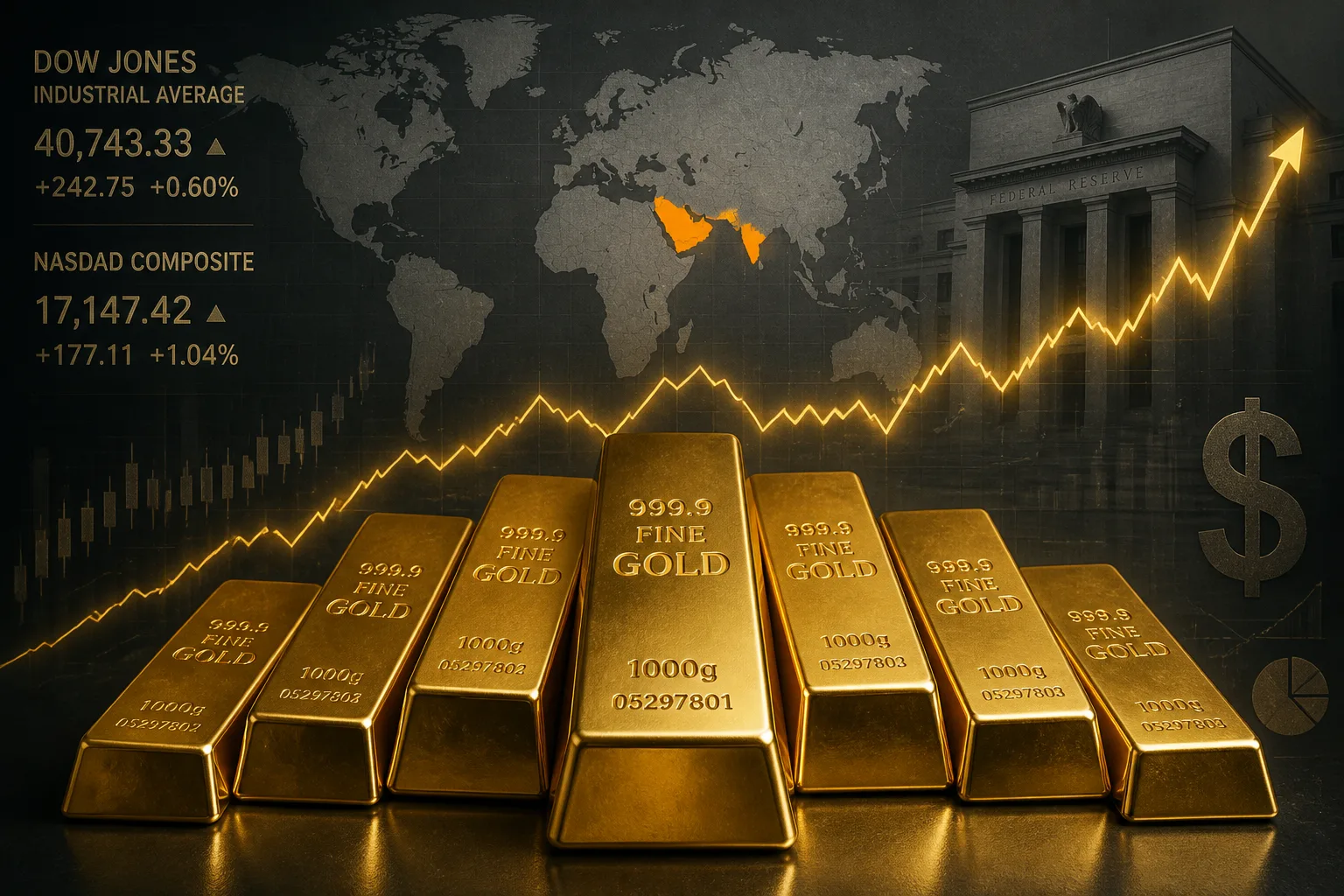
Gold Surges Above $4,200 Amid Fed Hawkish Outlook and Middle East Tensions
Gold prices swung sharply this week, falling close to $4,000 before rebounding to above $4,200 as investors weighed stronger U.S. inflation, a robust labor market and rising geopolitical uncertainty in the Middle East.
The metal’s decline began after the U.S. Bureau of Labor Statistics released May consumer‑price‑index data showing headline inflation at 4.2 % year‑over‑year and core inflation at 2.9 %. The figures were the highest in more than three years and reinforced expectations that the Federal Reserve will keep policy rates high for an extended period. The stronger data also pushed the U.S. dollar higher and Treasury yields up, both of which traditionally weigh on gold.
In the same month, the U.S. economy added 172,000 jobs, the most recent employment report indicating continued resilience. The combination of higher inflation and solid employment has led market participants to anticipate that the Fed will maintain the federal‑funds target range of 3.50 % to 3.75 % and that any rate cuts in 2026 are unlikely.
Against this backdrop, gold fell to a low of $4,023 on Friday, breaking below its 20‑day simple moving average and the 50‑day moving average that had been near $5,000. The decline stalled at the 100‑day moving average, and the metal quickly found support at the 50‑day level. By the end of the week, buyers had pushed the price back above $4,200, a psychological round‑number threshold that often stabilises sentiment after a forced liquidation.
The upcoming Federal Reserve policy meeting, scheduled for the first week of July, will be closely watched. Analysts expect the Fed to keep rates unchanged, but the minutes will reveal whether the committee is moving away from the easing bias that has dominated recent communications. The meeting also marks the first major policy gathering under Chair Kevin Warsh, who has historically favoured lower rates but is expected to adopt a hawkish stance given the current inflation environment.
Geopolitical developments have also influenced gold demand. The region’s tensions were heightened by a U.S.‑Iran peace agreement announced by Pakistan Prime Minister Shehbaz Sharif, which includes a permanent ceasefire on all fronts, including Lebanon. The announcement, made on June 14, was followed by a formal signing ceremony scheduled for June 19 in Switzerland. While the deal is intended to reduce conflict risk, the broader uncertainty in the Middle East continues to support safe‑haven demand for gold.
Technical analysis suggests that gold’s recent rebound is supported by key trend levels. The 50‑day moving average, which had been broken earlier in the year, remains a critical support line. The 100‑day moving average has held as a floor, and the metal’s ability to stay above $4,000 indicates that structural buyers are still active.
In summary, gold’s volatility this week reflects the clash between macroeconomic headwinds—strong inflation, a solid labor market and a hawkish Fed outlook—and geopolitical risk that fuels safe‑haven buying. The metal’s recovery to above $4,200 shows that buyers remain present at lower levels, but its next move will likely hinge on the Fed’s policy guidance, future inflation readings and whether diplomatic efforts in the Middle East prevent a new escalation.