Israel Signs Plan to Triple Population of West Bank Settlement Karnei Shomron
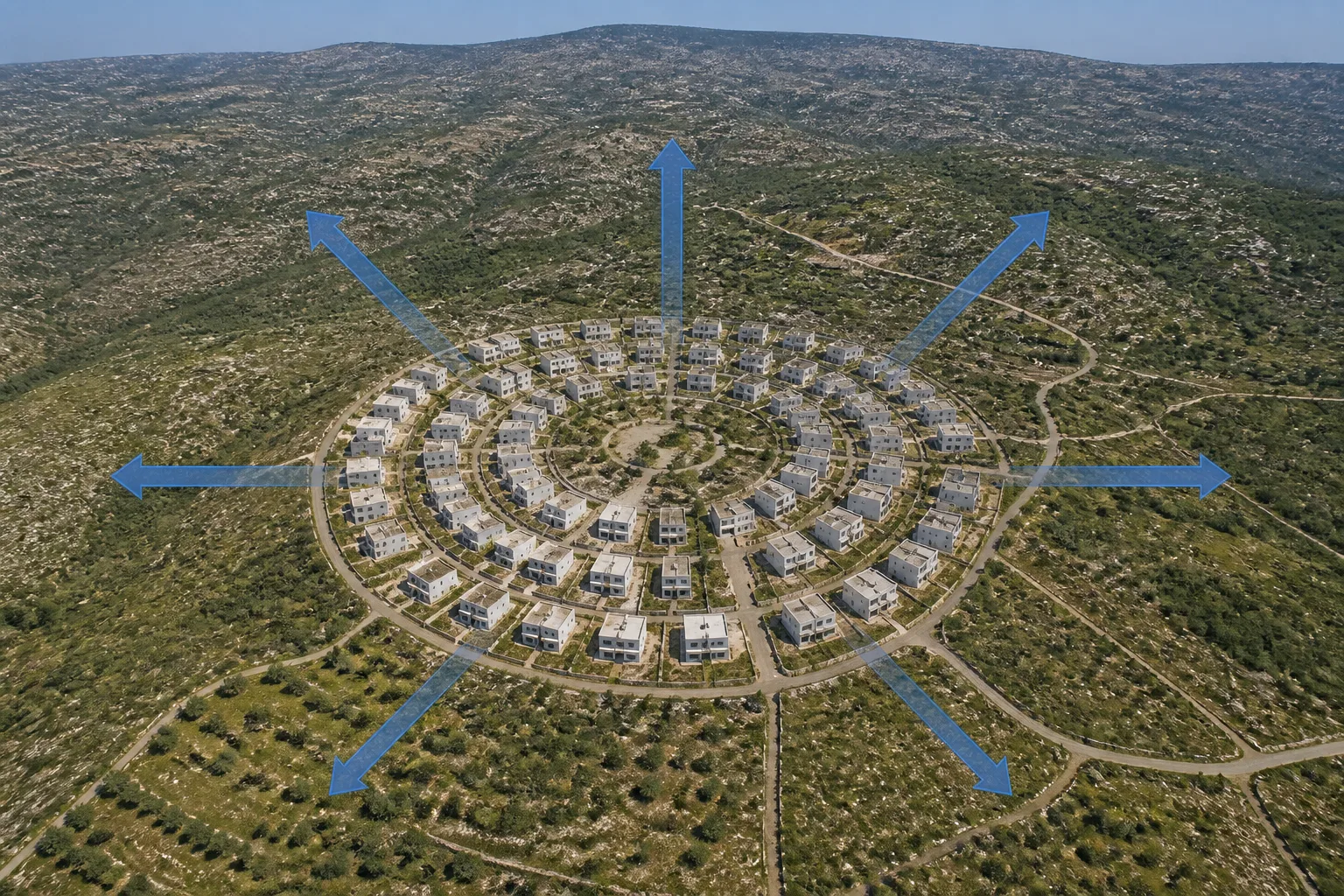
On Sunday, Israeli officials inked a blueprint that could reshape the West Bank’s demographic map. The agreement, dubbed the Roof Plan, was signed by representatives of Karnei Shomron’s local council, the Israeli government and the Israel Land Authority, and it sets out to triple the settlement’s population from roughly 11,000 to 40,000 by adding about 6,000 new housing units.
Karnei Shomron, founded in 1977 as a local council in the Samaria region, sits about 30 miles northeast of Tel Aviv and east of Kfar Saba. Its name—“Horns of Samaria”—reflects the hilltop ridge that crowns the town, offering sweeping views of Wadi Kana. Over the past decade the community has grown into a tightly knit residential hub, noted for its high rates of military service and its sense of belonging. In 2024 its population stood at 10,541, and the new plan would more than triple that figure.
The signing ceremony unfolded inside the Yeshivat Bnei Akiva in Karnei Shomron, a setting that underscored the settlement’s religious and cultural roots. Community members gathered alongside senior ministers, including Finance Minister Bezalel Smotrich, Construction and Housing Minister Haim Katz, and Mateh Binyamin Regional Council head Yisrael Gantz. Prime Minister Benjamin Netanyahu could not attend in person, but he sent a video message congratulating the community.
The agreement charts a comprehensive upgrade of existing infrastructure. Road resurfacing, the relocation of high‑voltage power lines underground, new access roads, bike paths and a new community park are among the first projects slated for implementation. The park, which will receive an investment of more than $3.2 million, will feature sports fields and recreational facilities designed to serve the town’s growing population. In addition, the plan calls for a full educational campus, a cultural centre, a country club and a regional commercial hub, all aimed at transforming Karnei Shomron into a self‑sustaining urban environment.
Finance Minister Smotrich framed the Roof Plan as the beginning of a wave of similar initiatives across Judea and Samaria. “This creates ‘normalization,’ making Judea and Samaria every bit a part of Israel as Caesarea, Dimona, Ofakim and other places,” he said. He added that Ariel and the Shomron Regional Council are expected to receive comparable plans in the near future and expressed hope that his hometown of Kedumim would follow suit.
Construction and Housing Minister Katz highlighted the acceleration of Roof Plans nationwide. “From 2013 through last July, only 50 roof plans were signed throughout Israel. However, from last July, 25 additional roof plans were introduced. And this is the first time it is being introduced in Judea and Samaria,” he said. He emphasized that the plan would enable Karnei Shomron to triple its population while maintaining balanced growth and improving quality of life.
Yonatan Kuznitz, head of the Karnei Shomron Local Council, hailed the agreement as “one of the most significant moves in the history of Karnei Shomron.” He described it as a strategic pivot that would turn the community into a regional metropolis linking Samaria to central Israel and attracting young families. Kuznitz also praised the improved highway connections that will enhance access across the country, and he framed the plan as a step toward “de facto sovereignty” through strengthened Jewish territorial continuity.
The signing occurred amid ongoing regional tensions, including the recent IDF bombing in Dahiya, Lebanon and Iranian threats of retaliation. The Roof Plan was viewed by many as a measure to bolster Israel’s security by expanding settlement presence.
Kuznitz paid tribute to the community’s high military recruitment rates and the heavy price paid in the current war, noting twelve new graves of fallen soldiers in the local cemetery since Oct. 7, 2003.
Beyond the immediate demographic shift, the plan is expected to stimulate local economic activity. The construction of a commercial hub will create jobs, attract businesses, and increase municipal revenue. Analysts predict that the influx of residents will raise demand for services such as healthcare, retail, and transportation, prompting further investment in the surrounding area.
Ultimately, the Roof Plan is expected to establish Karnei Shomron as a major urban centre in the heart of Samaria, linking nearby areas such as Alonai Shiloh and Emmanuel, and marking what participants called a historic step in the development of Jewish communities in the region. With the agreement now in force, the next phase will involve detailed engineering studies and the allocation of funds from the state and the Israel Land Authority. Residents and officials alike anticipate that construction will begin in early 2027, with the first wave of homes completed by 2030.