Oil Companies Eye Venezuela as U.S. Middle-East Policy Shifts Open New Opportunities
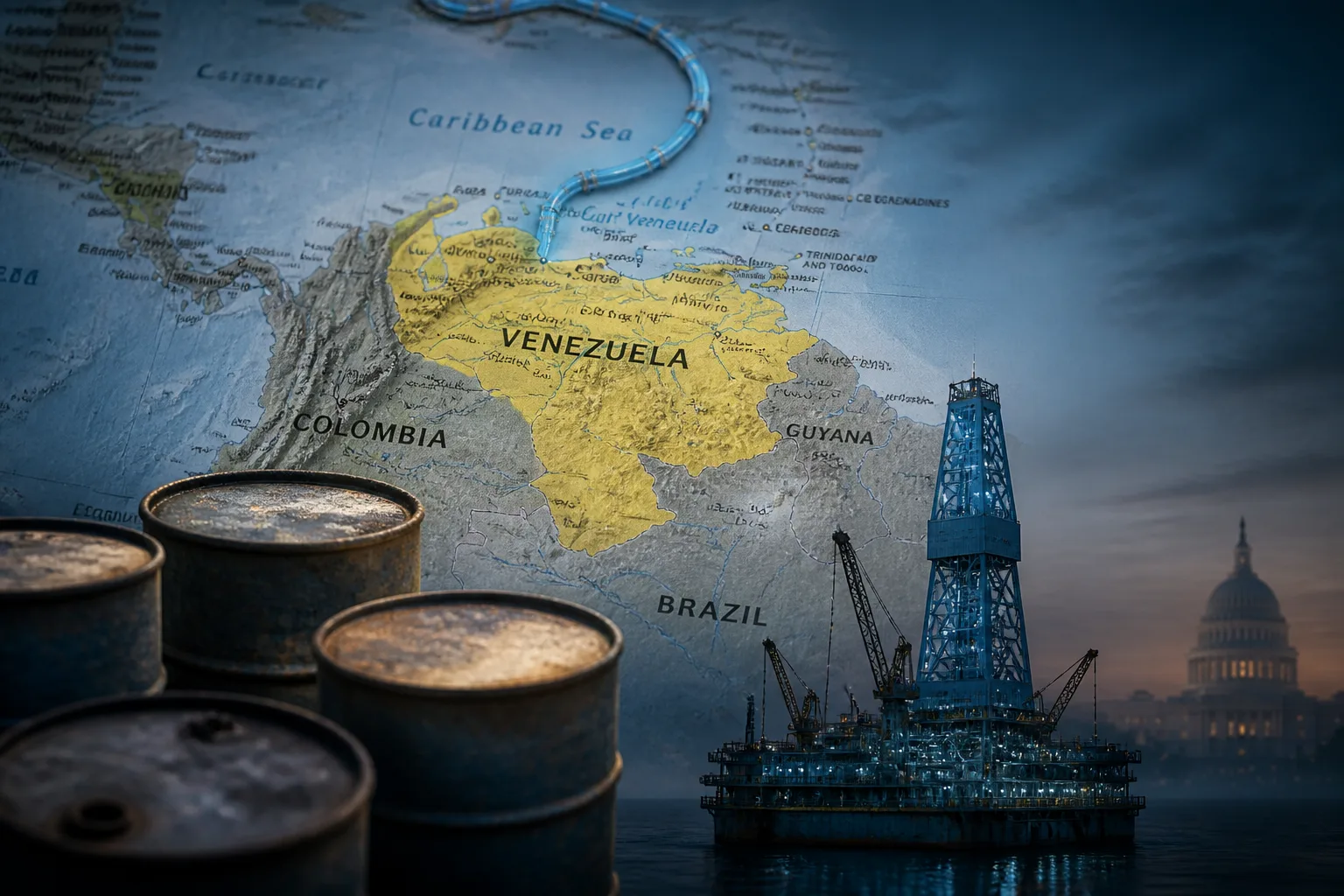
President Donald Trump’s recent energy policy moves in the Middle East have inadvertently opened a new window for Venezuela’s oil sector. In the past few months, a growing number of U.S. and international oil firms have begun to explore drilling opportunities in a country whose reserves are the world’s largest.
The shift began after the Trump administration urged oil companies to consider projects in Venezuela following the U.S. lifting sanctions on former president Nicolás Maduro. Industry lawyers and consultants say the decision was driven in part by the perceived fragility of Middle‑East supply lines, especially after the U.S., Israel and Iran’s conflict exposed vulnerabilities in the Strait of Hormuz.
"You see this view industry‑wide, right or wrong, that there’s a long‑term disruption going on all over the market," said Jason Bennett, global projects director at Baker Botts. He added that Venezuela is “looking pretty good right now, despite their historical problems.” Bennett’s comments echo a broader industry sentiment that Middle‑East instability has made Venezuelan oil an attractive alternative.
In recent weeks, several small independent firms—including Hunt Oil, HKN Energy and Crossover Energy—have signed memoranda of understanding (MOUs) with the Venezuelan government. These MOUs allow companies to reserve fields while negotiations continue, a practice that has accelerated as firms fear missing out on prime acreage. An industry lawyer who requested anonymity noted that the number of new clients has risen sharply in the last few weeks.
The Venezuelan government, led by interim President Delcy Rodríguez, has reportedly set aside fields for companies that sign MOUs, effectively giving them a first‑come, first‑serve advantage. "Most of Venezuela’s oil fields are now under an MOU or initial agreement with an oil company," said Elias Ferrer, director of the Caracas‑based advisory firm Orinoco Research. Ferrer observed that the country’s reforms to its oil laws, while not perfect, are moving in a direction that reduces the government’s take on production.
White House officials have been actively engaging with oil firms. Taylor Rogers, a White House spokesperson, stated that Trump was “right” that oil companies would flock back to Venezuela. She added that the administration’s policy “has successfully fostered productive relationships with the Venezuelan authorities while facilitating much‑needed changes to the country’s laws and contracts.” Rogers also claimed that “companies are rushing back to invest billions, Venezuela’s oil exports have jumped to the highest levels since 2018, and oil is flowing into the United States.”
Jarrod Agen, executive director of the White House’s National Energy Dominance Council, told POLITICO’s Energy Summit that Venezuela is moving from the MOU phase to a binding contract phase. He said, “It’s progressed significantly over the last couple weeks. It’s going to send a big signal to the world if we can get these binding contracts done.”
The shift is also being watched by other countries. India has become the second‑largest importer of Venezuelan oil as of May, and Rodríguez visited the country earlier in the month. The United States has seen interest from major oil majors. Chevron, which has remained in Venezuela despite earlier nationalizations, is reportedly looking to expand its production. Exxon, whose CEO had previously called Venezuela “uninvestable,” has sent a technical team to the country.
A key hurdle for firms has been dispute resolution. Venezuela has insisted that contract disputes be handled domestically, but it has proposed arbitration in Hong Kong or Paris if negotiations fail. The Treasury Department’s General Licenses, amended on June 10 to allow dispute resolution in the U.S., U.K., France or Singapore, may help bridge the gap. Senior specialist José Ignacio Hernandez of Aurora Macro Strategies noted that “many potential contradictions remain to be resolved under Venezuelan law.”
The broader context for this renewed interest is the ongoing conflict in the Middle East, which has strained the Strait of Hormuz—a critical chokepoint for global oil shipments. The Trump administration’s announcement of a peace deal with Iran, which it said would “fully authorize the toll‑free opening” of Hormuz, has further highlighted the need for alternative supply routes.
In summary, the combination of Middle‑East instability, Venezuelan oil law reforms and active U.S. diplomatic engagement has created a window of opportunity for oil companies to secure new contracts in Venezuela. While the final binding agreements remain pending, the trend suggests a significant shift in the global oil market, with potential implications for U.S. energy security, Venezuelan revenue and the broader geopolitics of the region.