Philippine Stock Index Surges 6.14% as Peso Reclaims 60 Level Amid US-Iran Peace Deal
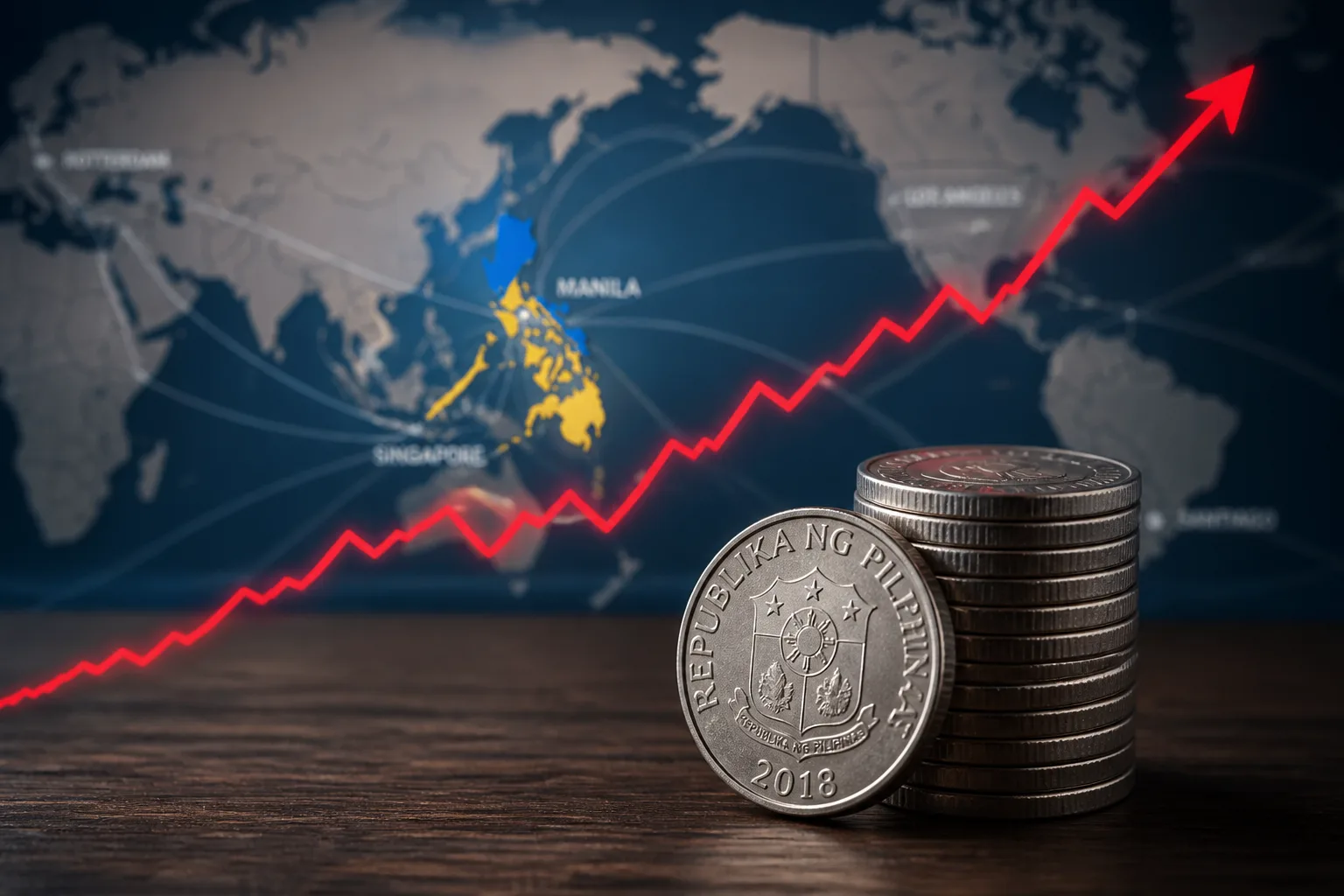
On Monday, June 15 2026, the Philippine Stock Exchange Composite Index (PSEi) leapt 6.14 percent, closing at 6,272.88 points. The Philippine peso rallied to 60.48 pesos per U.S. dollar, its strongest level in more than a month.
The rally followed the announcement that the United States and Iran had reached a peace agreement to lift the blockade of the Strait of Hormuz. Market participants linked the deal to a decline in global oil prices and a potential easing of inflationary pressure in the Philippines.
The PSEi’s rise marked its highest close since March 6 and its first above‑6,200 level in more than three months, while recovering from the four‑month low recorded on January 29. All sectoral indices finished in positive territory, with the banking sector leading the gain at 9.04 percent. BDO Unibank, Inc. posted the strongest individual rise, up 14.36 percent to 133 pesos per share. Only four PSEi constituents ended lower; DMCI Holdings, Inc. fell 2.33 percent to 8.38 pesos.
Trading volume was robust, with a net value turnover of 11.38 billion pesos, well above recent averages. Foreign investors returned to the market, ending the session as net buyers with inflows of 1.03 billion pesos.
"The announcement that a peace deal between the US and Iran is set to be signed on June 19 has reduced geopolitical risks and is expected to bring down global crude prices," said Japhet Tantiangco, research manager at Philstocks Financial Inc. "Lower oil prices could provide relief for inflation and strengthen the Philippines’ economic outlook," he added.
Luis Limlingan, head of sales at Regina Capital Development Corp., noted that the development triggered strong buying pressure, making the local index one of the top gainers in the region. He added that improved risk sentiment also supported the peso, leading to its appreciation against the greenback.
Brent crude prices had already begun to retreat toward the $80‑per‑barrel level following the agreement. The end of the Strait of Hormuz blockade was seen as a key factor in reducing the risk premium that had pushed oil prices higher.
The peso’s rebound to the 60‑pesos per dollar zone was its first return to that territory since May 8, when it closed at 60.613. The currency had previously weakened to a low of 61.75 during the period of heightened geopolitical uncertainty.
"It is not impossible for the peso to strengthen further to 59 against the greenback," said Robert Dan Roces, group economist at SM Investments Corp. "But it would likely take more than geopolitics alone; the broader direction of the dollar will matter just as much."
The market’s reaction reflects a renewed appetite for risk assets as concerns over supply disruptions and elevated energy costs ease. Analysts view the decline in oil prices as a positive signal for inflation, potentially giving policymakers more room to support economic growth.
In summary, the Philippine stock market experienced one of its strongest single‑day performances of the year, driven by a broad‑based rally across all major sectors. The peso gained against the dollar, foreign capital flowed into the market, and investors expressed optimism about the country’s economic outlook amid improving global sentiment.