US-Iran Framework Deal to Reopen Strait of Hormuz Sparks Oil Market Shift
On 14 June 2026, a quiet ceasefire agreement between Washington and Tehran sent shockwaves through oil markets, lowering prices as traders breathed a collective sigh of relief.
The deal, brokered by Pakistan and Qatar, lifted the U.S. naval blockade that had closed the Strait of Hormuz for most of the war that began in February. President Donald Trump announced the strait would open on 15 June, while Iran’s deputy foreign minister, Kazem Gharibabadi, said a broader ceasefire would open the door to talks on sanctions relief and other pressing issues.
Immediately, the removal of a major bottleneck eased pressure on the global market. Roughly 14 million barrels of crude per day—about 14 % of worldwide demand—had been stuck in transit since the strait’s closure. The International Energy Agency (IEA) reported that Middle‑East producers, including Iraq, Kuwait, Saudi Arabia and the United Arab Emirates, had halted millions of barrels of output.
Some fields, such as those in Iraq, could resume within a week of a restart decision," an industry source familiar with the matter said. Other fields will take longer. Wood Mackenzie analysts estimate that, with a measured ramp‑up, production could reach 70 % of pre‑war levels in three months and 90 % in six months, but the final 1 million barrels per day will take considerably longer.
Refining capacity suffered as well. As of 7 May, the IIR monitored that 3.52 million barrels per day of refining capacity had been shut, about 3.5 % of the global total. While some plants can be restarted in a couple of weeks, those damaged will require longer repairs. Vitol Bahrain’s head of research, Bader Nooruddin, said Gulf refineries could reach 90–95 % of capacity within 40–60 days. Rystad Energy estimates total repair spending in the region at roughly $46 billion, with petrochemical assets accounting for the largest share.
Liquefied natural gas output also took a hit. Early in the conflict, Qatar’s LNG facilities curtailed operations after attacks. Once a restart decision is taken, it will take about two weeks to cool gas to –162 °C and reach full capacity. QatarEnergy’s CEO said Iranian attacks had wiped out 17 % of Qatar’s LNG capacity, a loss that could take up to five years to recover.
The disruption has also depleted global oil inventories. The U.S. Energy Information Administration (EIA) notes that stockpiles in the world’s largest economies are heading toward their lowest levels since at least 2003, squeezed at a record pace by the lost Gulf output. Ninety‑One investment manager Paul Gooden estimated that inventories have shrunk by more than 1 billion barrels since the war began, a loss worth over $83 billion at current prices.
"Oil markets will therefore likely suffer a ‘hangover’ for several years as governments seek to rebuild inventories and insulate themselves from further geopolitical shocks," Gooden said.
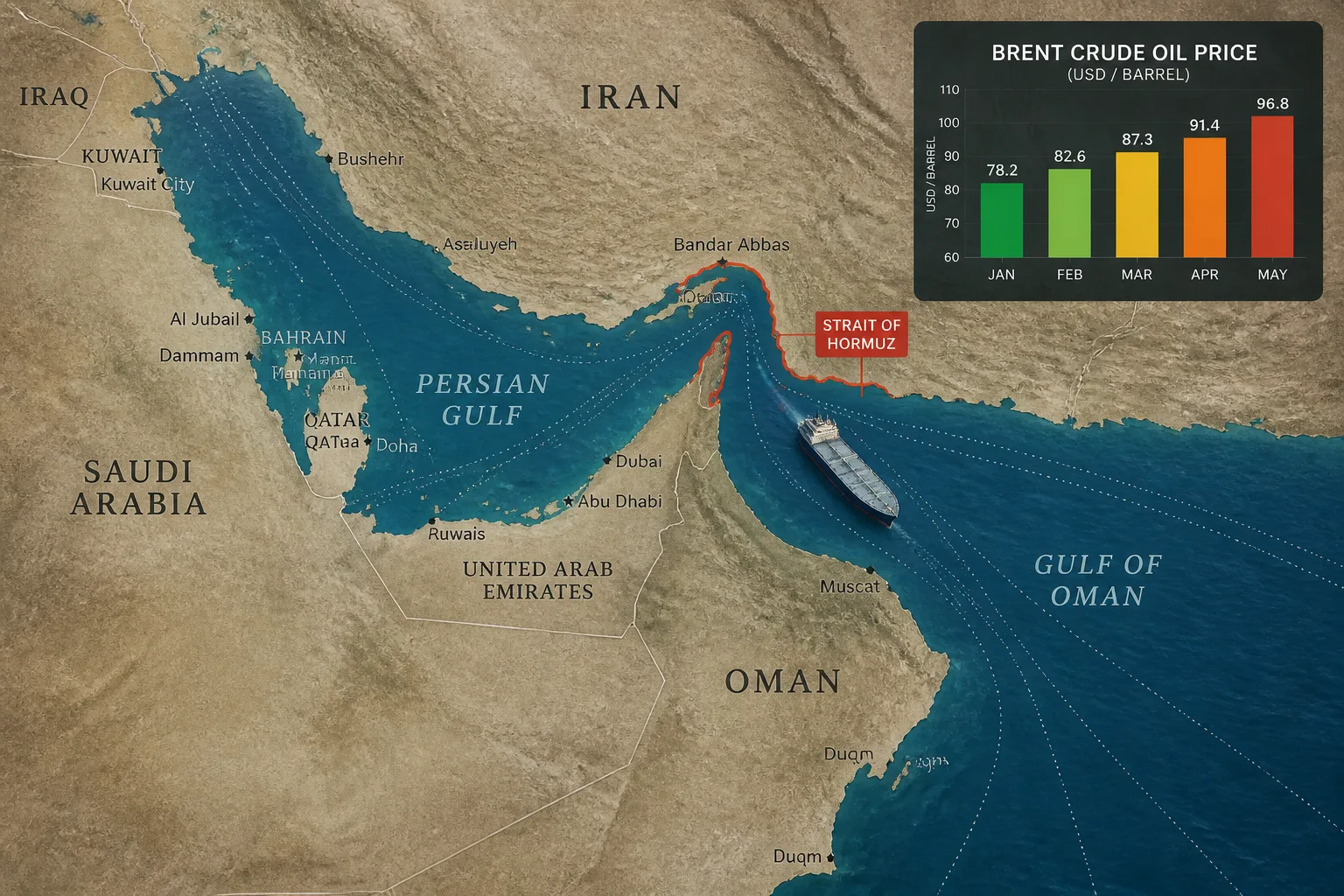
The reopening of the Strait of Hormuz is a key milestone for Middle‑East energy security. According to the Wikipedia entry on the Strait of Hormuz, the waterway is the only sea passage from the Persian Gulf to the open ocean and is a major route for seaborne oil and LNG. Its closure has historically caused severe supply shortages for Gulf countries and Europe.
The framework agreement does not yet resolve broader issues such as Iran’s nuclear program or sanctions relief, but it provides a 60‑day window for further negotiations. The U.S. has lifted its blockade and the strait is expected to be cleared of mines and reopened to shipping.
In the coming weeks, the pace at which production, refining and LNG facilities can return to normal will determine how quickly global oil markets recover. While the strait’s reopening removes a major choke point, the full restoration of Gulf output and supply chains will take weeks, months, or even years.
The current situation is that the Strait of Hormuz is open, U.S. naval forces have withdrawn from the area, and the region’s oil and gas infrastructure is beginning the process of resuming operations. The next steps will involve the practical reopening of shipping lanes, the restart of production facilities, and the gradual rebuilding of global oil inventories.