US-Iran Peace Deal Triggers Global Market Rally and Oil Price Drop
A sudden calm in the Gulf sent shockwaves through global markets on 15 June 2026, when the United States and Iran announced a tentative peace agreement that ended the nearly four‑month conflict that began on 28 February 2026. The deal, brokered by Pakistan and Qatar, lifted the U.S. naval blockade and reopened the Strait of Hormuz, the world’s most critical oil transit route.
President Donald Trump hailed the accord as a “peace deal,” and Tehran confirmed that Iranian oil would flow again through the Strait, which had been closed for most of the war. The U.S. lifted its blockade, mines were cleared, and commercial shipping could resume.
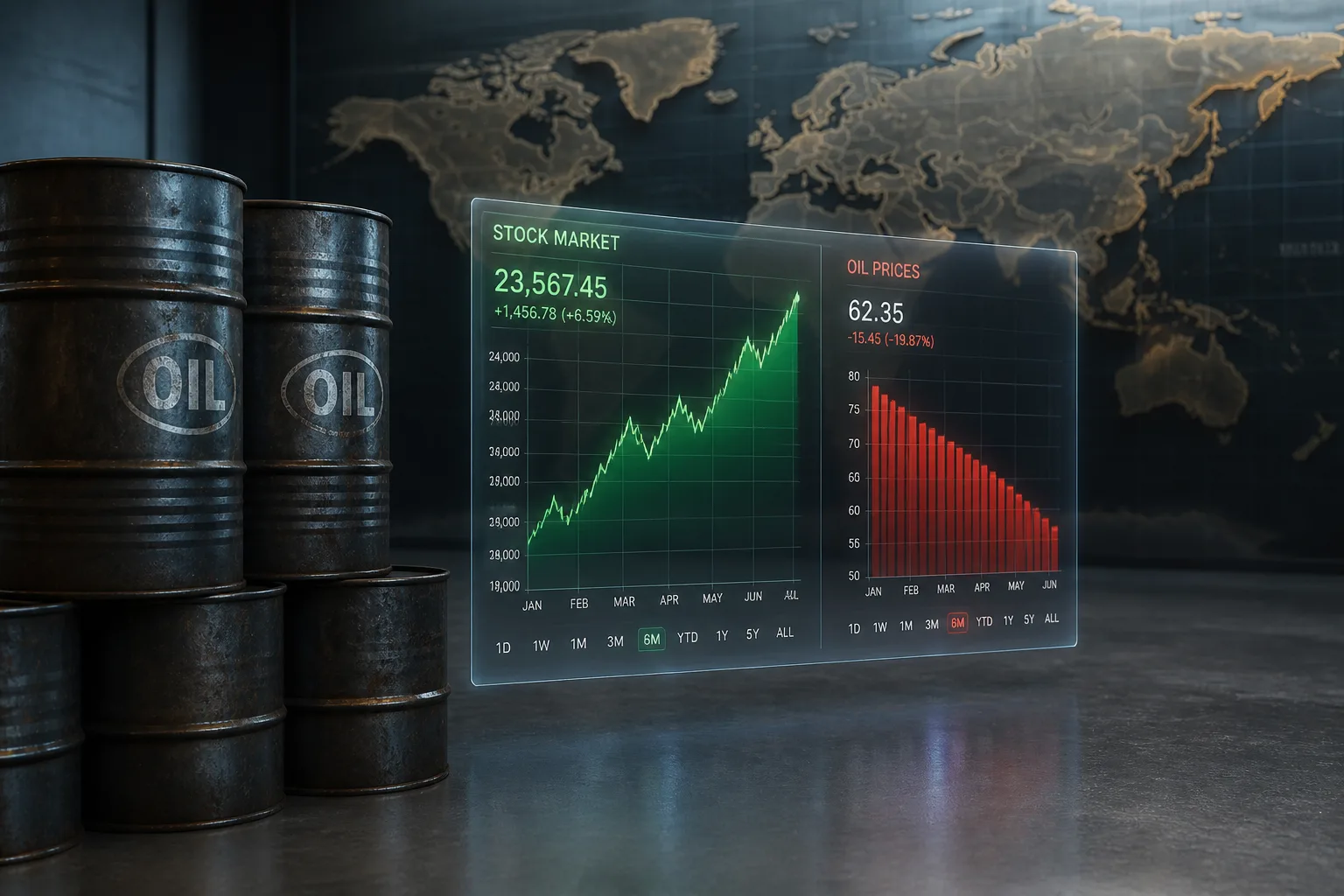
The market reaction was immediate. Australia’s share market surged to a two‑month high, while Japan’s Nikkei index climbed 5 percent. Oil prices fell more than 4 percent to US$83 a barrel in Asian trading, the lowest level since the war’s peak of US$126 a barrel in March 2026. Bond yields dropped to a two‑month low, reflecting expectations that lower commodity prices would ease inflationary pressure and reduce the likelihood of further interest‑rate hikes.
Currency and digital asset markets also responded. The Australian dollar strengthened to US$0.7075, and bitcoin climbed above US$65,800, its highest level in nearly two weeks. These moves illustrate the broad risk‑on sentiment that investors now have after the conflict’s abrupt de‑escalation.
The deal’s implications for monetary policy are already a focus. Several central‑bank meetings are scheduled for the week, including the Reserve Bank of Australia (RBA). The RBA has raised rates three times this year, and analysts are divided on whether it should pause or cut rates. Emanuel Datt, chief investment officer at Datt Capital, said the peace deal justifies an RBA pause and forecasts a future rate cut. Vivek Dhar, head of commodities at Commonwealth Bank, expects Brent oil futures to decline to around US$80 by year‑end if the diplomatic resolution holds. Christian Baylis, founder of Fortlake Asset Management, cautioned that lingering inflationary impacts from supply‑chain disruptions could still prompt central banks to raise rates.
The war’s background is essential to understand the market reaction. The conflict began when the United States and Israel launched airstrikes against Iranian targets, including the assassination of Supreme Leader Ali Khamenei. Iran retaliated by attacking U.S. and Israeli forces and by closing the Strait of Hormuz, which halted about 25 percent of global seaborne oil trade. The closure caused oil prices to surge to over US$100 a barrel and triggered a global supply shock that affected natural gas, fertilizer and other commodities.
The tentative agreement reached on 14 June 2026 is a 60‑day extension of the existing ceasefire, not a final peace treaty. It sets a framework for negotiating limits on Iran’s nuclear program, the disposal of its highly enriched uranium, sanctions relief and the release of frozen Iranian assets. A formal signing ceremony is expected on 19 June in Switzerland.
In the short term, the markets have responded positively to the expectation that oil prices will fall and that inflationary pressures will ease. In the medium term, the outcome will depend on how quickly the parties can resolve the remaining issues and on the broader economic environment, including global growth prospects and central‑bank policy.
The current situation is that the U.S. and Iran have agreed to end hostilities and reopen the Strait of Hormuz, with the deal slated for formal signing in mid‑June. Investors are watching central‑bank meetings closely, while the global economy anticipates a potential decline in commodity prices and a possible easing of inflationary pressures.