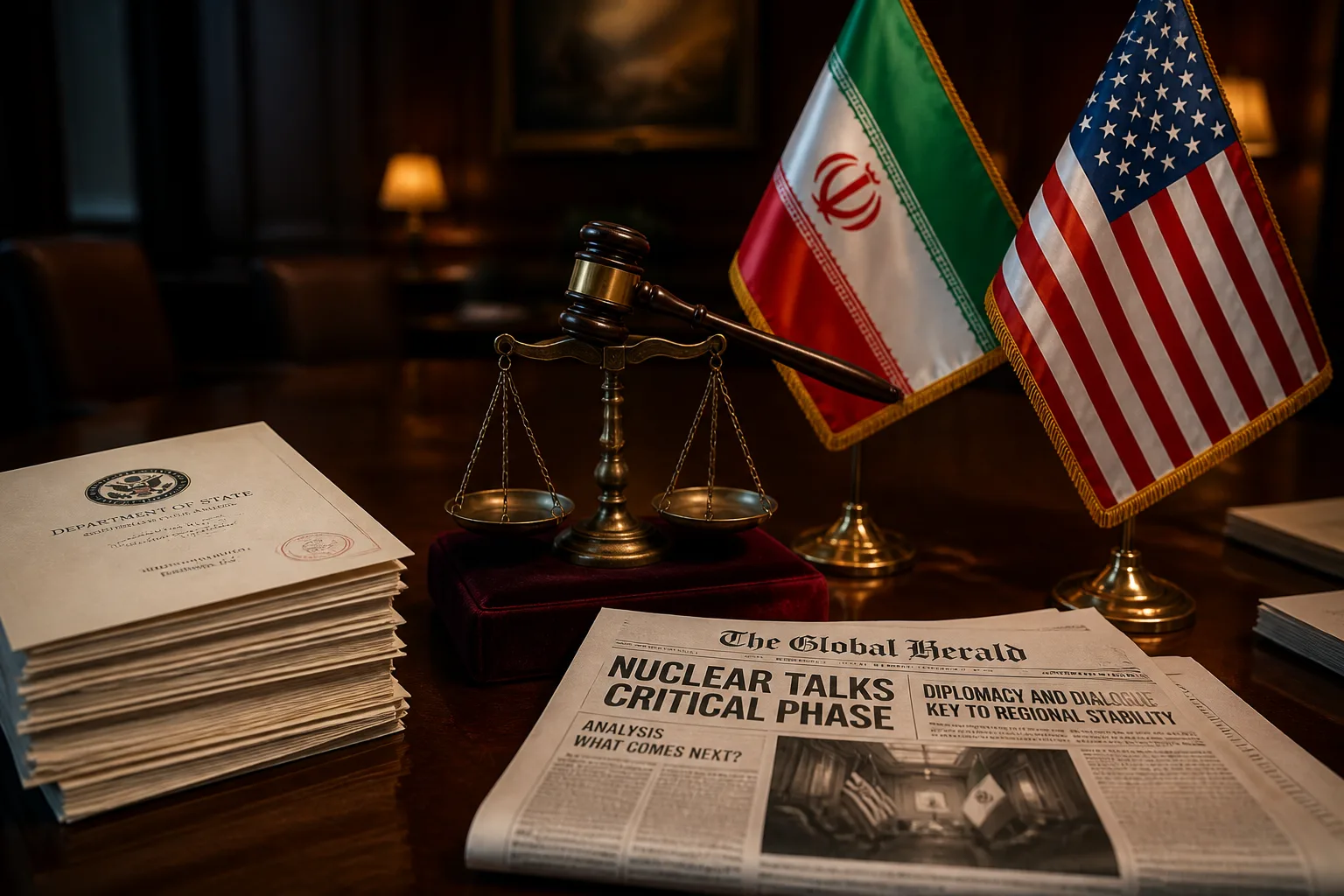
Bill Maher Criticizes Trump-Iran Memorandum of Understanding as Climbdown
On Friday, Bill Maher opened HBO’s Real Time with a scathing monologue that turned the United States’ newly signed memorandum of understanding (MoU) with Iran into a punchline. He described the deal as a “major climbdown” and compared it to the Stormy Daniels scandal, suggesting the U.S. had finally stopped asking for what it wanted.
The MoU, signed on 17 June 2026 after the G7 summit in France, extends a ceasefire that began in April by 60 days. Mediation came from Pakistan and Qatar, and the agreement was intended to lay the groundwork for a final settlement. It lifts the U.S. naval blockade of Iranian ports, reopens the Strait of Hormuz, and creates a temporary window for talks on Iran’s nuclear program, the disposal of highly enriched uranium, sanctions relief, and the release of frozen Iranian assets. A reconstruction fund of roughly $300 billion is tied to the sanctions relief, although Washington has denied that the money will be transferred directly.
Maher’s opening joke was a sarcastic claim that the U.S. “got everything we wanted except for everything we asked for.” He dismissed the MoU as a “memorandum of understanding” rather than a treaty, likening it to a sign in a break‑room that says, “please clean the microwave.” According to him, the deal is “about as legally binding as that sign.”
The comedian then turned his criticism toward former President Trump’s negotiating style. “Where’s the big deal maker? What happened to the art of the deal?” he asked, implying that Trump had lost interest in the conflict. He suggested that the U.S. had simply told the Supreme Leader, “let’s take a break,” and that the country was now “just want to bomb other countries.”
Maher warned that other nations might see the agreement as a “pay‑to‑play” arrangement. He noted that Iran would receive $300 billion in reconstruction funds, sanctions relief, and the lifting of asset freezes, and that Gulf allies would provide the money. “They’re all like, bomb us. Bomb us,” he said.
While framed as satire, the remarks echo concerns that the MoU falls short of the U.S. administration’s earlier rhetoric. The MoU was announced on 14 June 2026, after the U.S. and Iran had agreed to a two‑week ceasefire in April. The 60‑day extension was meant to give both sides time to negotiate a comprehensive settlement, but critics argue that the MoU lacks enforceability and does not address the core issues of Iran’s nuclear program.
Because the MoU is a memorandum rather than a treaty, it is not legally binding in the same way a treaty is. Legal experts say that while some provisions may be independently enforceable, the overall document is largely a political commitment.
The U.S. administration has positioned the MoU as a step toward ending hostilities, but it has also emphasized that the deal does not resolve the underlying disputes. Washington maintains that it will continue to monitor Iran’s compliance with nuclear limits and that the reconstruction fund is contingent on further negotiations.
Maher’s criticism highlights the tension between the U.S. public’s expectation of a decisive victory over Iran and the diplomatic realities that often result in incremental agreements. While the MoU ends the immediate conflict and lifts the blockade, it does not yet provide a long‑term solution to the nuclear and security issues that have driven U.S. policy in the region.
In the days following the MoU, U.S. officials reiterated that the agreement is a temporary measure and that a final peace treaty remains to be negotiated. The U.S. and Iran have agreed to resume talks in Geneva, where the parties will discuss the 60‑day window and the conditions for a permanent settlement.
The reopening of the Strait of Hormuz is expected to ease global oil flows, but the U.S. and Iran have yet to agree on the exact terms of sanctions relief and the disposal of Iran’s enriched uranium stockpile.
Maher’s comments, while comedic, underscore the perception that the U.S. has compromised on its original objectives. The MoU represents a significant shift in U.S. policy toward Iran, but it also illustrates the challenges of translating diplomatic agreements into enforceable commitments.
The next steps involve the U.S. and Iran negotiating the details of the 60‑day ceasefire extension, the conditions for sanctions relief, and the mechanisms for verifying compliance with the nuclear limits. The outcome of these negotiations will determine whether the MoU can evolve into a lasting peace agreement or remain a temporary ceasefire.