Middle East Conflict Drives Surge in Asia-US Airfares and Declines in Passenger Numbers
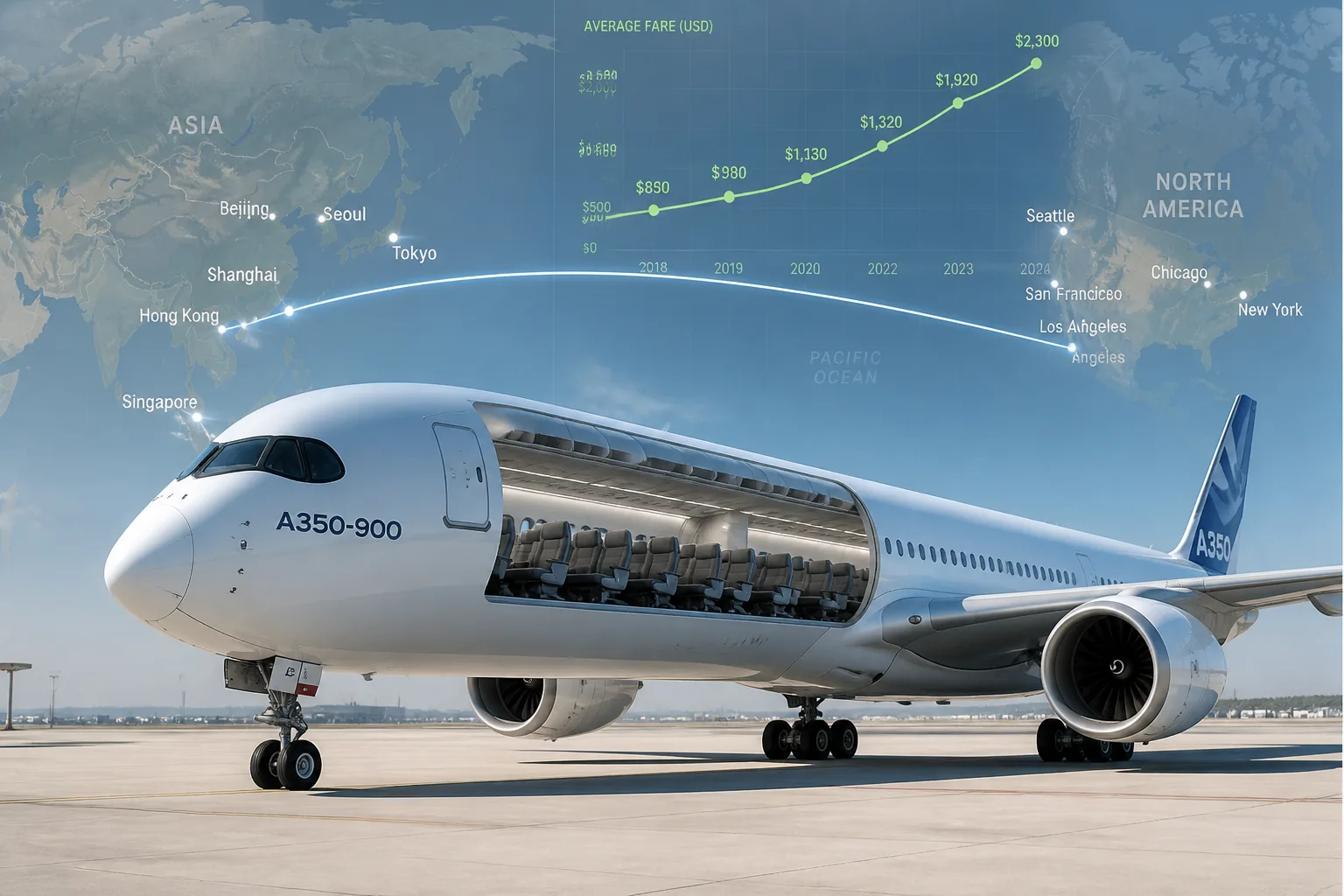
When the Middle East erupted into conflict in early 2026, the ripple reached far beyond the region, stretching across the skies between Asia and the United States. Airlines were forced to sidestep Gulf airspace, adding 1–4 extra hours to flights. The resulting increase in fuel burn and operating costs pushed average round‑trip fares up 15–40 % across major Asian source markets, while passenger arrivals fell 7–23 % in the first half of the year.
China’s arrivals to the United States slipped 1.4 % to 400,174, the smallest decline among the surveyed markets. The country’s average fare climbed 18–25 %, now ranging from $1,050 to $1,450. The hike reflects longer detours around the Persian Gulf, higher fuel consumption, and reduced reliability of hub connections through Doha and Dubai.
India suffered the steepest fall in arrivals, down 16.1 % to 370,031. Its average fare rose 25–35 %, reaching $900–$1,600. Flights that normally used one‑stop routes via Doha, Dubai or Abu Dhabi now add up to four extra hours, raising fuel costs and seat‑capacity constraints. Student and VFR segments have been particularly affected, with many travelers postponing long‑haul trips.
South Korea’s arrivals fell 3.5 % to 364,268. The country’s average fare increased 15–22 %, now between $1,200 and $1,700. While direct Pacific routes remain largely intact, the indirect impact of Gulf hub disruptions has lengthened connecting itineraries by up to two hours, adding fuel and crew costs.
The Philippines saw a 7.9 % drop to 50,940 arrivals. Average fares rose 20–30 %, reaching $950–$1,500. The nation’s heavy reliance on one‑stop routes via Doha, Dubai or Abu Dhabi has been undermined by airspace rerouting, leading to longer layovers and higher fuel expenses. Migrant workers and VFR travelers, who are highly price sensitive, have been most affected.
Singapore, a major aviation hub, recorded a 6.1 % decline to 29,025 arrivals. Average fares climbed 12–20 %, now $1,500–$2,200. The indirect effect of Gulf rerouting has increased fuel consumption and operational costs, even for airlines operating direct flights. Business travel remains relatively stable, but discretionary travel has softened.
Vietnam, Pakistan, Hong Kong, Indonesia and Thailand also reported significant declines in arrivals, ranging from 12.8 % to 23.4 %. Their average fares surged 15–40 %, with Vietnam’s fares reaching $1,100–$1,800. All these markets depend on Gulf hubs; the detours added 2–4 extra hours and raised fuel costs, eroding affordability for leisure and student travelers.
The broader pattern shows that the Middle East conflict has broken the efficient one‑stop connectivity that many Asian airlines relied on. Airlines have had to re‑route through alternative corridors, increasing flight times, fuel burn and crew duty costs. These higher operating expenses have been passed on to passengers, leading to a sharp rise in fares and a corresponding drop in demand.
In summary, the 2026 Middle East conflict has reshaped Asia‑US aviation by forcing airlines to avoid Gulf airspace, extending journeys, inflating fuel costs and raising ticket prices. The resulting price sensitivity has led to a measurable decline in passenger arrivals across China, India, South Korea, the Philippines, Singapore, Vietnam, Pakistan, Hong Kong, Indonesia and Thailand.