Norway to Ban Trade with Israeli Settlements in Occupied Palestinian Territories
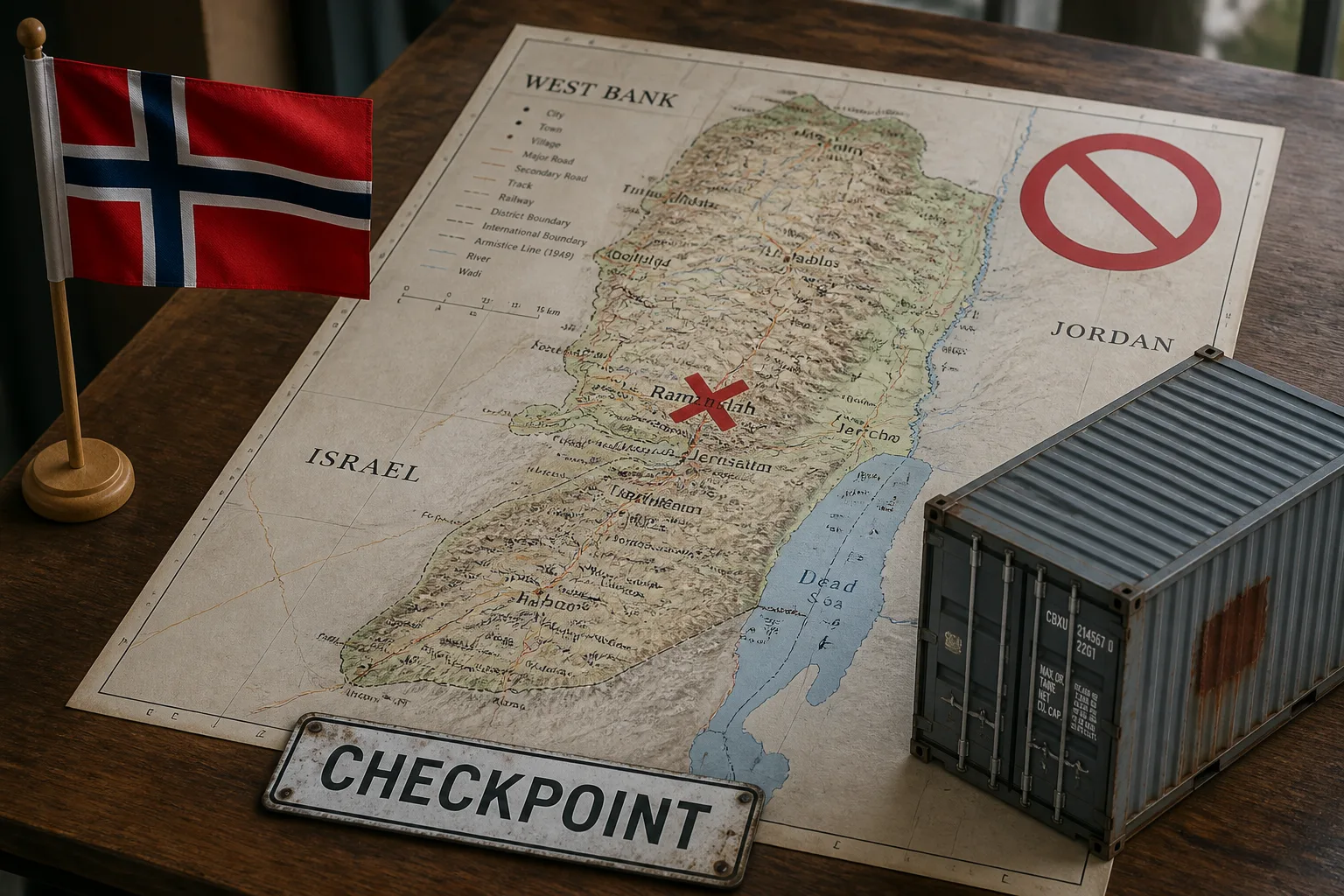
On 20 June 2026, Norway announced plans to prohibit all commercial activity with Israeli settlements located in the occupied Palestinian territories, including the West Bank, East Jerusalem and Gaza. The move follows Norway’s formal recognition of the State of Palestine in May 2024 and reflects a growing international push to curb settlement expansion.
The draft bill, presented by the Ministry of Foreign Affairs, would ban the import of goods produced in settlements and prohibit Norwegian companies and citizens from purchasing property, providing construction or renovation services, or acquiring commercial enterprises whose headquarters or production facilities are situated in the settlements. The legislation will enter a three‑month public consultation period ending on 19 September. Foreign Minister Espen Barth Eide said in a statement that "Norwegian people and Norwegian companies should not contribute to sustaining illegal settlements" and that "the colonies undermine the very foundations of the Palestinian state." The bill explicitly states that trade with legitimate Palestinian activities on Palestinian land and the provision of humanitarian aid will continue.
Norway is not a member of the European Union, but its policy aligns with the positions of Ireland and Spain, which also recognised Palestine in 2024. The European Union has announced that it will examine options to restrict trade with settlements, yet no consensus has emerged on further measures, such as ending the EU‑Israel preferential trade agreement. Ireland has called for a comprehensive EU ban on settlement trade, a stance that Norway’s new legislation echoes.
Settlements are considered illegal under international law. The United Nations Security Council adopted Resolution 2334 in 2016, declaring settlement activity a "flagrant violation" of the Fourth Geneva Convention and demanding that Israel cease such activity. In 2024 the International Court of Justice issued an advisory opinion stating that Israel’s occupation of the West Bank, East Jerusalem and Gaza is unlawful and that Israel must evacuate all settlements. Despite these rulings, Israel maintains that the settlements are legal and that the territories are part of its sovereign land.
The Norwegian proposal is part of a broader effort to address the humanitarian and security situation in the region. Palestinian communities in Gaza and the West Bank continue to experience frequent violence from Israeli troops and settlers. In the West Bank, rural villages report daily incidents of property damage, cattle theft and arson. The settlements’ expansion has been linked to the displacement of Palestinian residents and the fragmentation of Palestinian territory.
The policy is expected to influence Norway’s trade relations with Israel and its partners. While the bill targets goods and services linked to settlements, it preserves Norway’s ability to maintain humanitarian assistance and legitimate economic ties with Palestinian authorities. The government has not yet indicated whether it will pursue additional sanctions or diplomatic measures.
As the consultation period progresses, stakeholders will examine the bill’s legal and economic implications. The Norwegian government has stated that it will review the feedback received before moving forward with legislation. The final outcome will determine whether Norway becomes the first non‑EU state to impose a comprehensive trade ban on Israeli settlements.