Jordan Hosts Arab Foreign Ministers Meeting, Calls for Unified Action on Security and Palestinian Statehood
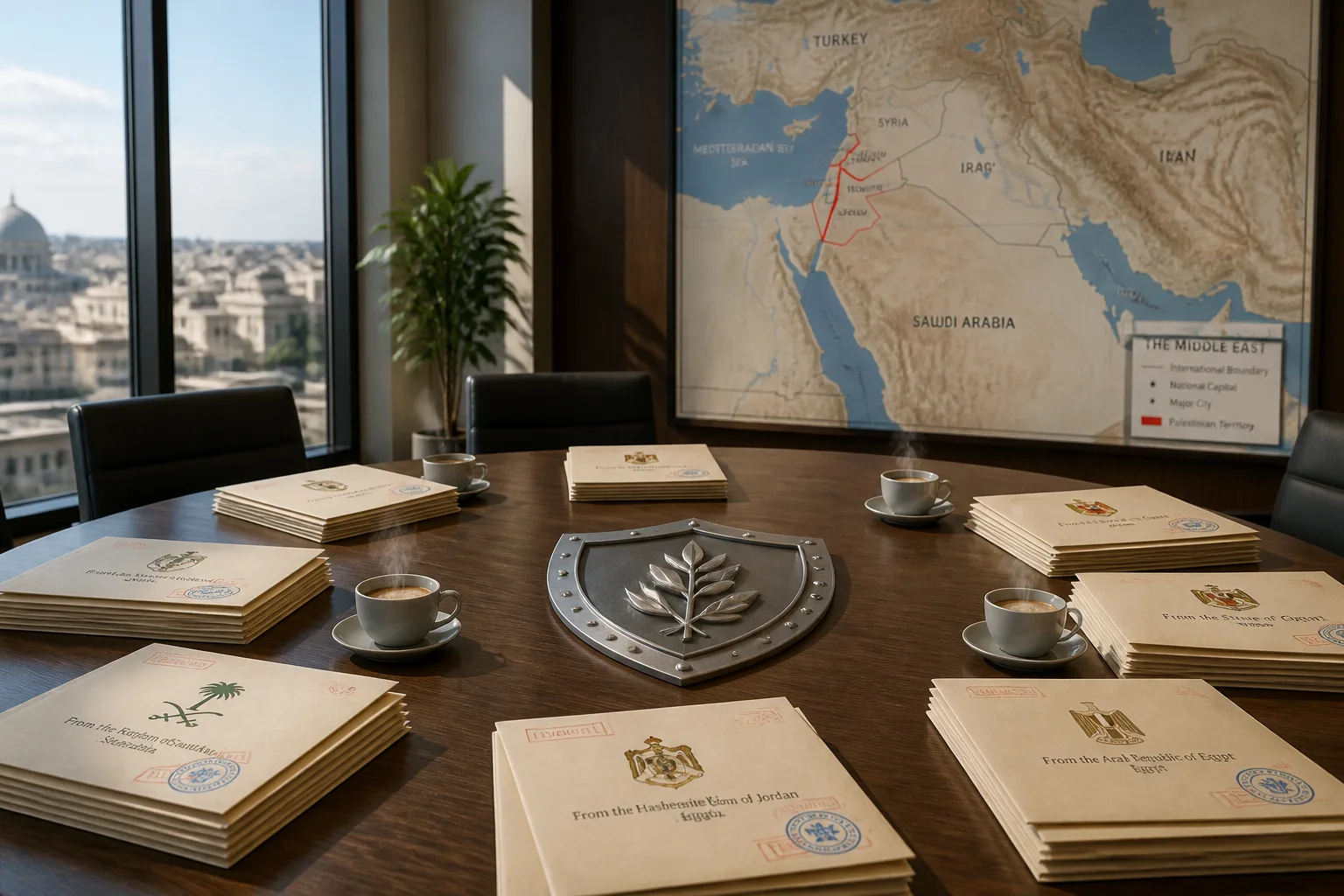
Amman, 22 June 2026 – In a ceremony that underscored the Arab world’s continued quest for cohesion, Jordan’s Deputy Prime Minister and Minister of Foreign Affairs, Ayman Safadi, opened the 165th ordinary ministerial meeting of the League of Arab States. The consultative session, chaired by Bahrain, brought together foreign ministers from all 22 member states and was broadcast live across the region.
Safadi’s opening address framed the gathering as a forum for “frank and comprehensive discussions” on the challenges that confront the Arab world today. He argued that deepening Arab cooperation remains the most effective strategy for confronting security and political issues. The minister also emphasized the need to guarantee the success of initiatives aimed at restoring stability across the Middle East.
A pivotal point of the agenda was the implementation of the Memorandum of Understanding (MoU) signed between the United States and Iran in June 2026. Safadi noted that advancing the MoU’s 14‑point framework—covering nuclear non‑proliferation, sanctions relief, and the establishment of an executive monitoring mechanism—would address the root causes of past tensions and safeguard Arab states, particularly those in the Gulf.
The Palestinian issue, however, remained the central theme of the meeting. Safadi highlighted the humanitarian crisis in the Gaza Strip, the continued expansion of Israeli settlements, and the attacks on Islamic and Christian holy sites as urgent concerns that demand coordinated Arab action. He reiterated that lasting peace can only be achieved through the recognition of the Palestinian people’s right to an independent and sovereign state on the 1967 borders, with East Jerusalem as its capital, living in peace and security alongside Israel.
In addition to the Palestinian question, Safadi expressed Jordan’s full solidarity with Lebanon amid ongoing cross‑border attacks. He stressed the importance of adhering to the ceasefire and supporting the Lebanese government’s efforts to restore sovereignty over all Lebanese territory, a stance that came in the wake of recent incidents that have heightened tensions along the southern border.
The minister also addressed Syria’s reconstruction process, underscoring that it must be based on preserving the country’s unity and sovereignty while meeting the Syrian people’s aspiration to live in peace and security within a fully sovereign state. This position aligns with Jordan’s longstanding support for a comprehensive political settlement in Syria, as outlined in the Arab League’s 2023 resolution on Syrian reconstruction.
Beyond these specific issues, the meeting tackled broader themes of regional diplomacy, including the Arab League’s role in fostering economic cooperation and mediating disputes. According to Safadi, the League’s renewed focus on security cooperation and economic integration is intended to counter extremism and support member states’ development.
The 165th ordinary ministerial session concluded with a joint statement urging all member states to enhance cooperation on security, economic development, and humanitarian assistance. The statement reaffirmed the League’s commitment to the principles of sovereignty, independence, and collective action.
As the meeting wrapped up, Safadi emphasized that the discussions would inform the League’s next steps in addressing the region’s security challenges and advancing the Palestinian cause. He said that Jordan remains ready to facilitate further dialogue and support initiatives that promote stability and peace across the Arab world.
In short, the Arab League has resumed its regular ministerial meetings in Amman, focusing on security cooperation, the implementation of the US‑Iran MoU, and the Palestinian issue. Jordan’s leadership in hosting the meeting signals its continued role as a mediator and advocate for regional stability.