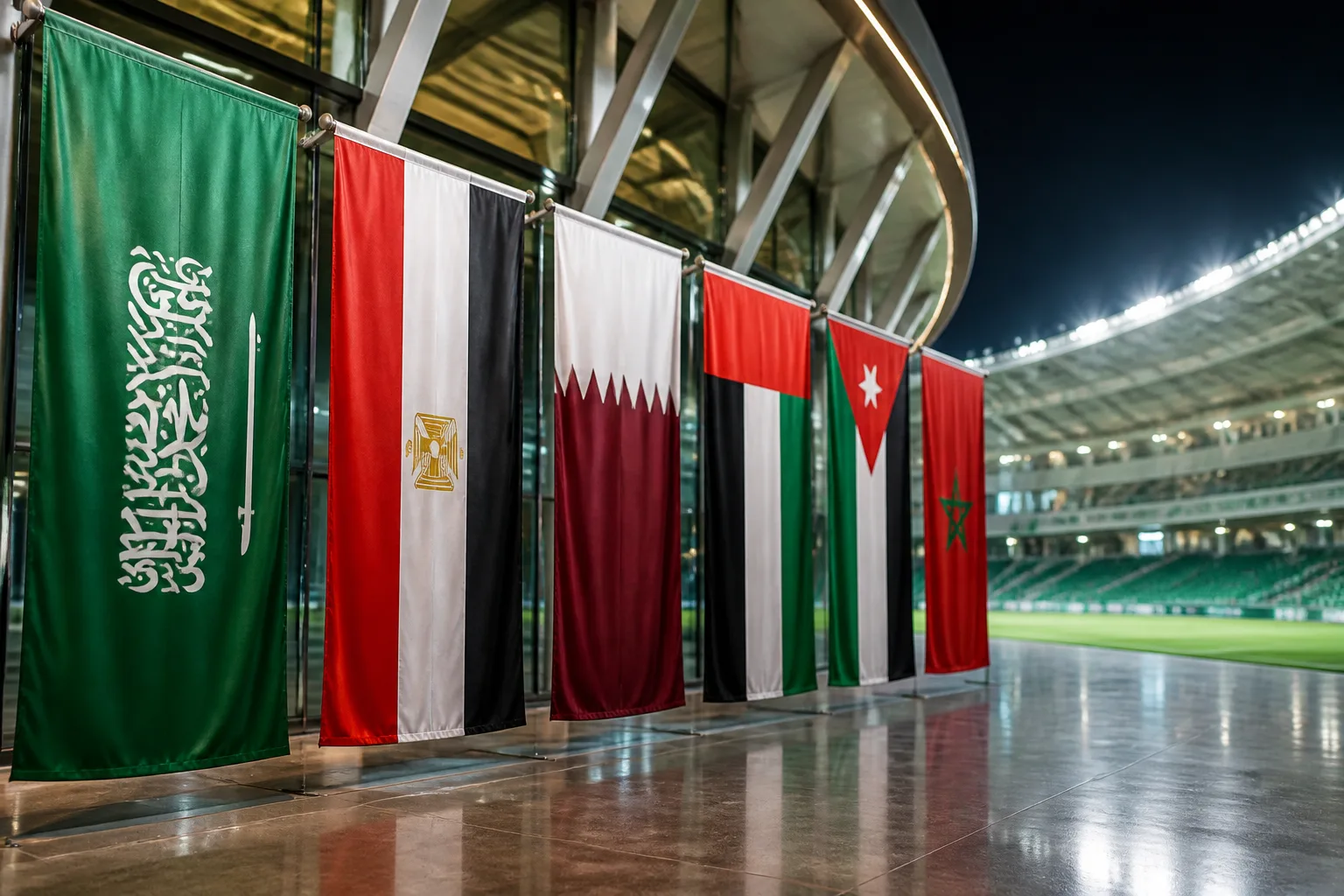
Arab Nations Reach Knockout Stage as World Cup Highlights Regional Football Growth
The 2026 FIFA World Cup has stepped into the knockout phase, and the Arab world is witnessing a historic moment: eight national teams have qualified for the tournament for the first time ever. The record‑setting lineup includes Jordan, Saudi Arabia, Morocco, Egypt, Algeria, Qatar, Iraq and Tunisia. While Jordan and Saudi Arabia have already bowed out in the group stage, Morocco, Egypt and Algeria remain in contention, sparking renewed enthusiasm across the region.
Jordan made its World Cup debut in Group J, drawn alongside reigning champions Argentina, Austria and Algeria. The Jordanian side, known as Al Nashama, found the back of the net in each of its three matches but could not advance. Coach Jamal Sellami admitted that inexperience and costly mistakes limited the team’s progress, yet he emphasized that the experience would be valuable for future competitions. A 22‑year‑old fan, Zaid, said after the exit that “the group was really difficult, but they still managed to score against Argentina.”
Saudi Arabia faced a tough Group H with Spain, Uruguay and Cape Verde. The Green Falcons were eliminated after a 1‑1 draw with Uruguay, a match that highlighted goalkeeper Mohammed Al Owais’ notable saves. Social media praised his performance, but the team’s overall results were insufficient to reach the round of 32.
Morocco, the Atlas Lions, entered the tournament as reigning African champions and recent Arab Cup winners. Their 2022 semi‑final run had set high expectations, and they remain the most credible Arab contender. In the round of 32, Morocco will face the Netherlands, a match that many analysts view as a test of the Lions’ experience in knockout football.
Egypt, nicknamed The Pharaohs, surprised many by reaching the knockout stage for the first time in World Cup history. With a balanced attack that does not rely solely on star Mohamed Salah, the team’s midfield and forward line have shown cohesion. Fan Riad, 23, noted that “you could really feel they’re playing with soul.” Egypt will meet Australia in the round of 32, a pairing that will test the Pharaohs against a disciplined Australian side.
Algeria, known as Les Fennecs, recovered from a defeat to Argentina in the group stage to secure qualification as one of the best third‑placed teams. A 3‑3 draw with Austria and a win over Jordan were pivotal. Veteran captain Riyad Mahrez continues to lead the squad, inspiring younger players. Algeria’s next opponent will be Switzerland in the round of 32.
The tournament’s broader significance lies in the widening gap between Arab and global football. While Qatar, Iraq and Tunisia were eliminated early, their participation alone marks progress. Morocco’s recent record of 19 consecutive wins and a top‑ten FIFA ranking underscore the region’s growing competitiveness.
The World Cup’s knockout stage will see the remaining Arab teams compete for a place in the quarter‑finals, a milestone that would further elevate the profile of football in the Middle East and North Africa. The outcomes will influence future investment in youth development, infrastructure and international partnerships across the region.
As the matches unfold, fans and analysts will watch to see whether Morocco, Egypt or Algeria can advance beyond the round of 32, potentially reshaping perceptions of Arab football on the world stage.