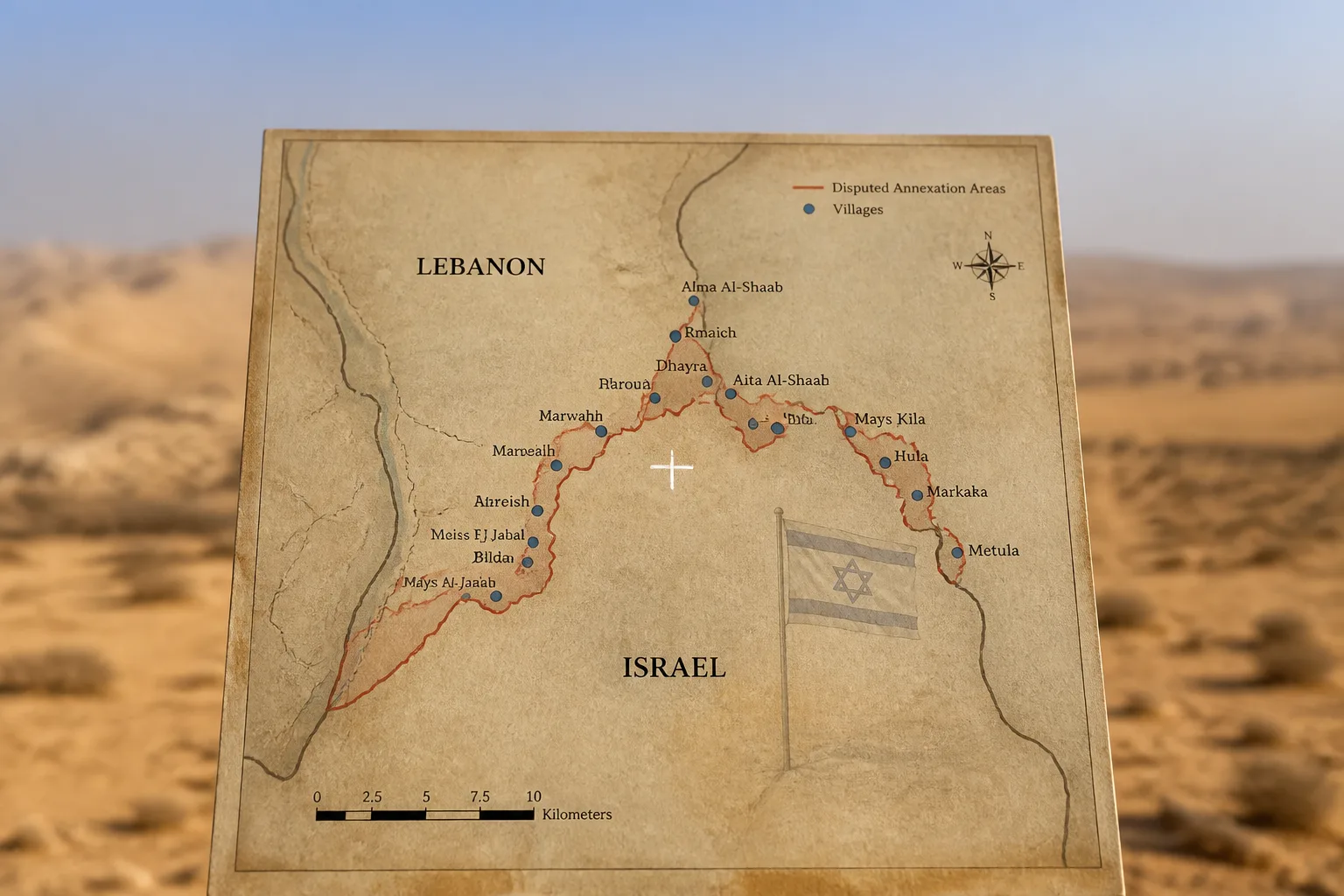
Netanyahu Claims Some Lebanese Christian Villages Seek Annexation to Israel, Lebanese Officials Deny
On 5 July, Israeli Prime Minister Benjamin Netanyahu told Fox News’ “The Sunday Briefing” that a number of Christian villages in southern Lebanon had asked Israel to annex them for protection from Hezbollah. He said: “Christian villages in Lebanon, some of them have actually asked to be annexed to Israel, because we protect them against the Hezbollah, Hezbollah fanatics who want to kill them, and we do the same things with Christians everywhere.” Netanyahu also reaffirmed that Israeli troops would remain in southern Lebanon for as long as necessary.
The claim was immediately rebuffed by Lebanese authorities. Senior members of the Kataeb Party and the mayor of Rmeich, Hanna al‑Amil, said the villages had not expressed any desire to become part of Israel. According to several Arab news outlets, the mayor stated that the residents “do not want to be part of Israel” and that they seek peace, normalcy and protection from the war, not annexation.
Lebanese Parliament Speaker Nabih Berri also categorically dismissed the assertion, praising the positions declared by municipal officials and emphasizing that the villages’ priority is to be left alone and to live their lives without being drawn into conflict.
The controversy comes amid a broader context of the 2026 Lebanon war. Hezbollah, the Lebanese Shia Islamist party with a powerful armed wing, has been engaged in repeated attacks against Israel since October 2023. The group’s activities have prompted the Lebanese government to move to ban its military operations and to seek disarmament under the Homeland Shield Plan approved in September 2025.
Alberto Fernández, a former U.S. ambassador and contributor to EWTN News on Middle East affairs, criticized Netanyahu’s remarks as a political maneuver aimed at appealing to Israeli audiences. He said: “It’s ridiculous that [Netanyahu] would say such a thing.” Fernández added that the Christian villagers in southern Lebanon “do not want to be part of Israel” and that they prefer to be left alone, to farm their land and live peacefully.
The Israeli claim is not the first time the Prime Minister has invoked the protection of Christian minorities as a justification for military presence in Lebanon. In past statements, Netanyahu has repeatedly linked the security of Christian communities to Israel’s broader strategic interests in the region.
Lebanese officials have consistently denied any formal request for annexation. The Kataeb Party, historically a nationalist party that has opposed foreign intervention, has stressed that any external proposals must meet strict conditions and respect Lebanese sovereignty. The mayor of Rmeich, a predominantly Maronite village near the Israeli border, has repeatedly expressed that the community’s main concern is safety from Hezbollah rocket attacks, not integration into Israel.
The dispute highlights the fragile security situation in southern Lebanon, where Israeli forces, Lebanese Army units, and Hezbollah fighters have all operated in close proximity. The Lebanese government’s recent push to disarm Hezbollah and bring all armed groups under state control reflects the urgency of stabilizing the region.
International observers note that the claim by Netanyahu, if taken at face value, would have significant diplomatic implications. It could strain Lebanon’s relations with its neighbors and complicate ongoing negotiations over the status of the border area. However, the lack of corroborating evidence and the swift denials by Lebanese authorities suggest that the statement is more rhetorical than factual.
In summary, Netanyahu’s assertion that some Christian villages in southern Lebanon have requested annexation to Israel has been met with immediate and unequivocal rejection by Lebanese officials, including the Kataeb Party, the mayor of Rmeich, and Parliament Speaker Nabih Berri. The claim remains unsubstantiated, and the Lebanese government continues to emphasize its commitment to sovereignty and the protection of all its citizens.
The situation remains fluid, with Israeli troops maintaining a presence in the south and Hezbollah continuing to launch attacks. The Lebanese government’s efforts to disarm non‑state armed groups are ongoing, and any developments in the region will likely influence the broader dynamics of the Israel‑Lebanon conflict.